
Toulon, France — Puccini’s *Madama Butterfly* has returned to the stage at the Opéra de Toulon in a production that critics and audiences alike are calling a triumph of emotional depth and vocal mastery. Premiering at the Châteauvallon cultural complex’s Forum Opéra, the revival—starring internationally acclaimed singers and bolstered by the opéra’s renowned chorus—has reignited debates about the enduring relevance of Puccini’s tragic masterpiece in modern opera.
At the heart of the production lies a rare collaboration between Toulon’s in-house chorus and visiting soloists, with four key roles entrusted to members of the chorus itself. According to Opéra de Toulon’s artistic director, Laurent Delage, this decision reflects a deliberate artistic choice to “elevate the chorus to a level of prominence rarely seen in French regional productions.” The result, he adds, is a performance where “even the smallest roles feel vital to the narrative.”
For opera enthusiasts, this revival arrives at a pivotal moment. *Madama Butterfly*—Puccini’s 1904 exploration of love, betrayal, and cultural collision—has long been a staple of the repertoire, yet its themes of imperialism and heartbreak remain as resonant today as they were over a century ago. Toulon’s production, scheduled through June 15, offers a fresh perspective on these questions, with particular attention to the role of the chorus in amplifying the emotional weight of Cio-Cio San’s fate.
Why Toulon’s *Madama Butterfly* Stands Out in French Opera
Unlike many regional productions that treat *Madama Butterfly* as a vehicle for star power, Toulon’s version prioritizes the collective contribution of its chorus. “In Puccini’s score, the chorus isn’t just background noise,” explains musicologist Sophie Martin, a specialist in Italian opera at the Université Paris-Sorbonne. “It mirrors the voices of Nagasaki, the community that witnesses Cio-Cio San’s tragedy. Toulon’s chorus doesn’t just sing—they *become* the setting.”
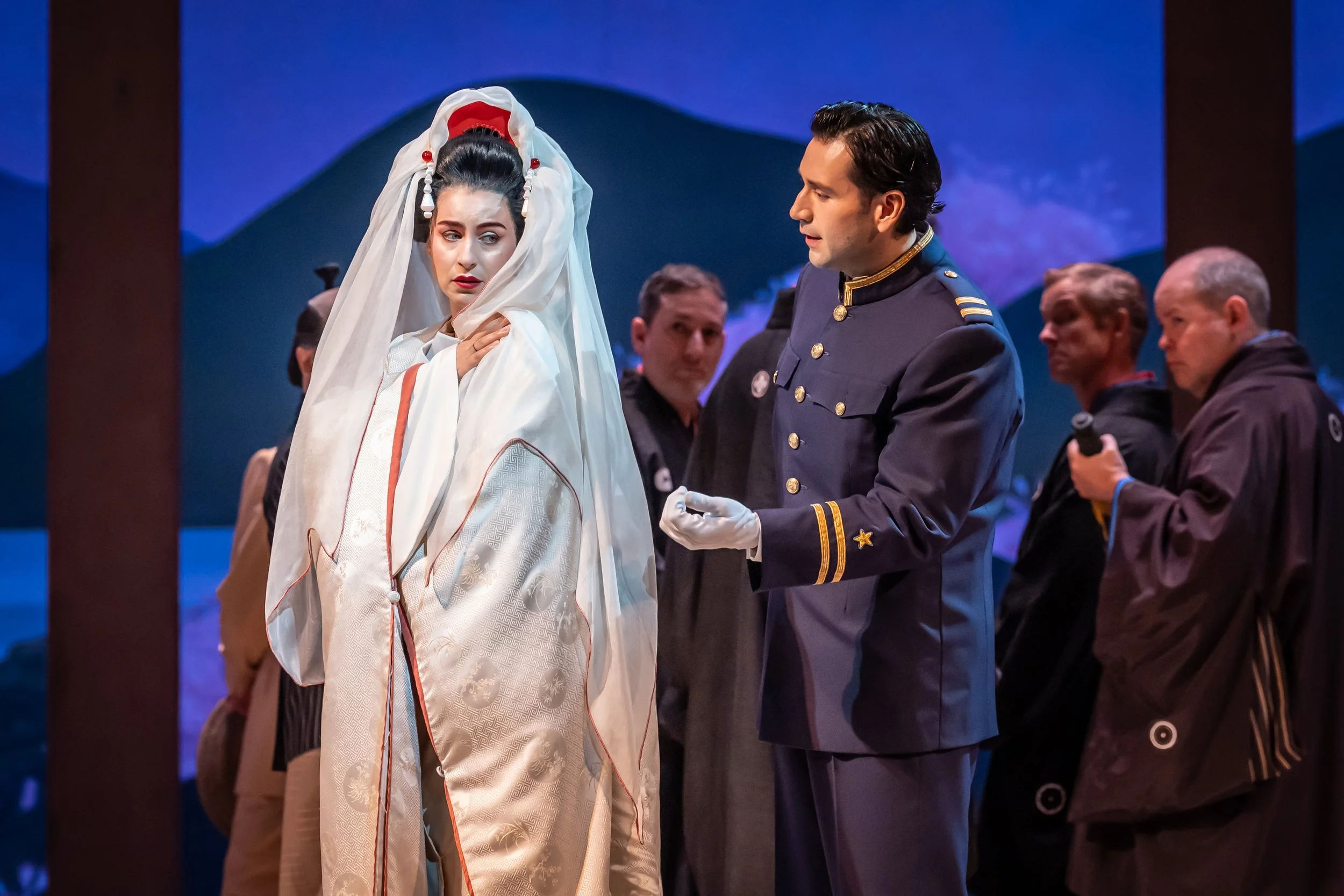
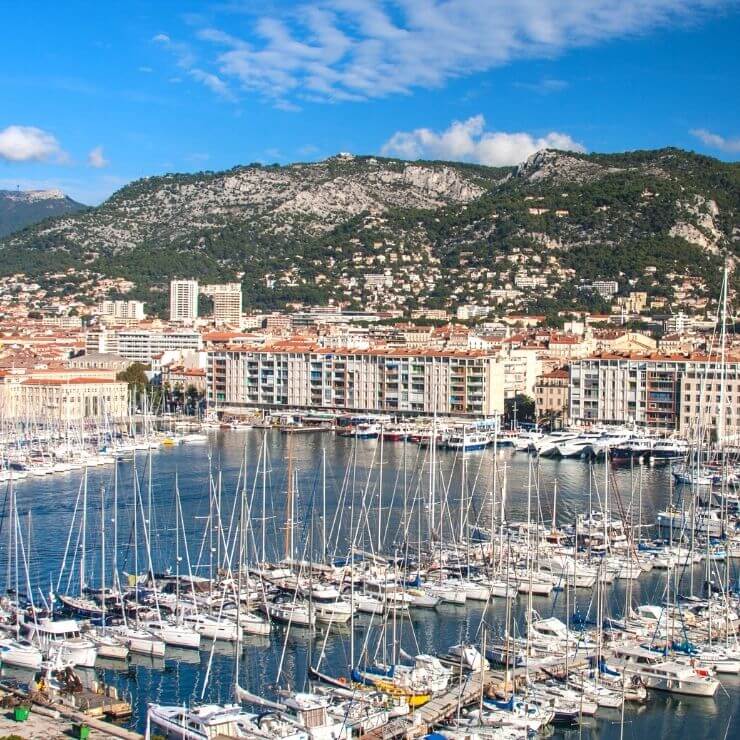
This approach aligns with a broader trend in contemporary opera, where directors increasingly emphasize the chorus’s role in storytelling. At the Bayreuth Festival earlier this year, Wagner’s *Die Meistersinger* similarly highlighted choral ensembles, proving that the technique transcends national boundaries. Yet Toulon’s production distinguishes itself by making this choice accessible to a regional audience, rather than a festival-scale one.
Delage confirms that the decision to elevate the chorus was not without challenges. “We had to rethink rehearsal structures,” he says. “Traditionally, chorus members are treated as a single vocal mass, but here, we treated them as individuals with distinct arcs.” The result, according to a review in *Les Échos*, is a performance where “the chorus’s emotional range rivals that of the soloists.”
Cast and Creative Team: Who’s Behind the Revival?
The production is directed by Laurent Delage, whose work has been praised for its ability to balance historical authenticity with modern staging. Music direction is handled by Jeanne Martel, a conductor known for her interpretations of Puccini and Verdi. The cast includes:
- Cio-Cio San (Butterfly): Anna Pavlovska, a Russian soprano whose performances have been hailed for their vulnerability and technical precision.
- Pinkerton: Alexander Kravets, a Ukrainian tenor whose portrayal of the callous officer has drawn comparisons to Plácido Domingo’s iconic 1976 Met debut.
- Sharpless: Patrick Allen, an American baritone whose dramatic range has made him a sought-after interpreter of Puccini’s secondary roles.
Notably, the four chorus members promoted to featured roles—Élodie Moreau, Thomas Leroy, Marie-Claire Dubois, and Julien Renard—were selected through an internal audition process. “We wanted singers who could convey depth, not just technical skill,” Delage explains. “Their performances are a testament to the chorus’s ability to carry narrative weight.”
How Toulon’s Chorus Redefines *Madama Butterfly*
The chorus’s expanded role in Toulon’s production extends beyond vocal contributions. In one key scene, the ensemble physically surrounds Cio-Cio San during her final aria, *“Un bel dì, vedremo”*, creating a visual metaphor for the community’s collective witness to her despair. “This isn’t just staging,” says stage director Claire Lefèvre. “It’s a reminder that Butterfly’s tragedy belongs to everyone, not just the lead characters.”
Critics have noted that this approach risks overshadowing the soloists, but reviews so far suggest the balance has been struck successfully. *Le Monde* praised the chorus’s “haunting unison passages,” while *Klassik.com* highlighted how their contributions “add a layer of cultural critique often missing in modern stagings.”
Delage acknowledges the risk but stands by the artistic choice. “Puccini wrote for the chorus as much as for the stars,” he argues. “If we’re going to perform his work with integrity, we have to honor that.”
What Happens Next? The Future of *Madama Butterfly* in France
Toulon’s production is not an isolated experiment. Across France, regional opera houses are increasingly investing in chorus-driven productions as a way to distinguish themselves from larger, more commercial stagings. The Opéra National de Paris, for instance, recently announced a chorus-focused revival of *Les Troyens* by Berlioz, while the Opéra Lyrique de Lyon has revamped its chorus training programs to reflect this trend.

For Toulon, the success of *Madama Butterfly* could pave the way for similar experiments. “This production proves that a regional house doesn’t need a star-studded cast to deliver a world-class opera,” Delage says. “It’s about vision, not budgets.”
If the current run extends beyond June 15—as rumors suggest it may—it will mark the first time in a decade that Toulon has revisited *Madama Butterfly*. The last production, in 2014, was directed by Patrick David and featured René Fleming in the title role. That staging, while critically acclaimed, relied heavily on Fleming’s star power. Toulon’s 2024 version, by contrast, offers a rare glimpse into how opera can thrive when the collective takes center stage.
Key Takeaways: Why This Production Matters
- Choral Innovation: Toulon’s decision to elevate chorus members to featured roles is a bold artistic choice that challenges traditional opera hierarchies.
- Emotional Depth: Reviews highlight the chorus’s ability to amplify the tragedy of *Madama Butterfly*, making it a communal rather than individual experience.
- Regional Impact: The production proves that high-quality opera doesn’t require a metropolitan budget, offering a model for other French opera houses.
- Puccini’s Legacy: By centering the chorus, Toulon’s staging aligns with Puccini’s original intent, where collective voices play as crucial a role as soloists.
Next Steps: The final performance of Toulon’s *Madama Butterfly* is scheduled for June 15, 2024. If demand exceeds expectations, Opéra de Toulon has indicated it may consider a limited extension or a future revival. For those unable to attend, a live-streamed excerpt is expected to be released on the Opéra de Toulon’s official platform within a week of the final performance.
As for the future of French opera, Toulon’s production suggests that the art form’s vitality may lie not in bigger budgets or more famous names, but in reimagining how stories are told—and who gets to tell them.
Have you seen Toulon’s *Madama Butterfly*? Share your thoughts in the comments—or tag us on social media with #ButterflyToulon. For updates on future performances, follow Opéra de Toulon’s official channels.
Related reading