Three decades ago, Nobel laureate Joshua Lederberg framed the battle against infectious diseases as an asymmetrical war—one where microbes outnumber humans by a billionfold and mutate a billion times faster. His 1996 JAMA editorial declared that “pitted against microbial genes, we humans mainly have our wits.”
Today, those wits are sharper than ever. In the fight against HIV—a virus that has defied eradication for over four decades—scientists are deploying an arsenal of strategies that Lederberg could scarcely have imagined. From gene editing to AI-driven drug discovery, the tools at our disposal are reshaping the landscape of infectious disease research. Yet the virus remains a formidable adversary, demanding not just innovation, but relentless global coordination.
As the world marks World AIDS Day each December 1, the question looms: Are we finally gaining the upper hand? The answer lies in a confluence of scientific breakthroughs, policy shifts, and the unyielding efforts of researchers who refuse to accept HIV as an insurmountable foe.
The Unfinished Battle: HIV’s Resilience and Human Ingenuity
HIV has claimed over 40 million lives since its emergence in the early 1980s. Unlike many infectious diseases, HIV has no cure—only treatment that suppresses the virus to undetectable levels. Yet even with antiretroviral therapy (ART), which has transformed HIV from a death sentence to a manageable chronic condition, the virus persists in reservoirs within the body, ready to rebound if treatment stops.

Lederberg’s warning about microbial adaptability proved prescient. HIV’s high mutation rate allows it to evade immune responses and develop resistance to drugs. In 2023, the World Health Organization (WHO) reported that drug-resistant strains of HIV are emerging in over 100 countries, complicating treatment efforts. The challenge, as Lederberg foresaw, is not just defeating the virus in isolated cases but preventing it from outmaneuvering humanity at scale.
Gene Editing: A New Weapon in the Arsenal
The most promising frontier in HIV research is gene editing, particularly CRISPR-Cas9 technology. In 2021, a landmark study published in Nature demonstrated that CRISPR could permanently disable the CCR5 gene—a receptor HIV uses to enter human cells—in stem cells derived from HIV-positive patients. When these edited cells were transplanted back into the patients, their immune systems became resistant to HIV infection.
While still experimental, this approach offers a potential cure by editing the virus’s entry points at the genetic level. The National Institute of Allergy and Infectious Diseases (NIAID) is leading trials to assess safety and efficacy, with early results suggesting that gene-edited cells can persist in the body for years without causing harm. If successful, this could mark the first time HIV is eradicated from a patient’s system.
AI and Drug Discovery: Speeding Up the Hunt for a Cure
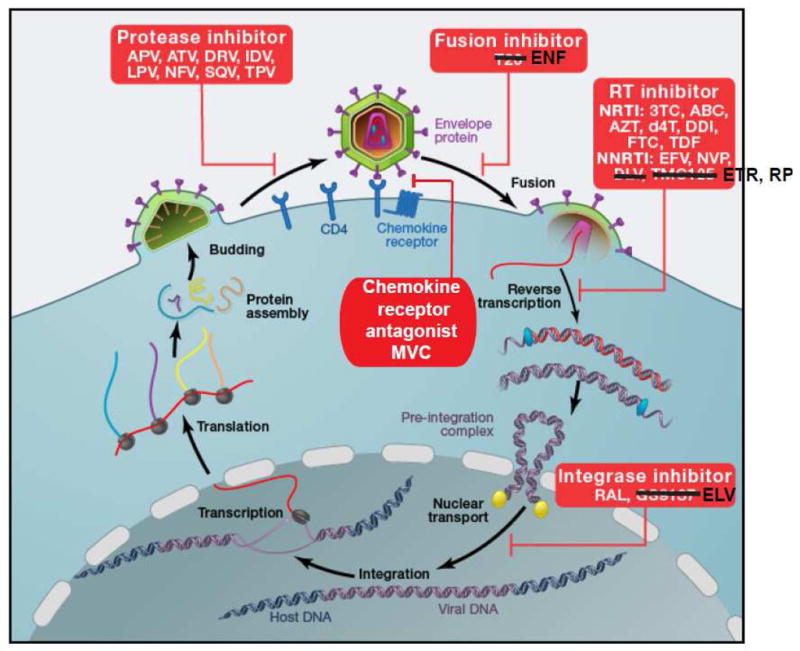
Artificial intelligence is accelerating the discovery of new HIV treatments. In 2022, researchers at Europe’s European Bioinformatics Institute (EBI) used AI to analyze millions of chemical compounds, identifying a novel class of drugs that could disrupt HIV’s replication cycle. Traditional drug development takes a decade or more. AI models can simulate interactions between drugs and viral proteins in weeks.
One standout example is lenacapavir, an experimental drug developed by Gilead Sciences. In clinical trials, it reduced viral loads in patients who had failed other treatments. While not a cure, it represents a leap forward in long-acting therapies that could simplify HIV management.
Global Coordination: The Missing Link
Despite scientific progress, HIV remains a global health disparity. In 2023, sub-Saharan Africa accounted for nearly 60% of new HIV infections, where access to treatment and prevention tools is limited. The WHO’s 95-95-95 targets—aiming for 95% of people with HIV diagnosed, 95% on treatment, and 95% virally suppressed—have stalled in many regions due to funding gaps and healthcare infrastructure challenges.
Lederberg’s call for global cooperation resonates today. The End the Outbreak Coalition, launched in 2023, brings together governments, NGOs, and pharmaceutical companies to fast-track HIV research and equitable access to treatments. Yet progress hinges on sustained political will and investment.
What’s Next? The Path to an HIV-Free Generation
Three decades after Lederberg’s editorial, the tools to outwit HIV are within reach—but the race is far from over. Key milestones on the horizon include:

- 2026: Phase III trials for CRISPR-based HIV cures, with potential FDA approval by 2028.
- 2027: Expanded rollout of long-acting injectable HIV treatments in low-resource settings.
- 2030: WHO’s target to reduce new HIV infections by 90% compared to 2010 levels.
The roadmap is clear: combine gene editing, AI-driven drug discovery, and global health equity initiatives. Yet success depends on treating HIV not as a single-country crisis but as a shared challenge requiring collective action.
Reader Takeaways: What You Can Do
- Stay informed: Follow updates from WHO HIV and UNAIDS.
- Advocate: Support policies that ensure equitable access to HIV treatments worldwide.
- Get tested: Early diagnosis is critical. Locate testing sites via CDC’s Get Tested.
- Donate: Organizations like (red) and The Global Fund drive research and treatment access.
As Lederberg once wrote, “Our fight with microbes is far from over.” But today, the odds are shifting—not because we outnumber microbes, but because we outthink them. The question is whether humanity will rise to the challenge.
Dr. Helena Fischer is a physician and health journalist with expertise in infectious diseases and global health policy. Follow her work on World Today Journal.
Next Checkpoint: The WHO’s 2024 Global Health Estimates, due June 2025, will assess progress toward HIV elimination targets. Share your thoughts: Are we on track to end HIV? Comment below.