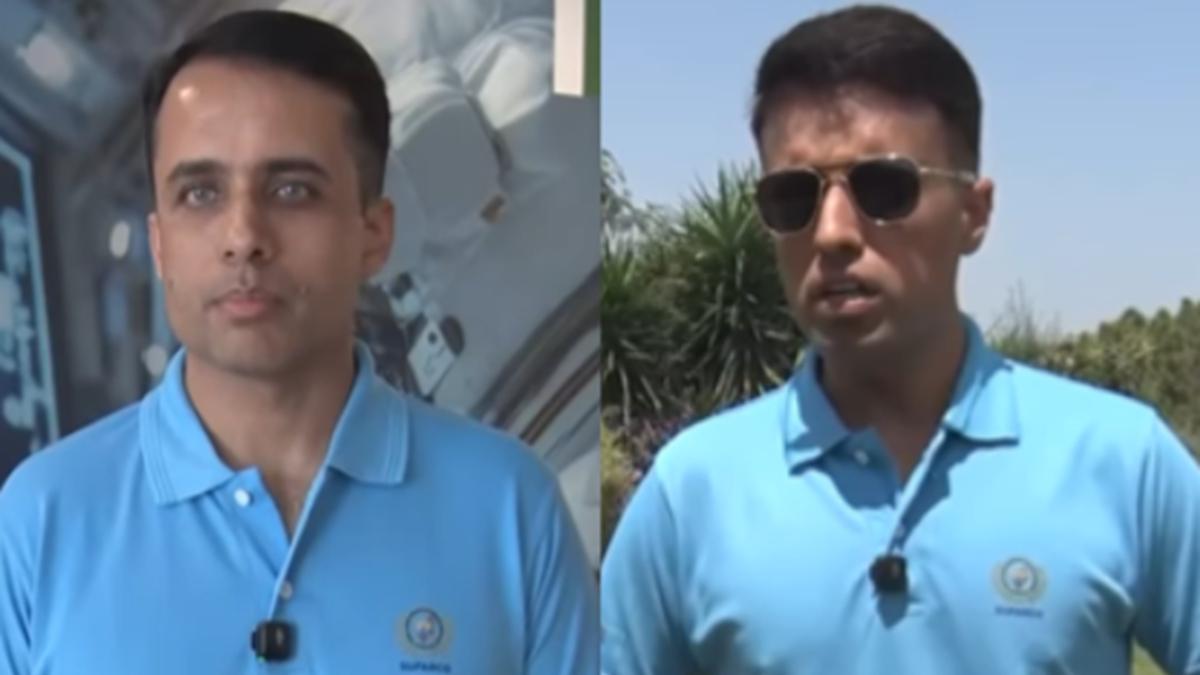
Reports suggesting that two Pakistani nationals could become China’s first foreign astronauts have sparked renewed discussion about shifting dynamics in regional space cooperation, particularly in relation to India’s Gaganyaan human spaceflight programme. While no official confirmation has emerged from either the China National Space Administration (CNSA) or Pakistan’s Space and Upper Atmosphere Research Commission (SUPARCO), the speculation follows years of growing collaboration between Beijing and Islamabad in space technology and satellite development.
The idea of Pakistani astronauts flying aboard Chinese spacecraft would represent a notable development in Asia’s evolving space landscape, where India has long positioned itself as a regional leader through its indigenous Gaganyaan mission aimed at sending Indian astronauts to low Earth orbit by 2026. Any advancement in Pakistan’s human spaceflight capabilities, especially through partnership with China, would inevitably draw comparisons and analysis regarding strategic implications for the subcontinent.
China has progressively expanded its international engagement in human spaceflight, most notably by inviting foreign astronauts to participate in missions to its Tiangong space station. In 2022, China announced plans to welcome foreign payload specialists and astronauts from allied nations, framing the initiative as part of its vision for inclusive and peaceful utilization of space. This openness has fueled speculation about potential candidates from Pakistan, a longstanding ally with deepening ties in defense, infrastructure, and space technology.
Verified Background on China-Pakistan Space Cooperation
Official records confirm that China and Pakistan have maintained a structured partnership in space-related activities for over a decade. In 2010, the two countries signed a framework agreement on cooperation in the peaceful uses of outer space, which has since been renewed and expanded through subsequent memoranda of understanding. These agreements cover areas including satellite remote sensing, navigation, communications, and space science.
One of the most tangible outcomes of this collaboration is the Pakistan Remote Sensing Satellite (PRSS-1) system, launched in 2018 aboard a Chinese Long March 2C rocket from the Jiuquan Satellite Launch Centre. PRSS-1, equipped with electro-optical and infrared payloads, was developed jointly by Chinese and Pakistani engineers and marked Pakistan’s first optical remote sensing satellite. A second satellite, PakTES-1A, was launched alongside it as a companion experimental satellite.
Further strengthening the alliance, China assisted Pakistan in launching the Pakistan Multi-Mission Satellite (PakSat-MM1) in 2022, enhancing the country’s communications and broadcasting capabilities. These projects have been frequently cited by officials from both nations as examples of mutually beneficial technological exchange under the broader China-Pakistan Economic Corridor (CPEC) initiative.
China’s Human Spaceflight Outreach and Selection Precedents
China’s efforts to internationalize its human spaceflight programme gained clarity in June 2022, when the China Manned Space Agency (CMSA) issued an open call for applications from foreign astronauts to participate in future missions to the Tiangong space station. The announcement specified that candidates would undergo joint selection and training with Chinese astronauts, with an emphasis on scientific expertise and engineering backgrounds.
While the initial focus appeared to target scientists from developing nations involved in collaborative experiments, CMSA has not publicly disclosed the nationalities of any selected foreign candidates as of early 2026. The agency has emphasized that all participants must meet stringent physical, psychological, and technical standards comparable to those of Chinese taikonauts.
China has previously hosted international astronauts for training and familiarization visits. In 2016, European Space Agency (ESA) astronauts Samantha Cristoforetti and Matthias Maurer underwent sea survival training alongside Chinese astronauts in Shandong province. More recently, in 2023, astronauts from France, Germany, and Italy participated in joint physiological research campaigns related to long-duration spaceflight, though none have yet flown to Tiangong as crew members.
Pakistan’s Domestic Space Ambitions and Constraints
Pakistan’s national space agency, SUPARCO, has outlined ambitions to develop indigenous satellite launch capability by 2040, but currently lacks the infrastructure for human spaceflight. The organization’s recent strategic plans emphasize Earth observation, satellite communications, and capacity building through international partnerships rather than independent crewed missions.

Despite periodic expressions of interest in sending a Pakistani astronaut to space—most notably during public statements by former SUPARCO chairmen in the 2010s—no concrete programme has been funded or implemented domestically. Analysts note that financial constraints, technological gaps, and competing national priorities have historically limited progress toward human spaceflight goals.
partnership with China offers a plausible pathway for Pakistan to achieve near-term human spaceflight milestones without requiring massive upfront investment in launch systems, life support, or astronaut training facilities. Such an arrangement would mirror arrangements China has explored with other partners, including discussions with Thailand and Indonesia regarding potential participation in Tiangong missions.
Contrast with India’s Gaganyaan Programme
India’s Gaganyaan mission, developed by the Indian Space Research Organisation (ISRO), remains the most advanced indigenous human spaceflight effort in South Asia. Designed to carry a crew of two or three astronauts to low Earth orbit for up to seven days, Gaganyaan has undergone extensive ground testing, including uncrewed orbital flights of the Gaganyaan spacecraft in 2022, and 2023.
In October 2024, ISRO successfully conducted the first uncrewed test flight of the Gaganyaan crew module, validating critical systems such as heat shielding, parachute deployment, and recovery procedures. A second uncrewed flight is scheduled for mid-2025, with the first crewed mission currently targeting late 2026, pending successful completion of all pre-flight milestones.
The four Indian Air Force test pilots selected for Gaganyaan training in 2019—including Group Captain Shubhanshu Shukla, who later flew on Axiom Mission 4 to the International Space Station in July 2025—have undergone rigorous preparation in Russia and India, including centrifuge training, simulations, and survival exercises. Shukla’s spaceflight made him the second Indian to reach orbit after Rakesh Sharma in 1984, though his mission was privately arranged via Axiom Space rather than through ISRO.
Should Pakistan send astronauts to Tiangong before India launches its first crewed Gaganyaan mission, it would mark a symbolic shift in regional perceptions, even if the technological origins of the capability differ significantly. However, experts caution against equating participation in another nation’s programme with independent spaceflight capacity, noting that true autonomy requires end-to-end control over launch vehicles, spacecraft, mission control, and astronaut development.
Stakeholder Perspectives and Regional Implications
From a geopolitical standpoint, any deepening of Sino-Pakistani space ties is likely to be monitored closely by India, which has expressed concerns about the dual-use potential of space technologies and the militarization of outer space. New Delhi has consistently advocated for transparency and confidence-building measures in space activities, particularly amid reports of Chinese anti-satellite weapon testing and the expansion of its BeiDou navigation system into regional markets.
Pakistani officials, meanwhile, have framed space cooperation with China as a means of bridging technological gaps and enhancing national security through improved surveillance and communication capabilities. Civilian applications—such as disaster monitoring, agricultural planning, and urban development—are frequently highlighted in public statements as key benefits of existing satellite programmes.
International observers note that while human spaceflight captures public imagination, the majority of Sino-Pakistani space collaboration remains focused on practical, Earth-oriented applications. The launch of advanced Earth observation satellites with higher resolution and faster revisit rates continues to be a priority for both sides, particularly for monitoring climate change impacts and managing natural disasters in the Indus Basin.
Official Updates and Next Steps
As of April 2026, neither CMSA nor SUPARCO has issued an official announcement regarding the selection or training of Pakistani astronauts for future Tiangong missions. The most recent public engagement between the two agencies occurred in March 2026, during a bilateral forum on space technology held in Islamabad, where discussions centered on satellite data sharing, joint research in space weather, and capacity-building workshops for young scientists.
Prospective observers should monitor official channels for any future updates, including press releases from the China Manned Space Agency website (cnsa.gov.cn) and SUPARCO’s official portal (suparco.gov.pk). The United Nations Office for Outer Space Affairs (UNOOSA) maintains a register of international space cooperation agreements that may provide further insight into bilateral arrangements.
Until verifiable confirmation emerges, claims about Pakistani astronauts preparing for flight aboard Chinese spacecraft remain unverified speculation. Readers are encouraged to rely on authoritative sources and avoid amplifying unconfirmed reports that could contribute to misinformation in a sensitive strategic domain.
If you have insights or observations about developments in Asian space cooperation, we welcome your thoughts in the comments below. Please share this article with others interested in global affairs, science and technology, and international relations to help foster informed discussion.
Related reading
- Missing Israeli Mother and Daughter Found Safe on Bus in Argentina After International Search
- NC Tourism Spending Reaches Record $37.2 Billion in 2025 Amid Hurricane Helene Recovery
- Iga Swiatek Climbs to World No. 5 and Breaks Historic Clay-Court Record (time.news)
- NASA Returns Air Show to Kennedy Space Center with Max Power (newsdirectory3.com)