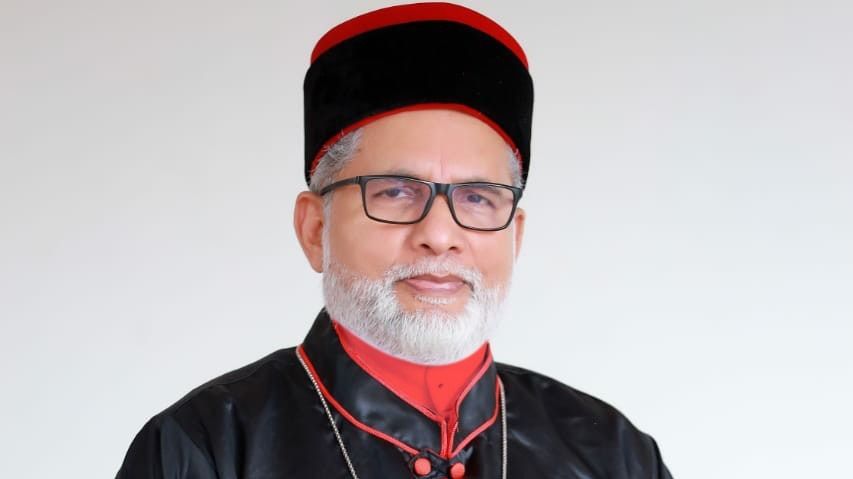
A deepening rift between the Bharatiya Janata Party (BJP) and the Catholic Church hierarchy in Kerala has reached a critical point, as religious leaders push back against what they describe as a tone of intimidation. The tension escalated following public attacks by party leaders P.C. George and his son, Shone George, sparking a broader debate over the Church’s role in the political sphere.
The conflict intensified on Monday, April 14, 2026, when the Pala bishop defended the Church’s right to maintain a political stand. Bishop Mar Joseph Kallarangatt stated that a “voice of threat” is unacceptable, responding to abusive remarks directed at Kanjirappally Bishop Mar Jose Pulickal and a scathing attack on Deepika, a Malayalam daily newspaper run by the Church via The Fresh Indian Express.
Addressing the faithful at the Jaigiri Christuraj Church in Thottuva, near Kuravilangad, Bishop Kallarangatt emphasized that those working in the public sphere must maintain decorum. He asserted that We see inappropriate for public figures to speak disrespectfully against religious leaders and that the sentiments of believers must be respected. According to the Bishop, efforts to instill fear or use intimidation will not be effective via The New Indian Express.
The Escalation of Political Tensions in Kerala
The current schism is rooted in a series of verbal confrontations involving the George family and the Church hierarchy. The controversy has reportedly created internal confusion within the BJP regarding the potential political repercussions of these attacks. The friction centers on the boundary between political criticism and the perceived insult of religious institutions and their leadership.
The remarks by P.C. George and Shone George have been viewed by Church leadership as a breach of public decorum. By defending the Church’s right to take a political stand, Bishop Kallarangatt has signaled that the hierarchy will not be silenced by aggressive rhetoric. This development highlights the complex relationship between the Syro-Malabar Church and political entities in Kerala, where religious institutions often wield significant social and political influence.
Efforts Toward Reconciliation
Amidst the growing tension, some attempts at mediation have emerged. Shone George recently met with Mar Raphael Thattil at the Syro-Malabar Church headquarters in Kochi via The Statesman. Mar Raphael Thattil serves as the Major Archbishop of the Syro-Malabar Church and the Metropolitan Archbishop of Ernakulam-Angamaly, having been installed in January 2024 via Wikipedia.
Following this meeting, Shone George defended the BJP and claimed that he has always maintained close ties with the Church. He further clarified his position by stating that his criticisms were directed at the newspaper, Deepika, rather than the Church itself via The Statesman. He also recalled his father’s previous support for the Bishop during a 2021 controversy, attempting to frame the current friction as a misunderstanding rather than a systemic conflict.
Stakeholders and the Impact of the Rift
The conflict involves several key stakeholders, each with different interests in the outcome of the dispute:
- The Catholic Church Hierarchy: Represented by leaders like Bishop Kallarangatt and Mar Raphael Thattil, the Church seeks to protect the dignity of its leaders and its right to engage in public and political discourse.
- BJP Leadership: The party is navigating the balance between the aggressive rhetoric of some of its members and the necessitate to maintain a broad appeal among the Catholic electorate in Kerala.
- The Faithful: The believers in the region are caught between their religious affiliations and their political leanings, with the Bishop specifically urging for the respect of their sentiments.
- Media Institutions: The attack on Deepika brings the issue of press freedom and the role of Church-run media into the spotlight.
The impact of this rift extends beyond mere verbal spats. In a state like Kerala, where community ties are deeply intertwined with political identity, a breakdown in relations between a major religious body and a national political party can influence voter behavior and social harmony. The “voice of threat” mentioned by Bishop Kallarangatt suggests a perceived shift from political disagreement to personal and institutional intimidation.
Understanding the Syro-Malabar Church’s Position
The Syro-Malabar Church is the largest Eastern Catholic Church and maintains a significant presence in Kerala. Its leadership, currently headed by Major Archbishop Mar Raphael Thattil, often finds itself at the intersection of social advocacy and political navigation. The Church’s insistence on “decorum” in public speech reflects a desire to maintain a level of respect that allows for critical engagement without descending into abuse.
The defense of the Church’s right to a political stand is a crucial point of contention. While some argue that religious institutions should remain neutral, the hierarchy in Pala argues that their role in public activities necessitates the ability to express opinions on matters affecting their community, provided such expressions are handled with respect.
Key Takeaways of the Conflict
- Core Conflict: A dispute between BJP leaders (P.C. George and Shone George) and the Catholic Church hierarchy over abusive remarks and political stances.
- Church Response: Pala Bishop Mar Joseph Kallarangatt has explicitly rejected the use of intimidation and defended the Church’s right to political engagement.
- Point of Contention: Specific attacks were directed at Kanjirappally Bishop Mar Jose Pulickal and the Church-run daily Deepika.
- Attempted Resolution: Shone George met with Major Archbishop Mar Raphael Thattil to clarify that his criticisms were aimed at the press, not the Church.
- Political Risk: The BJP is facing internal confusion over the potential repercussions of these attacks on its political standing in Kerala.
As the situation evolves, the focus remains on whether the BJP will formally distance itself from the remarks of its leaders or if the reconciliation efforts by Shone George will be sufficient to mend the relationship with the Church hierarchy. There is currently no scheduled official hearing or public forum to resolve the dispute, but the reactions from the Pala diocese suggest that the Church will remain firm in its demand for respect and decorum.
We invite our readers to share their perspectives on the intersection of religious leadership and political discourse in the comments section below.