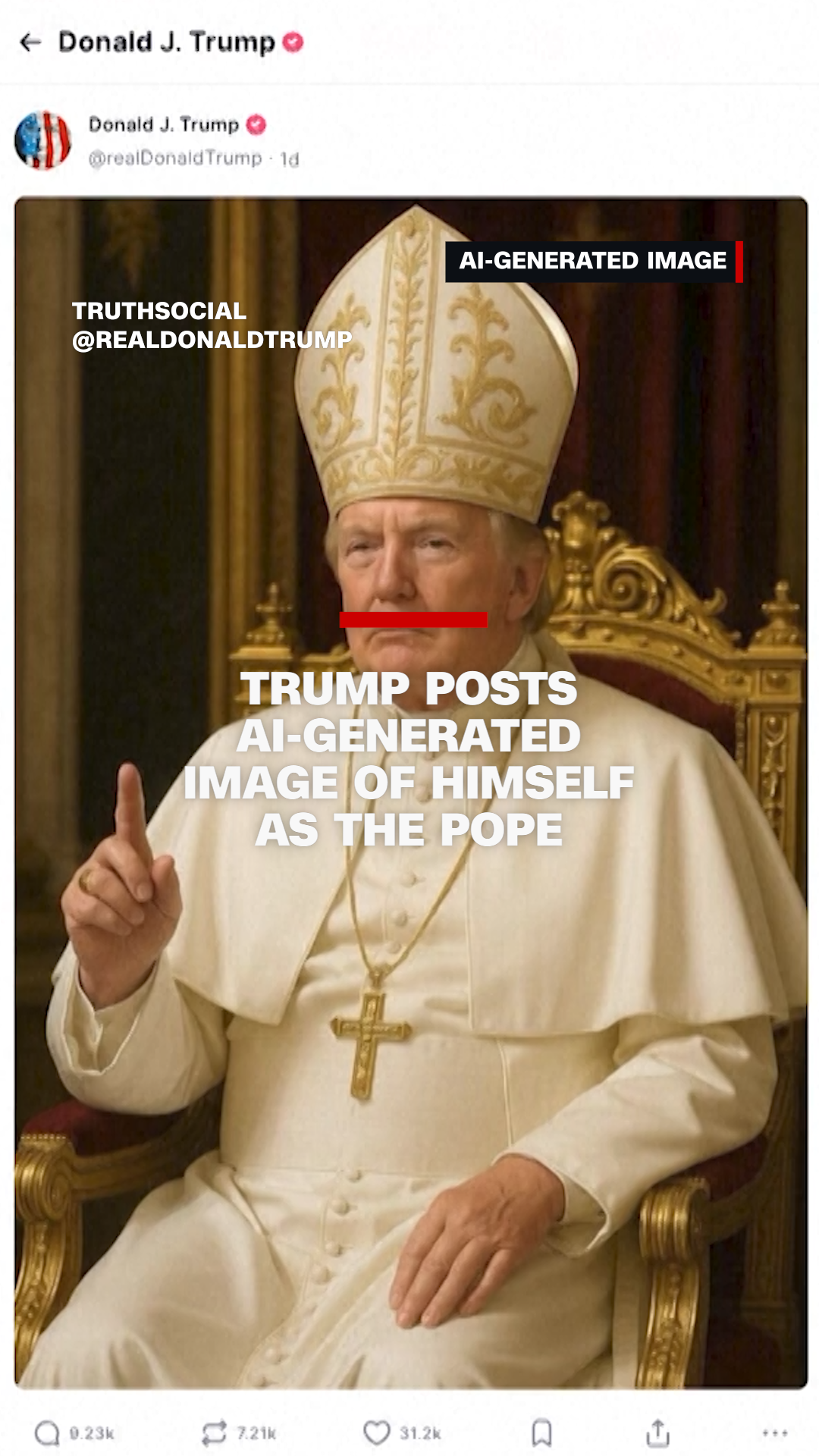
U.S. President Donald Trump has sparked a significant controversy following the publication of an AI-generated image of himself depicted as a Christ-like figure. The image, which was shared on Sunday and later removed, triggered a wave of criticism from across the political spectrum, including from some of his most dedicated religious supporters who viewed the depiction as a violation of sacred norms.
The incident has intensified an ongoing feud between the President and Pope Leo, highlighting a growing tension between the administration’s leverage of artificial intelligence for imagery and the sensitivities of global religious institutions. While the image was eventually deleted, the backlash underscores the volatile intersection of digital technology, political branding, and faith in the modern era.
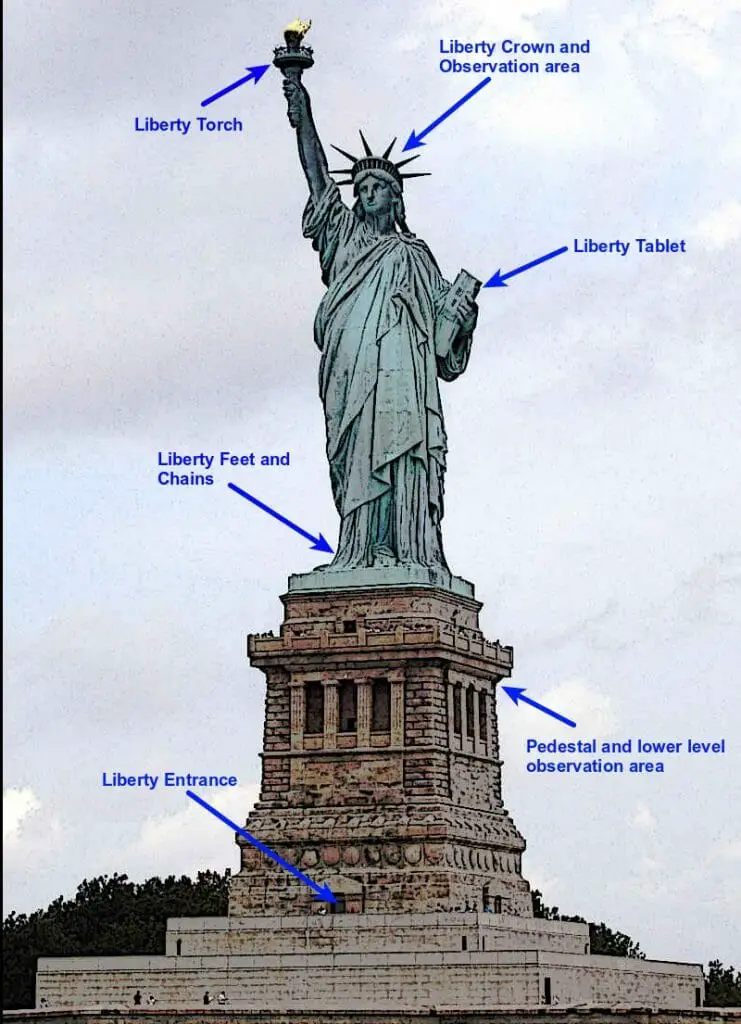
The AI-generated image portrayed President Trump wearing billowy white and red robes, placing his hand on the forehead of a man in a hospital bed. According to reports, the scene included a divine orb of light in the President’s other hand, with a background featuring an American flag, the Statue of Liberty, soaring bald eagles, and fighter jets streaking across a cloudy sky. Other figures in the image included a kneeling nurse, a woman in prayer, and a soldier looking up at the President with reverence.
The post was initially shared on the President’s Truth Social account on Sunday night but was deleted by Monday morning, April 14, 2026, following a firestorm of condemnation. Despite the removal of the content, reports indicate that the President has not apologized or backed down from his conflict with Pope Leo NBC News.
Accusations of Blasphemy from Conservative Supporters
The reaction was particularly sharp among conservative Protestant Christians, a core segment of the President’s base. Many expressed outrage, labeling the AI-generated depiction as “blasphemy.” The speed of the response on social media platforms like X indicated a deep-seated discomfort with the appropriation of religious iconography for political purposes.
Megan Basham, a prominent conservative Protestant Christian writer and commentator, slammed the post as “OUTRAGEOUS blasphemy.” Basham questioned whether the President was attempting to be humorous or was “under the influence of some substance,” stating that he needed to ask for forgiveness from both the American people and God Reuters.
Similarly, conservative political commentator Cam Higby expressed a refusal to defend the imagery despite his general support for the President. Higby stated on X that while he spends eight hours a day defending Trump, he “will not defend blasphemy,” urging the immediate removal of the post NBC News.
Riley Gaines, a conservative podcaster and former collegiate swimmer, also questioned the intent behind the post. Gaines wrote that she could not understand why the image was shared, asking if the President was “looking for a response” or if he “actually think[s] this.” She concluded that “a little humility would serve him well” and reminded followers that “God shall not be mocked” Modern York Post.
The Role of AI in Political Imagery
This incident is part of a broader trend where artificial intelligence is used to create hyper-stylized or idealized versions of political leaders. By utilizing AI, campaigns and individuals can generate imagery that evokes specific emotional responses or aligns a leader with powerful cultural and religious symbols. However, as seen in this case, the use of AI to depict a living political figure as a deity can lead to severe cultural and religious friction.
The imagery in the deleted post combined nationalistic symbols—such as fighter jets and the Statue of Liberty—with religious motifs to create a narrative of divine leadership and healing. The resulting “firestorm of criticism” suggests that We find clear boundaries regarding the use of AI in political communication, particularly when those images intersect with deeply held religious beliefs New York Post.
Key Details of the Controversial Image
| Category | Elements Depicted |
|---|---|
| President’s Attire | White robe with a red sash |
| Action | Hand on the forehead of a bedridden man; holding an orb of light |
| Supporting Figures | Kneeling nurse, woman in prayer, soldier in Army camouflage |
| National Symbols | American flag, Statue of Liberty, bald eagles, fighter jets |
Broader Implications and Next Steps
The removal of the image suggests a tactical retreat in the face of intense pressure from the President’s own supporters, but the underlying tension with the Vatican remains. The feud with Pope Leo continues to be a point of contention, with the AI incident serving as a flashpoint for the broader clash between the President’s public image and traditional religious authority.
As AI tools become more accessible, the potential for further provocative imagery increases. This event serves as a case study in the risks of “digital blasphemy” and the potential for AI to alienate even the most loyal political constituencies when religious boundaries are crossed.
There are currently no scheduled official apologies or further statements regarding the incident. Observers will be watching for any official response from the Vatican or further indications of how the administration intends to utilize AI in its future communications.
World Today Journal encourages readers to share their perspectives on the use of AI in political messaging in the comments section below.
- Maxence Lacroix Joins Chelsea: Fee, Contract Details, and Tactical Impact
- China’s Head-of-State Diplomacy: Building a Community with a Shared Future for Mankind
- Blanche Confirmation Complicated by Trump IRS Lawsuit Settlement Scrutiny (newsdirectory3.com)
- Tariff vs. Price Floor: What Trump's New Solar Rule Does (daybreakwire.com)