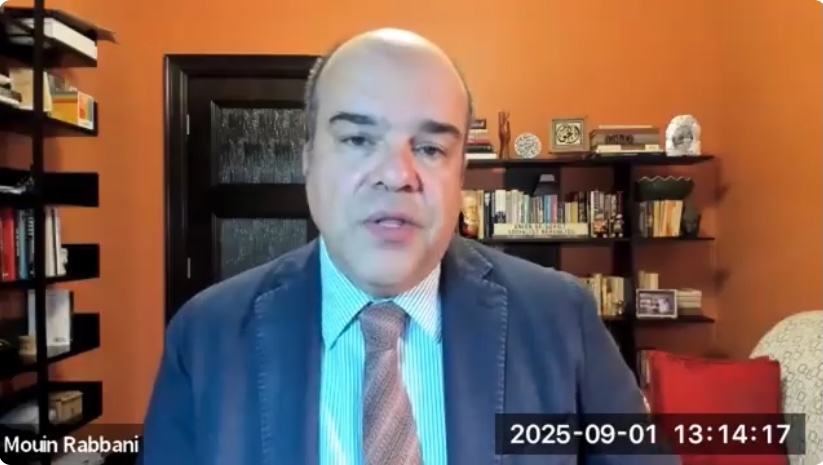
The Shifting Sands of Palestinian Mobilization: A Conversation with Mouin Rabbani
The situation in Palestine is undergoing a profound transformation. Recent events, especially in Gaza and the West Bank, aren’t simply a continuation of existing conflict – they signal a potential reshaping of Palestinian political life and resistance. A recent, insightful conversation between Abdelhalim Abdelrahman and Mouin Rabbani explored these critical shifts, raising fundamental questions about the future of Palestinian movements.
Will established structures survive in their current form? Or are we witnessing the emergence of entirely new modes of mobilization, leaving existing organizations as relics of the past? This article delves into the key takeaways from that discussion, offering analysis and context for understanding the evolving landscape.
The Illusion of Ceasefire and the “West Bankification” of Gaza
Rabbani’s analysis cuts through the rhetoric surrounding temporary pauses in violence. he argues there was never a true ceasefire, only fluctuating intensities of Israeli action, strategically managed under US pressure. This maneuvering is now extending to Gaza, with israel implementing strategies mirroring those long employed in the west Bank.
This “West Bankification” of Gaza involves:
* Territorial Fragmentation: Dividing the territory to limit movement and control populations.
* Obstructed Reconstruction: Hindering rebuilding efforts to maintain dependence and instability.
* Impeded Daily Life: Creating conditions that incentivize forced migration.
Interestingly, Rabbani points out that, despite the current escalation, the Gaza Strip has historically experienced less internal physical fragmentation than the West Bank over the past two decades. This highlights the distinct, and now converging, strategies being applied to both regions.
The Futility of Collaboration and the failure of the PA
A central tenet of Rabbani’s argument is the impossibility of achieving liberation through collaboration with the occupation. “You can’t remove an occupation by collaborating with it,” he stated plainly. “When you collaborate with an occupation, you deepen it.” This principle, he argues, is universally applicable and holds true for Palestine.
Furthermore, Rabbani underscored the Palestinian Authority’s (PA) failure to adequately protect residents of the West Bank. This lack of protection further erodes trust and fuels disillusionment with existing political structures.
Rebuilding from the Ground Up: Collective Strategy Over Individual Leaders
Rabbani advocates for a shift in focus from individual personalities to the rebuilding of inclusive national institutions. While figures like Marwan Barghouti often garner attention, he believes the emphasis should be on developing collective strategies and fostering broad-based participation. This approach is crucial for lasting and effective resistance.
A Turning Tide in western Public Opinion?
A surprising, yet significant, advancement Rabbani highlighted is the dramatic shift in Western – particularly American and British – public opinion regarding Palestine since 2024. This change is largely attributed to the tireless work of grassroots advocacy movements.
However, he cautions against overstating this shift. True liberation, he insists, must be achieved by Palestinians themselves. For those in the diaspora, the priority should be information-sharing and solidifying Palestine’s presence in the global consciousness.
Rabbani even noted a glimmer of hope in the unexpected: “What gives me hope is seeing some of these politicians,who you know are Israel flunkies … now getting up in public and saying,’I will no longer accept a penny from AIPAC.’ … When you have those kinds of people distancing themselves from Israel in public and doing so insincerely, because they feel they have to do that to survive-that’s what gives me hope.” This signals a growing awareness, even among those traditionally aligned with Israel, of the shifting political landscape.
The Path Forward: Global Consciousness and Sustained Advocacy
Ultimately, Rabbani believes the key to lasting change lies in making Palestine a universally recognized issue. “The key issue is to make sure that Palestine becomes an issue in every nook and cranny around the world,so that it solidifies in the global collective consciousness.” This requires sustained advocacy, education, and a commitment to amplifying Palestinian voices.
Further Exploration:
For those seeking deeper insights, I highly reccommend engaging with the work of Abdelhalim Abdelrahman and Mouin Rabbani directly:
* Abdelhalim Abdelrahman: Substack & YouTube Podcast
* Mouin Rabbani: Substack & [Middle East Monitor Contributions](
Related reading