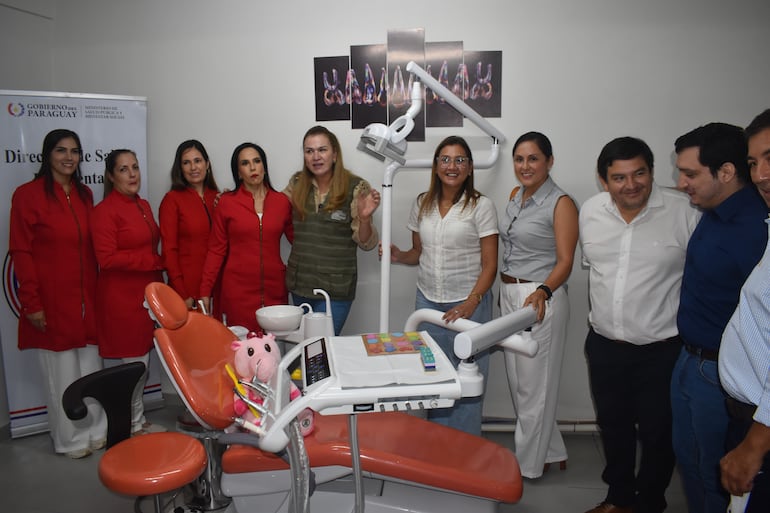
Ayolas, Paraguay – A recent visit by Minister of Public Health, Dr. María Teresa Barán, to the Hospital Integrado de Ayolas (IPS-MSPyBS) highlighted improvements in the region’s healthcare infrastructure and ongoing efforts to address critical medical needs, including access to oncology medications and the urgent need for organ donation. The visit coincided with the inauguration of a new inclusive dental chair, marking a commitment to accessible healthcare for all citizens. While acknowledging recent challenges in oncology drug availability, Minister Barán emphasized that the situation is actively being rectified and underscored the importance of organ donation to save lives, particularly for patients like two-year-old Bianca Sofía Balbuena Roldán, who is awaiting a heart transplant.
The Hospital Integrado de Ayolas is increasingly playing a vital role in providing specialized care, particularly intensive care, to a wider population. According to officials, the hospital’s Intensive Care Unit (ICU) is now operating at 100% capacity, with all six beds fully functional. This represents a significant improvement, allowing the facility to treat critically ill patients who previously might have required transfer to other medical centers. The expansion of ICU capacity is a direct result of collaborative efforts between the Ministry of Public Health and Social Welfare (MSPBS) and the Social Security Institute (IPS), demonstrating a commitment to integrated healthcare solutions in Paraguay.
Addressing Oncology Medication Shortages
Concerns regarding the availability of oncology medications were recently raised by Deputy Minister of Health, Dr. Saúl Recalde. However, Minister Barán assured the public that steps are being taken to resolve the issue. Dr. Jabibi Noguera, director of the National Cancer Institute (Incan), is currently in discussions with pharmaceutical suppliers to secure a consistent supply of essential drugs. These efforts have already resulted in the procurement of four critical medications for cancer treatment, with ongoing work to address further needs. The Ministry recognizes the urgency of these needs for oncology patients and is committed to ensuring timely access to treatment. This commitment comes amidst reports from patients and advocacy groups regarding difficulties in obtaining necessary medications, highlighting the sensitivity of the situation and the importance of transparent communication.
The situation underscores the broader challenges facing healthcare systems in Paraguay and globally, where supply chain disruptions and budgetary constraints can impact access to vital medications. The Ministry’s proactive engagement with suppliers and its focus on securing essential drugs are crucial steps in mitigating these challenges. The ongoing dialogue with Incan, the national cancer institute, is also vital for coordinating efforts and ensuring that treatment protocols are aligned with available resources.
Expanding Healthcare Capacity at Hospital Integrado de Ayolas
Beyond addressing medication shortages, the visit to Hospital Integrado de Ayolas showcased significant investments in infrastructure and equipment. The inauguration of the 20th inclusive dental chair nationwide, and the first in the Misiones department, demonstrates a commitment to providing accessible dental care for individuals with disabilities. The hospital has incorporated new, high-generation medical equipment to strengthen overall patient care, including enhancements to the dialysis system for patients in the ICU. These improvements are designed to optimize resource utilization and provide a higher standard of care for the local population.
The integration of IPS and MSP hospitals, as directed by President Santiago Peña, is a key component of this broader strategy. This collaborative approach aims to streamline services, reduce redundancies, and ensure that citizens have access to a wider range of healthcare options. The Hospital Integrado de Ayolas serves as a model for this integrated system, benefiting both insured and uninsured patients by providing equitable access to quality healthcare services. This model is particularly important in a country where access to healthcare can vary significantly based on socioeconomic status and geographic location.
The Urgent Need for Organ Donation: Bianca’s Story
Minister Barán also used the visit to raise awareness about the critical need for organ donation in Paraguay. She highlighted the case of Bianca Sofía Balbuena Roldán, a two-year-old girl who has been on the waiting list for a heart transplant since 2023. Bianca’s case serves as a poignant reminder of the life-saving potential of organ donation and the devastating consequences of its scarcity. Currently, Bianca is awaiting a compatible heart, and the hospital has the technical capacity to perform the transplant when a suitable donor is found.
“If Bianca cannot be operated on today, it is since we do not have a heart,” Minister Barán stated, emphasizing the reliance on donor availability. She appealed to the public to consider organ donation, noting that while kidney donation can often come from a family member, a heart transplant requires a deceased donor. Raising awareness about organ donation is crucial to increasing the number of potential donors and saving lives. According to the Organización Nacional de Trasplantes (ONT) of Spain, which serves as a model for organ donation programs globally, public awareness campaigns and streamlined donation processes are key to increasing donor rates. The ONT website provides detailed information on organ donation and transplantation.
Paraguay’s Healthcare System: A Focus on Integration
The efforts at Hospital Integrado de Ayolas reflect a broader trend towards integration within Paraguay’s healthcare system. The collaboration between the MSPBS and IPS aims to optimize resource allocation and improve access to care for all citizens. This integration is particularly important in a country where healthcare access can be unevenly distributed. The Ministry of Public Health and Social Welfare is responsible for overseeing the national healthcare system, while the IPS provides social security benefits, including healthcare, to insured workers. By working together, these two institutions can leverage their resources and expertise to deliver more comprehensive and efficient healthcare services.
The success of this integrated model will depend on continued investment in infrastructure, equipment, and personnel, as well as ongoing efforts to address challenges such as medication shortages and the need for increased organ donation. The Ministry’s commitment to these priorities is essential for ensuring that all Paraguayans have access to the quality healthcare they deserve. The ongoing improvements at Hospital Integrado de Ayolas serve as a positive example of what can be achieved through collaboration and a focus on patient-centered care.
The Ministry of Health continues to monitor the availability of essential medications and is working to strengthen supply chains to prevent future shortages. The focus on preventative care and early detection of diseases is also a key component of the Ministry’s strategy. By investing in these areas, Paraguay can improve the health and well-being of its citizens and reduce the burden on the healthcare system. The integration of technology and data analytics is also being explored to improve healthcare delivery and optimize resource allocation.
Looking ahead, the Ministry of Health will continue to prioritize the expansion of healthcare access, the improvement of quality of care, and the strengthening of the healthcare system as a whole. The ongoing collaboration between the MSPBS and IPS, as exemplified by the success at Hospital Integrado de Ayolas, will be crucial to achieving these goals. The Ministry will also continue to engage with stakeholders, including healthcare professionals, patient advocacy groups, and the private sector, to ensure that the healthcare system meets the evolving needs of the Paraguayan population.
The next key development to watch will be the Ministry’s report on the progress of oncology medication procurement, expected in the coming weeks. Continued public awareness campaigns regarding organ donation are also planned, aiming to increase the number of registered donors and provide hope for patients like Bianca Sofía Balbuena Roldán. The ongoing success of the integrated healthcare model at Hospital Integrado de Ayolas will serve as a benchmark for similar initiatives across the country.
What are your thoughts on the improvements to healthcare access in Paraguay? Share your comments below and help us continue the conversation.
Keep reading
- Steelers Sign Linebacker Elandon Roberts to One-Year Contract
- How the UK Royal Mint Turns Old Phones Into Pure Gold and Luxury Jewelry
- Free Cancer Wellness & Exercise Program: Rebuild Strength and Health (archyworldys.com)
- The Office Star Lucy Davis Announces Incurable Breast Cancer Diagnosis (world-today-news.com)