
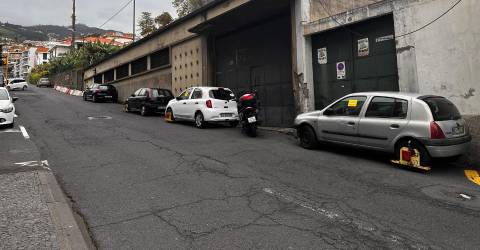
Authorities in Funchal have intensified efforts to curb chronic traffic violations, focusing on a localized but persistent issue of illegal parking. In a targeted operation conducted early Tuesday afternoon, the Polícia de Segurança Pública (PSP) carried out a sweeping enforcement action at the beginning of Rua do Comboio, resulting in multiple fines and the immobilization of several vehicles.
The operation targeted a stretch of road known for habitual parking irregularities. According to reports on the enforcement action, the PSP not only issued monetary penalties but also deployed vehicle clamps to prevent the movement of cars parked in violation of local traffic codes. This escalation in enforcement suggests a shift toward more aggressive deterrents to ensure the fluidity of traffic in the area.
For residents and business owners in Funchal, parking enforcement on Rua do Comboio represents a broader challenge regarding urban mobility and the balance between accessibility and regulation. The street has long been characterized by a pattern of irregular parking throughout the week, often obstructing the flow of traffic and complicating access for emergency services and delivery logistics.
Addressing Chronic Traffic Violations in Funchal
The decision to deploy clamps alongside traditional fines indicates that standard ticketing has failed to deter drivers from utilizing Rua do Comboio as an unauthorized parking zone. In many urban centers, the transition from fines to vehicle immobilization is a strategic move by law enforcement to reclaim public space and ensure that traffic regulations are viewed as mandatory rather than a “cost of doing business.”
The Polícia de Segurança Pública is tasked with maintaining public order and safety, which includes the management of traffic flow in high-congestion areas. By targeting the beginning of Rua do Comboio, the PSP aims to eliminate bottlenecks that can ripple through the surrounding street network, impacting the efficiency of the city’s transport infrastructure.
Local traffic regulations in Madeira are designed to maintain the structural integrity of the city’s narrow streets, many of which were not built for modern vehicle volumes. When drivers ignore these boundaries, the result is often a cascade of delays that affect not only other motorists but also the local economy by hindering the movement of goods and services.
The Economic and Logistical Impact of Illegal Parking
From a business perspective, illegal parking is more than a regulatory nuisance; We see an economic friction point. When vehicles are parked irregularly on key arteries like Rua do Comboio, the “last mile” of delivery becomes significantly more expensive and time-consuming. Courier services and supply trucks often face delays, which can lead to increased operational costs for local merchants.
the accessibility of commercial zones is paramount for attracting foot traffic. While some drivers may feel that illegal parking provides a shortcut to their destination, the cumulative effect is a degraded urban environment that can discourage visitors from entering congested areas. The current crackdown by the PSP serves as a reminder that urban accessibility relies on collective compliance with the Funchal Municipality traffic guidelines.
Key Implications of the PSP Operation
- Increased Deterrence: The use of clamps provides an immediate, physical consequence for violations, which is generally more effective than delayed mail-in fines.
- Improved Traffic Flow: Clearing the entrance of Rua do Comboio reduces congestion for vehicles entering and exiting the neighborhood.
- Regulatory Reinforcement: The operation signals to the public that habitual “blind spots” in enforcement are being monitored.
Urban Mobility and Future Enforcement
The enforcement action on Rua do Comboio is likely part of a wider strategy to improve urban mobility across Funchal. As the city grows and tourism continues to play a vital role in the local economy, the pressure on existing parking infrastructure increases. The challenge for city planners and law enforcement is to provide adequate parking alternatives while strictly penalizing those who circumvent the rules.
Urban mobility experts often note that when enforcement is sporadic, drivers develop a “calculated risk” mentality. By conducting targeted raids on known hotspots, the PSP is attempting to break this cycle. The effectiveness of these measures will depend on whether the police maintain a consistent presence or if the operation was a one-time event.
For motorists navigating the region, the current climate suggests a lower tolerance for parking deviations. Those operating within Funchal are encouraged to utilize official parking structures and adhere strictly to signage to avoid the financial and logistical burden of vehicle immobilization.
There is currently no scheduled date for a follow-up operation, but local authorities typically monitor traffic flow data following such interventions to determine if further permanent measures, such as increased signage or physical barriers, are required.
World Today Journal encourages readers to share their views on urban parking challenges in the comments section below.