
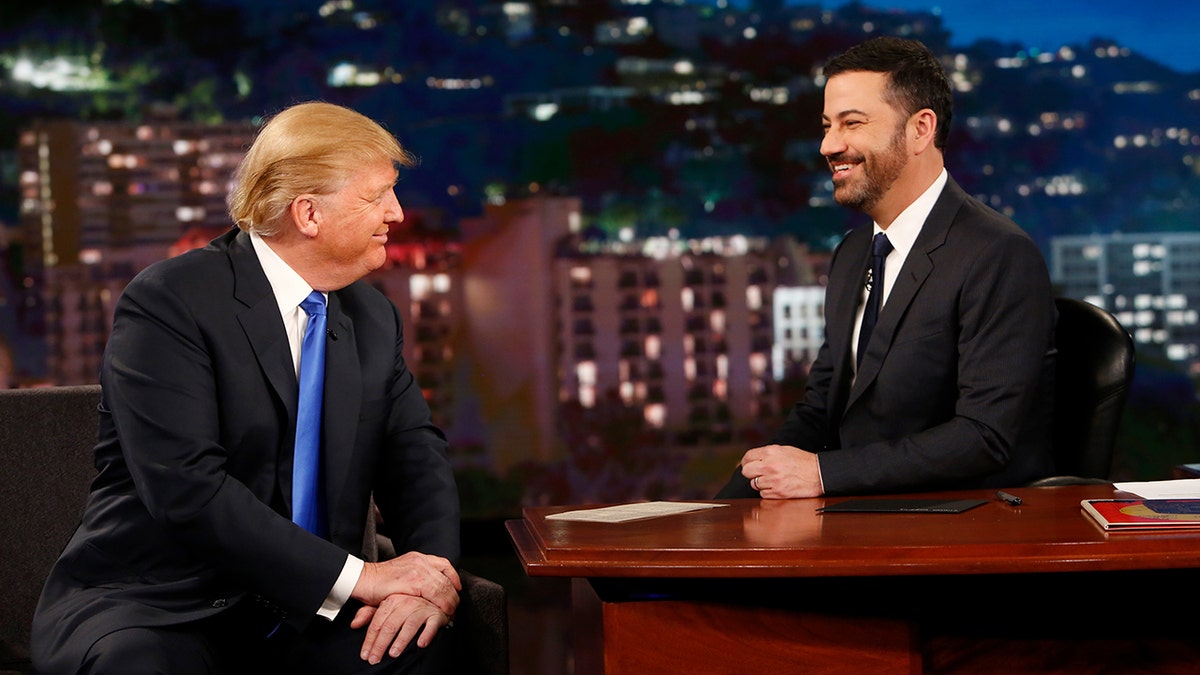
The long-standing feud between Donald Trump and late-night host Jimmy Kimmel has reached a novel flashpoint, as the former president renewed his demands for the host’s termination. The conflict has expanded beyond social media sparring, sparking a wider debate over the boundaries of executive influence and the regulatory powers of the Federal Communications Commission (FCC).
The tension escalated after Trump asserted that ABC better
fire Kimmel, a move that prompted a sharp response from the comedian during his monologue. Kimmel leveraged the moment to highlight Trump’s current standing with the American public, specifically pointing to approval ratings that he characterized as record lows.
This confrontation is not merely a clash of personalities but has raised significant legal questions regarding the stability of broadcast licenses. While some critics have suggested that the FCC could potentially revoke the licenses of stations affiliated with ABC, regulatory officials have moved to distance the agency from political pressure.
As Disney, the parent company of ABC, remains steadfast in its support of Kimmel, the episode underscores a recurring tension between the U.S. Government’s executive branch and the First Amendment protections afforded to media organizations and satirists.
The Demand for Termination and Kimmel’s Response
The current cycle of hostility began when Trump publicly called for ABC to fire Jimmy Kimmel, citing the host’s frequent and caustic critiques of his administration and personal character. Trump has a history of targeting late-night comedians, but the recent insistence that the network better
act on his demands has intensified the scrutiny on ABC’s corporate independence.
During a recent broadcast, Kimmel responded by referencing polling data to frame Trump’s demands as the grievances of an unpopular leader. Kimmel highlighted specific approval ratings, suggesting that the president’s calls for his firing are a distraction from a dwindling base of support. While specific polling numbers fluctuate across different agencies, the host used these figures to argue that the president’s influence over public opinion is at a historic nadir.
The clash has drawn commentary from various political figures. Bill O’Reilly, a former Fox News host, weighed in on the dispute, arguing that the conflict is not simply about the nature of comedy. O’Reilly stated that the situation is not about jokes, it’s about hatred
, suggesting that Kimmel’s approach transcends satire and enters the realm of personal animosity.
Regulatory Pressure and the FCC Broadcast Licenses
A more concerning development in this dispute is the discussion surrounding the potential utilize of the FCC to penalize ABC. Under U.S. Law, broadcast licenses are granted based on the “public interest, convenience, and necessity.” While the FCC has the authority to review or revoke licenses, doing so based on the content of a comedy show would be an unprecedented move in the modern era of American broadcasting.

The possibility of license revocation became a point of public discourse following Trump’s comments. However, FCC Commissioner Brendan Carr has explicitly denied that pressure from the president prompted any formal review of Disney’s or ABC’s licenses. Carr’s denial serves as a critical buffer, as the FCC is designed to operate as an independent regulatory agency to prevent the government from using licensing as a tool for political censorship.
Legal experts note that the threshold for the FCC to revoke a license is exceptionally high. Typically, such actions require evidence of a “lack of candor” with the commission or severe violations of broadcast rules, such as the airing of obscene material or intentional distortion of news. Political satire, protected under the First Amendment, almost never meets the criteria for license revocation according to FCC licensing guidelines.
Disney’s Corporate Stance and First Amendment Implications
Despite the pressure from the White House, Disney has remained firm in its decision to maintain Kimmel on the air. The company’s refusal to terminate the host reflects a broader corporate strategy to protect editorial independence and avoid setting a precedent where executive demands dictate programming decisions.
The standoff highlights a fundamental tension in American media: the balance between corporate interests and the protection of free speech. If a major media conglomerate were to fire a host solely since of pressure from the president, it could be viewed as a surrender of the “editorial firewall” that separates news and entertainment from government interference.
This dynamic is further complicated by the nature of late-night television, which occupies a unique space between journalism and performance art. By utilizing satire, hosts like Kimmel can critique political figures in ways that traditional news reporting cannot, making them frequent targets for leaders who view such criticism as a personal attack rather than a political commentary.
Key Takeaways of the Trump-Kimmel Dispute
- Executive Pressure: Donald Trump has repeatedly called for ABC to fire Jimmy Kimmel following the host’s satirical attacks.
- Regulatory Denial: FCC Commissioner Brendan Carr has denied that any review of ABC’s broadcast licenses was prompted by presidential pressure.
- Corporate Resistance: Disney has stood by Kimmel, maintaining the host’s position despite public demands for his removal.
- Legal Protections: The First Amendment and existing FCC protocols make the revocation of broadcast licenses based on political satire highly unlikely.
- Public Sentiment: Kimmel has used the conflict to highlight Trump’s low approval ratings, framing the president’s anger as a symptom of political weakness.
What This Means for Media Independence
The broader implication of this conflict is the perceived “weaponization” of regulatory agencies. When a sitting or former president suggests that a government body like the FCC should act against a media company because of a specific program, it creates a chilling effect across the industry. Even if the FCC does not act, the mere suggestion that licenses are “up for review” can lead to self-censorship among smaller broadcasters who lack the legal resources of a company like Disney.
the incident illustrates the evolving nature of political communication. Rather than responding to satire with counter-humor or policy arguments, the current trend involves direct attacks on the employment status of the critic. This shift transforms a cultural disagreement into a labor and regulatory issue.
For the global audience, this spat serves as a case study in the resilience of the U.S. Media landscape. The fact that a major network has resisted direct pressure from the executive branch is often cited by free-press advocates as a sign that the institutional checks and balances regarding speech remain functional, even in a highly polarized environment.
Next Steps and Checkpoints
You’ll see currently no scheduled FCC hearings regarding ABC’s licenses, and no formal petitions for revocation have been filed that have gained regulatory traction. The situation remains a conflict of rhetoric rather than a legal proceeding.
Observers will be watching for any formal filings with the FCC or changes in Disney’s corporate communications regarding their talent contracts. The next cycle of national approval polls will likely provide the data that Kimmel continues to use in his critiques of the administration.
World Today Journal encourages readers to share their thoughts on the intersection of political power and media independence in the comments section below.
- Graz: Cyclist Arrested for Sexually Harassing Women
- 3 US States to Execute Inmates on Same Day for First Time Since 2010
- Majority of LPD Marked Cruisers Equipped with Automated License Plate Readers (world-today-news.com)
- Iran Disputes Trump Claims as Strait of Hormuz Traffic Plummets (newsdirectory3.com)