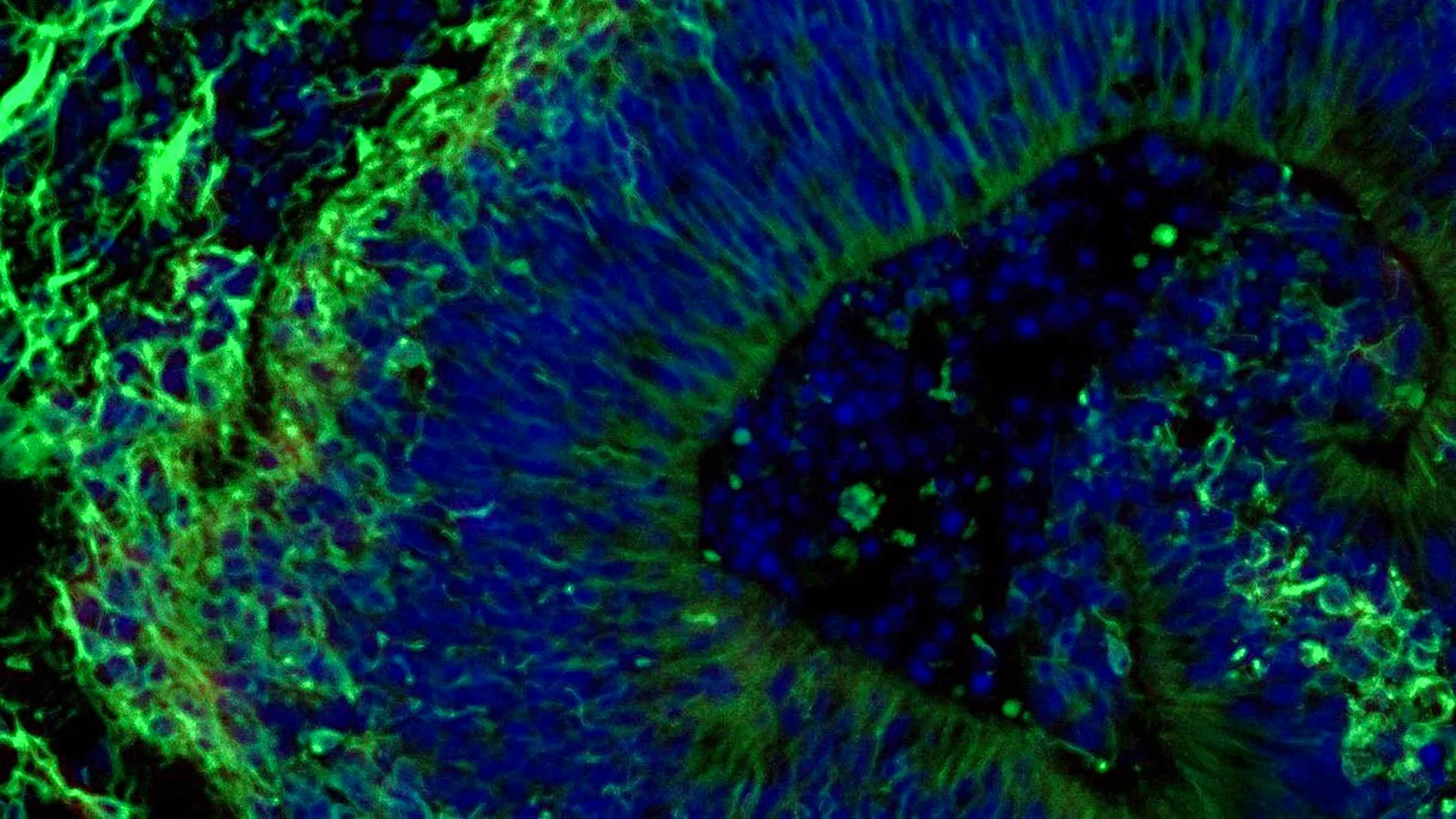
Miniature brain models grown from patients’ cells are offering researchers a fresh avenue for evaluating Alzheimer’s disease treatments and understanding individual drug responses. Scientists utilizing these lab-grown tissue structures, known as organoids, have observed striking differences in how Alzheimer’s-related tissue responds to an antidepressant.
The research explores whether these cellular models can serve as testing grounds for personalized treatments. By culturing cells derived from patients, laboratories can simulate aspects of neurodegeneration in a controlled environment. Beyond observing cellular changes within the tissue itself, investigators are also analyzing particles released by the organoids, which could eventually provide new clues for diagnosing the disease.
How Patient-Derived Brain Organoids Mirror Neural Pathology
Brain organoids are cultivated from cells. In the context of neurodegenerative research, these models allow scientists to study pathological features in human cells.
Recent laboratory evaluations have highlighted that these tissue models do not react uniformly. When exposed to an antidepressant, individual organoid lines display unique cellular responses. This variability reinforces the focus on personalized therapeutic strategies.
Analyzing Secreted Particles for Diagnostic Clues
A key focus of current investigation involves the particles shed by these cultured brain tissues.
By examining these released substances, researchers aim to identify signatures associated with Alzheimer’s pathology. If specific particle profiles can be reliably correlated with disease progression or treatment response, clinicians might one day utilize tests to detect similar biomarkers in living patients.
While brain organoids provide tissue for experimentation, translating these findings into routine clinical care remains a process. Laboratories continue to refine the organoids to better replicate the environment of the human brain.
As investigators gather more data on how patient-specific organoids interact with various compounds, the goal is to establish testing pipelines. Such systems could help clinicians match an Alzheimer’s patient with a medication profile. Researchers continue to publish ongoing findings as validation studies progress.
Readers interested in further developments regarding clinical trials and neuroscience research can monitor official updates provided through scientific institutions and public health databases. Please share your thoughts or questions on this topic in the comments section below.
Keep reading