
The evolution of patient rights in the United States reflects a centuries-long shift from a paternalistic medical model to one defined by individual agency and shared decision-making. While the Declaration of Independence established the foundation for American liberty in 1776, the legal application of those principles to the doctor-patient relationship did not gain significant traction until the early 20th century. Today, as generative artificial intelligence and digital health tools expand access to medical information, the balance of power between clinicians and patients is undergoing a transition that echoes the foundational ideals of self-reliance and bodily autonomy.
The transition toward modern patient rights began with legal challenges to medical authority. In 1905, the Illinois Appellate Court ruled in Pratt v. Davis that a surgeon could not perform a hysterectomy without the patient’s knowledge, establishing that under a free government, citizens maintain the right to determine what is done to their own bodies. This ruling challenged the prevailing American Medical Association (AMA) code of the era, which often prioritized physician authority over patient input. According to legal records, this case served as a critical precursor to the modern legal doctrine of informed consent.
The Legal Evolution of Informed Consent
For decades following the 1905 ruling, the medical establishment maintained a “caring custody” model, often withholding information to avoid distressing patients. It was not until the 1957 case Salgo v. Leland Stanford Jr. University Board of Trustees that a California appellate court formally introduced the term “informed consent,” ruling that a physician’s failure to disclose the risks of a procedure violated the patient’s right to self-determination. This shift mandated that disclosure must be comprehensive, covering both potential risks and benefits.

Further progress occurred in 1972 with Canterbury v. Spence, where a U.S. Court of Appeals ruling emphasized that the standard for disclosure should be based on what a reasonable patient would need to know to make an informed decision, rather than what a physician deemed necessary. This decision solidified the requirement for “plain language” in medical communication, ensuring that patients could meaningfully exercise their right to choose their own care. These legal precedents were essential in moving the medical profession away from the expectation of “prompt obedience” that characterized early 20th-century practice.
Artificial Intelligence and the New Power Dynamics
The rise of generative artificial intelligence is accelerating the democratization of medical knowledge, presenting both opportunities and challenges for patient agency. Recent data from a 2024 KFF Health Tracking Poll indicates that approximately one in three U.S. adults has used generative AI for health-related questions. Furthermore, the 2024 Edelman Trust Barometer reports that 64 percent of respondents believe that individuals who are proficient in using AI tools can perform certain health-related tasks as effectively as, or better than, traditional medical professionals.
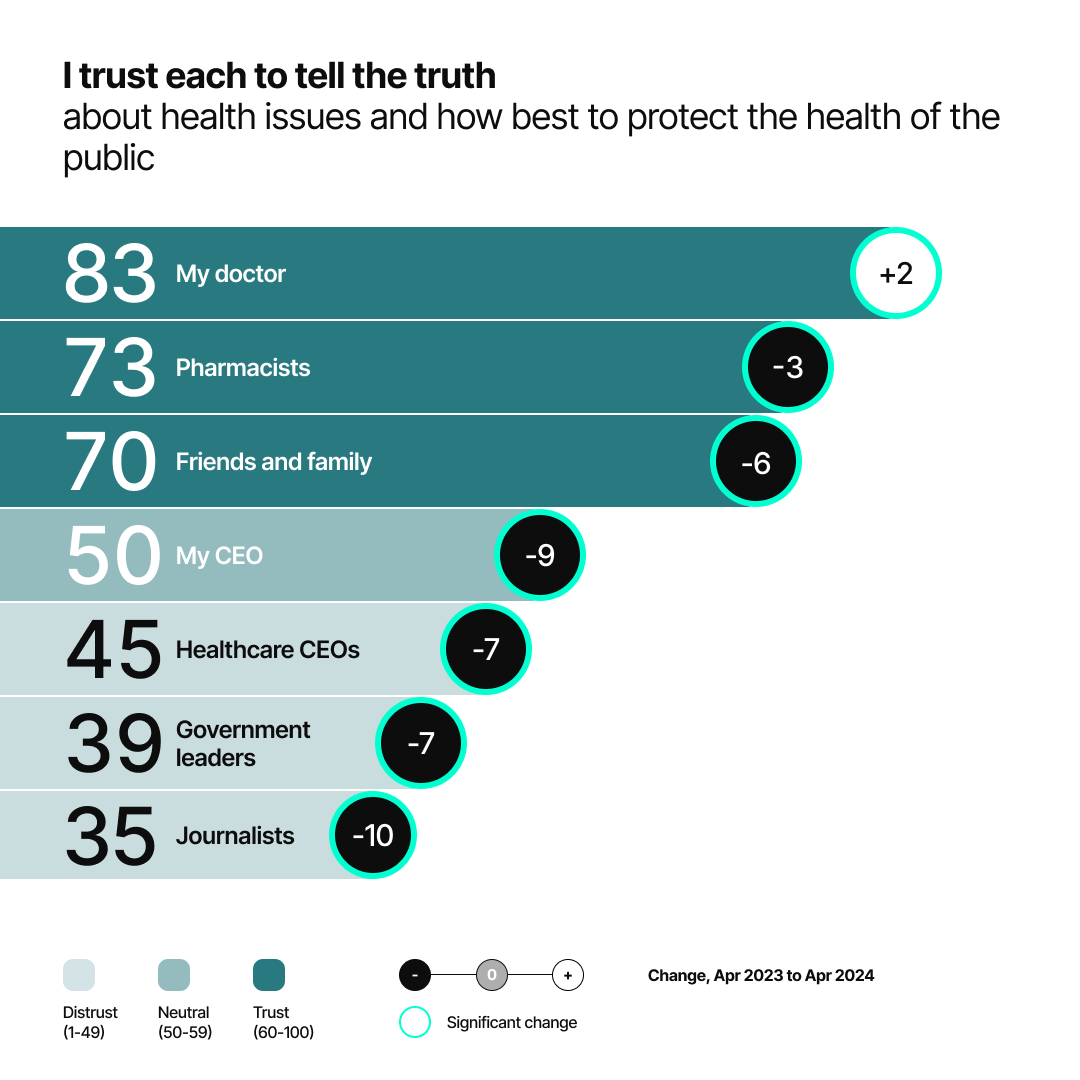
This technological shift has prompted the formation of new advocacy groups focused on digital health literacy. Initiatives such as the Critical AI Health Literacy (CAIHL) project and the CLAIM initiative (Contextual Literacy for AI in Medicine) are designed to provide frameworks for patients to critically evaluate AI-generated outputs. These efforts aim to ensure that patients can use digital tools to augment their own health management, rather than relying solely on the expertise of a single provider. As noted by medical ethicist Dr. John Lantos in a 2024 essay for JAMA, the reproducibility of medical knowledge through AI is forcing a redefinition of the physician’s social role in modern healthcare.
Toward a Model of Collaborative Health
The movement toward “collaborative health” builds upon the work of several pioneers who advocated for patient-centered care throughout the late 20th century. Figures like Dr. Tom Delbanco, a co-founder of the OpenNotes movement, and Dr. Donald Berwick, who championed the principle of “Nothing about me, without me” while at the Institute of Medicine, helped codify the shift toward shared decision-making. These efforts have moved the needle toward a model where the patient is viewed as an active partner in their own treatment.
Despite these advancements, critics note that current informed consent processes often remain focused on institutional liability rather than genuine patient understanding. A 2023 analysis published in the Journal of Medical Ethics highlights that the time constraints in modern clinical settings often prevent the meaningful dialogue necessary for true shared decision-making. Consequently, patient activists and digital health pioneers are pushing for a structure that emphasizes mutual accountability and shared engagement, ensuring that the ideals of autonomy are not merely theoretical but are fully integrated into daily medical practice.

As the healthcare landscape continues to adapt to rapid technological integration, the focus remains on fostering a relationship built on transparency and trust. The current trajectory suggests that the future of patient rights will be defined by the ability of both clinicians and patients to navigate a world where information is no longer the exclusive domain of the medical establishment. Stakeholders are encouraged to monitor upcoming policy discussions regarding AI transparency in clinical settings and to participate in local health literacy workshops to better understand their rights within the current regulatory framework.
Worth a look