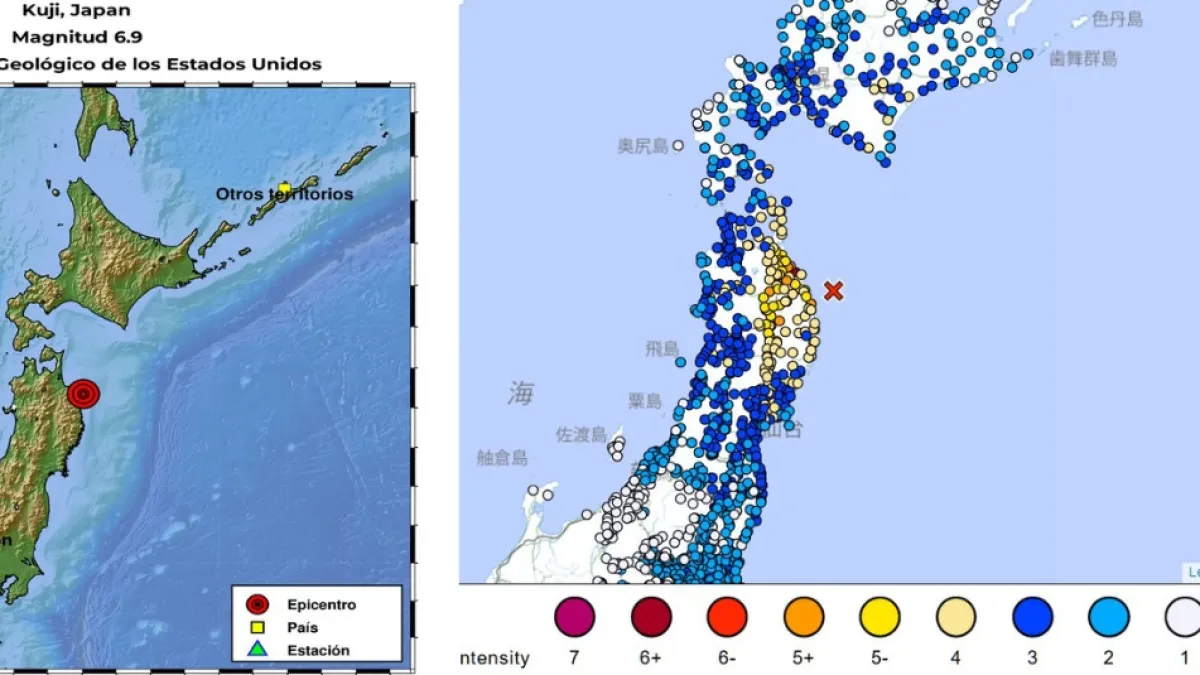
A magnitude 6.9 earthquake struck northern Japan, causing significant tremors felt in the capital city of Tokyo and prompting international agencies to monitor potential tsunami activity across the Pacific Ocean. While the initial seismic event caused widespread concern, authorities have not issued a major tsunami warning for the Japanese coastline, according to preliminary reports from regional monitoring stations.
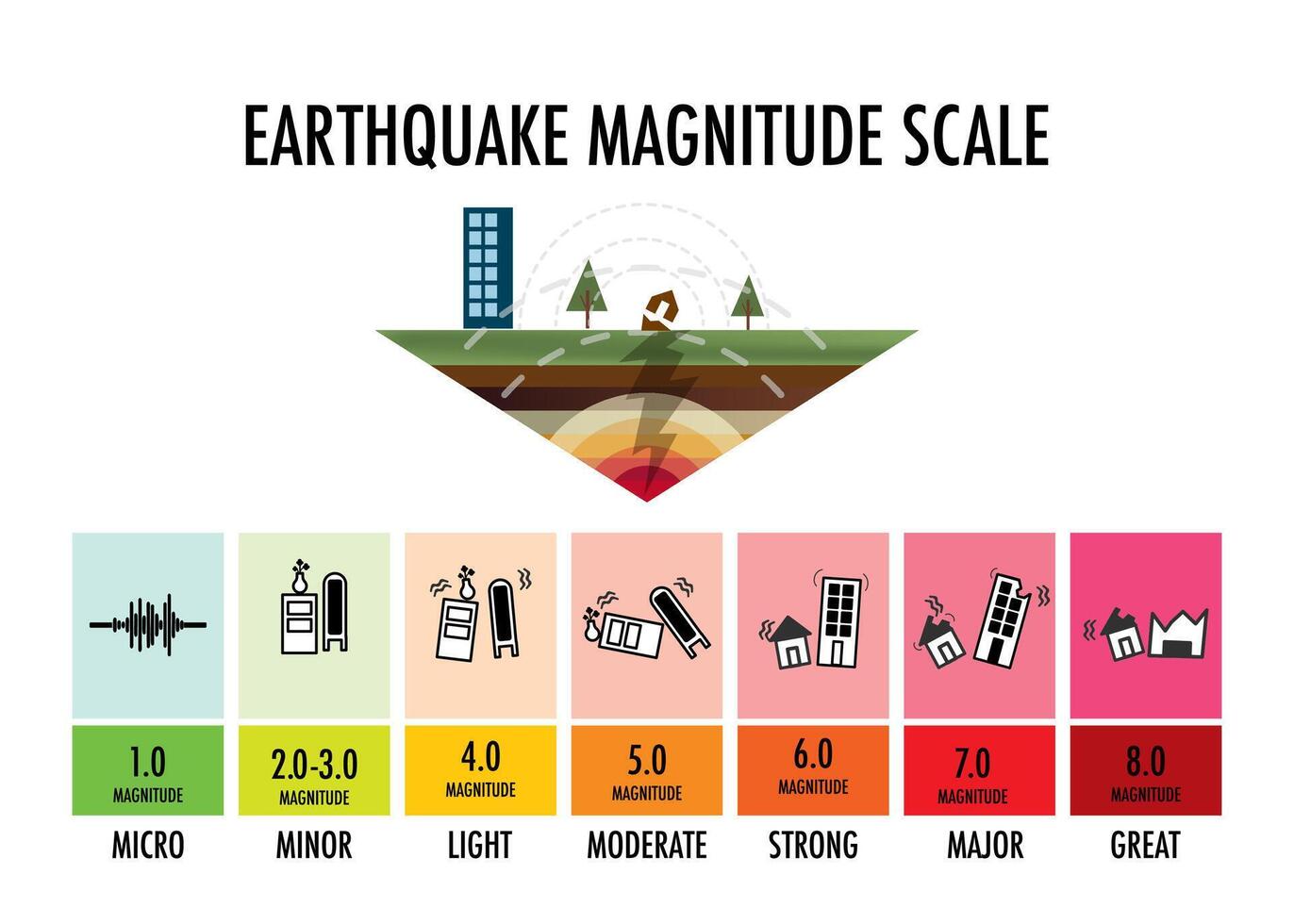
The earthquake, which occurred in the northern reaches of the Japanese archipelago, has led to a discrepancy in early reporting regarding its intensity. While some initial news outlets reported a magnitude of 7.2, subsequent data from seismic monitoring agencies refined the figure to a magnitude of 6.9. This magnitude falls within the category of a “strong” earthquake, capable of causing significant structural damage to older buildings and disrupting high-speed rail networks.
As of the latest updates, emergency services and the Japan Meteorological Agency (JMA) are assessing potential damage in the affected northern prefectures. Although the shaking was felt intensely in Tokyo, there have been no immediate reports of catastrophic infrastructure failure in the metropolitan area. Monitoring remains active in the Pacific, specifically regarding sea-level fluctuations that could affect distant coastlines, including parts of South America.
Discrepancies in Earthquake Magnitude Reporting
In the immediate aftermath of high-magnitude seismic events, reporting often fluctuates as different geological agencies process raw data. During the first hour following the tremor, several news agencies reported the earthquake at a magnitude of 7.2. However, more precise calculations from seismic sensors have since stabilized the reported magnitude at 6.9.
This difference, while appearing small numerically, represents a significant variation in the energy released by the earthquake. Because the Richter scale and the Moment Magnitude Scale (Mw) are logarithmic, a jump from 6.9 to 7.2 would indicate a substantially higher release of energy. The refinement to 6.9 suggests that the initial readings may have been influenced by local amplification or preliminary sensor readings before the full rupture pattern was analyzed by geophysicists.
The following table compares the evolving data reported by various international news observations regarding this specific seismic event:
| Data Point | Initial Reports | Refined/Current Data |
|---|---|---|
| Reported Magnitude | 7.2 Mw | 6.9 Mw |
| Tsunami Status | Active Monitoring | No Tsunami Warning Issued |
| Primary Impact Zone | Northern Japan | Northern Japan (Confirmed) |
Tsunami Monitoring and Pacific Ocean Implications
Following the earthquake, maritime monitoring agencies immediately began evaluating the risk of a tsunami. The displacement of the seabed during a magnitude 6.9 event can generate significant water displacement, which travels across ocean basins as a series of waves. While the Japan Meteorological Agency has not issued a formal tsunami warning for the immediate Japanese coast, the scale of the event has triggered precautionary monitoring in the Pacific.
International maritime observers, including reports noted by Infobae, have highlighted that seismic activity in the Pacific can have ripple effects across the ocean. Specifically, monitoring has been activated to ensure that sea-level changes do not pose a threat to distant regions, such as the coastlines of Peru and other South American nations. This “trans-Pacific” monitoring is standard protocol for large-scale subduction zone earthquakes to prevent delayed maritime disasters.
Tsunami waves are not always single, massive walls of water; they often manifest as a rapid rise in sea level or a series of turbulent surges. Coastal residents in the northern regions of Japan have been advised to remain vigilant and follow local evacuation protocols if sea-level changes are observed, even in the absence of an official warning.
Seismic Impact on Tokyo and Urban Infrastructure
Although the epicenter was located in northern Japan, the seismic waves were strong enough to be felt clearly in Tokyo. The capital’s high-rise buildings are designed to sway during such events to absorb kinetic energy, a process known as seismic damping. While this swaying can be disorienting for residents, it is a critical safety feature intended to prevent structural collapse.
The intensity of the shaking in Tokyo serves as a reminder of the country’s vulnerability to “long-period ground motion.” This phenomenon occurs when seismic waves from a distant earthquake travel through the soft sedimentary layers often found beneath major metropolitan areas, amplifying the duration and feel of the shaking. This can cause taller buildings to oscillate for several minutes after the initial shock has passed.
Transportation authorities in the Tokyo metropolitan area have begun reviewing the status of the Shinkansen (bullet train) lines and subway networks. Standard safety protocols in Japan dictate that high-speed rail lines automatically undergo emergency braking when seismic sensors detect a certain threshold of movement. Engineers will need to conduct thorough track inspections before normal service can resume to ensure no subtle shifts in the rail geometry have occurred.
The Geological Context: The Ring of Fire and Subduction Zones
To understand why Japan experiences such frequent and powerful seismic activity, it is necessary to examine its position on the “Ring of Fire.” Japan sits at the intersection of several major tectonic plates, including the Pacific Plate, the Philippine Sea Plate, and the Eurasian Plate. The movement of these plates—specifically where one plate is forced beneath another in a process called subduction—is the primary driver of the country’s earthquakes and volcanic activity.
When these plates become “locked” due to friction, stress builds up along the fault line. Eventually, the stress exceeds the strength of the rocks, causing a sudden rupture that releases energy in the form of seismic waves. In northern Japan, the interaction between the Pacific Plate and the Okhotsk Plate (part of the North American Plate) is a frequent source of significant crustal movement.
The magnitude 6.9 event is consistent with the historical seismic profile of this region. Understanding these geological patterns allows the Japan Meteorological Agency to develop more accurate early warning systems, which provide critical seconds or minutes of notice to the public, potentially saving lives by allowing individuals to seek cover or move to higher ground.
Frequently Asked Questions Regarding the Earthquake
Was there a tsunami warning for Japan?
No major tsunami warning has been issued for the Japanese coastline following the magnitude 6.9 earthquake. However, maritime authorities continue to monitor the Pacific for any unusual sea-level changes.

Why was the earthquake felt in Tokyo if the epicenter was in the north?
Seismic waves can travel hundreds of kilometers from an epicenter. In Tokyo, the shaking is often amplified by the city’s geological composition and the way tall buildings respond to long-period seismic waves.
What should I do if I feel an earthquake in Japan?
The standard safety procedure is to “Drop, Cover, and Hold On.” Protect your head and neck under a sturdy piece of furniture and stay away from windows or heavy objects that could fall.
How do magnitude scales work?
The magnitude scale is logarithmic, meaning each whole number increase represents a tenfold increase in measured amplitude and a roughly 32-fold increase in the actual energy released. This is why the difference between a 6.9 and a 7.2 is so significant.
Official updates regarding seismic activity and potential tsunami risks are expected to be released by the Japan Meteorological Agency (JMA) as more sensor data becomes available. Residents in affected areas should monitor local news and official government channels for the most current safety advisories.
What are your thoughts on the earthquake preparedness in the region? Share this article and join the conversation in the comments below.
Keep reading