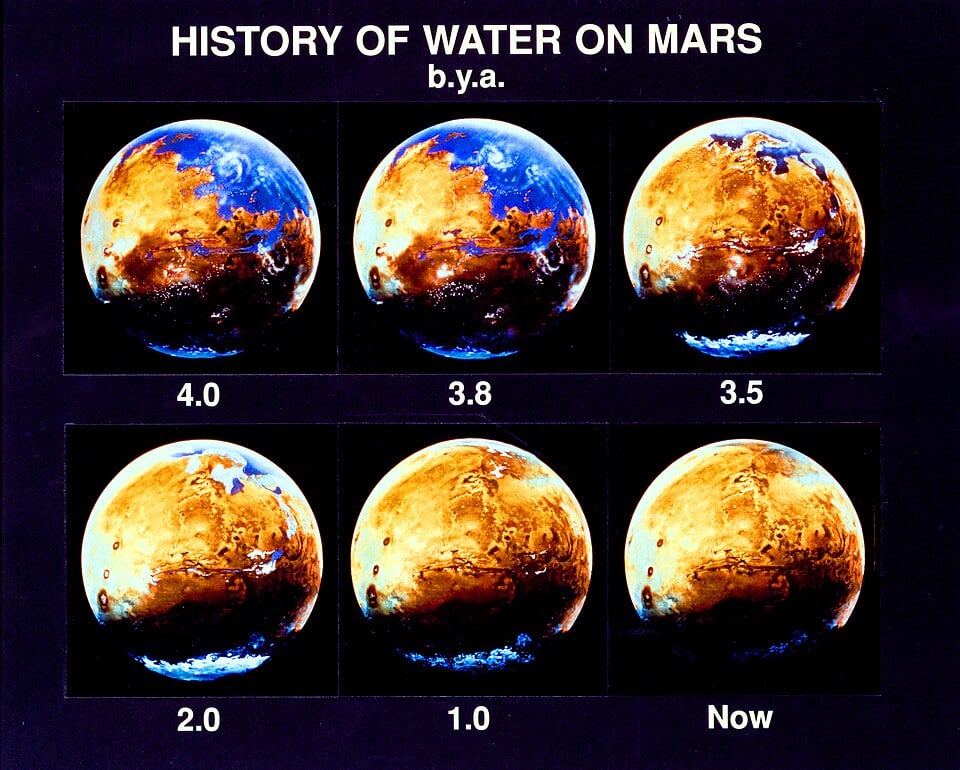
Archival data collected by NASA’s Spirit rover inside Gusev Crater reveals widespread traces of crystalline hematite and altered magnetite in undisturbed Martian soil. Published in the journal Interactions, a reanalysis of readings gathered between 2004 and 2010 suggests significant areas of the Red Planet may have once been covered by liquid water.
More than two decades after NASA launched its Mars Exploration Rover mission, archival measurements are yielding new insights into the planet’s distant past. Professor Paulo de Souza of Edith Cowan University in Australia has constructed the most detailed iron-mineral profile of typical Martian soil assembled to date. By pooling thousands of individual readings that were previously too faint to register individually, the analysis uncovers widespread chemical evidence that water once shaped large expanses of the surface.
Revisiting Gusev Crater Data with a Consolidated Mössbauer Spectrum
During its active mission on Mars, the Spirit rover traversed the surface of Gusev Crater for 2,062 sols, utilizing a specialized instrument known as a miniaturized Mössbauer spectrometer (MIMOS II). The device identified iron-bearing minerals. Because the rover had to divide its limited time, power, and memory among a full suite of scientific instruments, individual measurements were often brief and yielded spectra with poor statistics.
Those operational constraints left minor iron phases hidden beneath background noise. To overcome this limitation, the researcher combined readings gathered between 2004 and 2010 from 32 undisturbed soil sites.
“The original rover observations were limited by time, power and the gradual aging of the instrument used to collect the data. Many measurements were not detailed enough on their own to identify minerals present in very small quantities. By bringing the data together and analysing it in a new way, we were able to reveal information that had been hidden for years.”
Professor Paulo de Souza, Edith Cowan University
Crystalline Hematite and Altered Magnetite in Ordinary Martian Soil
The resulting composite spectrum surfaced clear signatures of altered magnetite and crystalline hematite across ordinary Martian dust and soil. While hematite can form through volcanic or hydrothermal activity, it is widely recognized as a robust mineral indicator of past liquid water interacting with iron-bearing rocks.

The discovery is notable because earlier mission analyses concluded that crystalline hematite was largely absent from the Spirit rover’s landing site inside Gusev Crater. The mineral’s spectral signature simply remained too faint in single-experiment measurements to stand out against background interference.
“One of the most important discoveries was finding crystalline hematite in ordinary Martian soil. This mineral’s widespread presence suggests not only that water was present, but that significant areas of Mars may have once been covered by water.”
Professor Paulo de Souza, lead author
Broader Implications for Martian Geology and Future Analysis
Because the dust and soil analyzed by the Spirit rover blanket extensive regions of the Red Planet, the findings extend well beyond Gusev Crater.
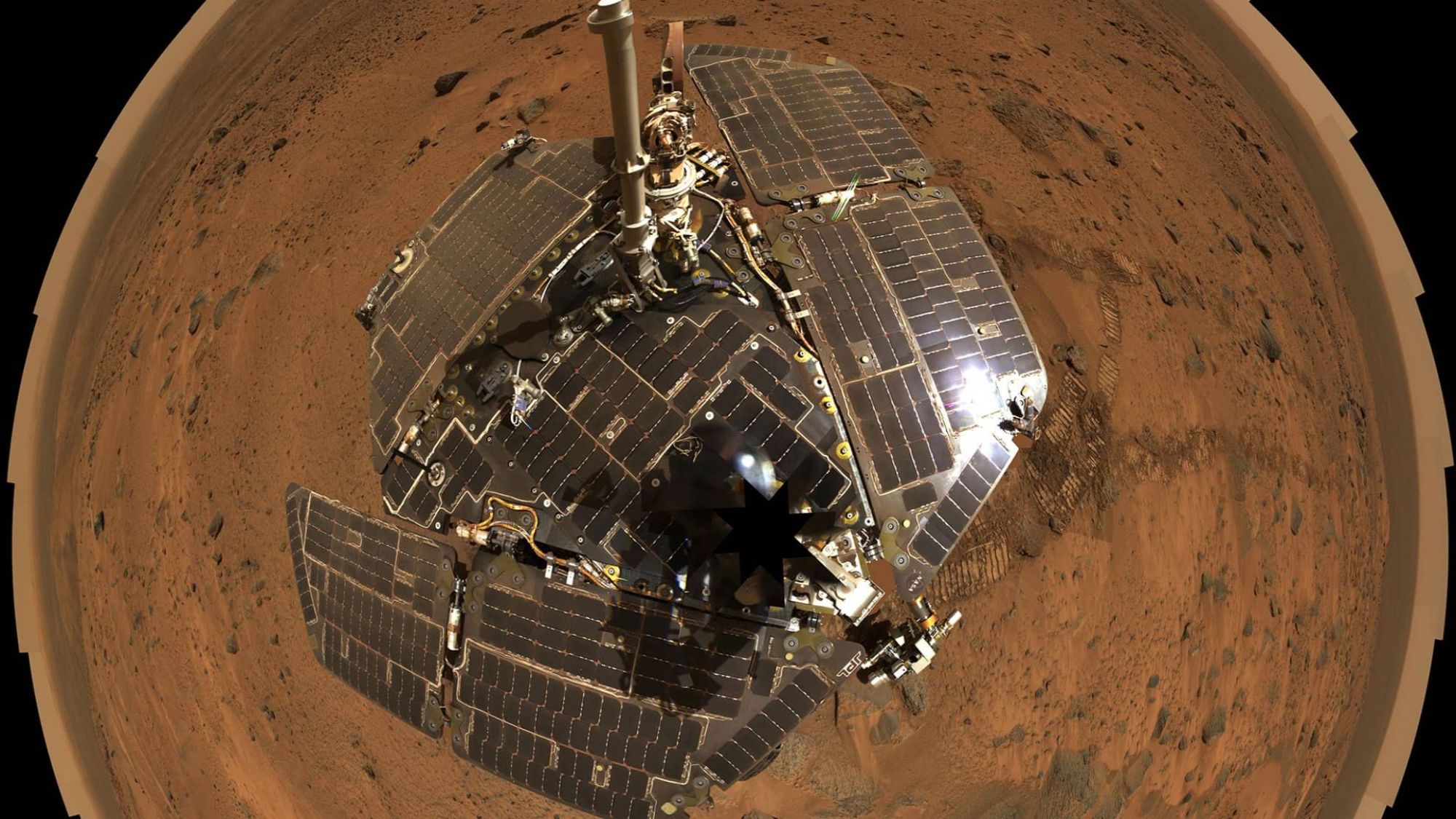
This fresh perspective reinforces a growing body of evidence indicating that early Mars was far more habitable than it is today. Previous exploration by the Spirit rover identified water-altered rocks in the Columbia Hills, while NASA’s Curiosity rover subsequently found that Gale Crater hosted long-lived lakes and streams.
The study, published in the journal Interactions, demonstrates that archival spacecraft data retains long-term scientific value long after missions conclude.
“This work shows that important discoveries are not always made by collecting new data. Sometimes they come from looking at existing data with fresh eyes and better analytical techniques.”
Professor Paulo de Souza, Edith Cowan University
Related reading