
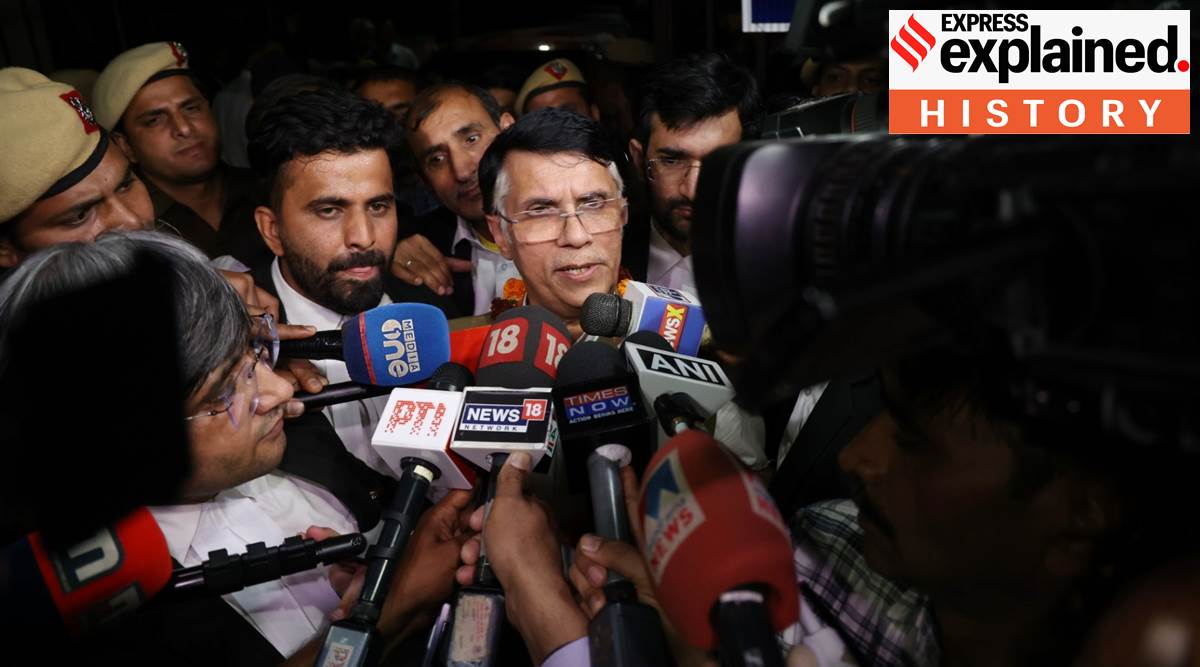
Pawan Khera Moves Supreme Court After Gauhati High Court Denies Anticipatory Bail in Defamation Case
In a high-stakes legal battle that has gripped India’s political landscape, Congress leader Pawan Khera has approached the Supreme Court of India, challenging the Gauhati High Court’s decision to deny him anticipatory bail. The case stems from allegations Khera made against Riniki Bhuyan Sarma, the wife of Assam Chief Minister Himanta Biswa Sarma, accusing her of holding multiple passports and overseas assets. The Supreme Court’s upcoming ruling could set a precedent for how political rhetoric is treated under India’s defamation laws, particularly in cases involving high-profile public figures.
Khera’s legal team has described the case as a “tough nut to crack” (Tedhi khir in Hindi), signaling the complexity of securing bail in a matter that has already seen multiple court interventions. The case has raised questions about the balance between free speech and defamation, especially when allegations are directed at family members of elected officials. Legal experts and political observers are closely watching the proceedings, which are expected to test the boundaries of India’s defamation laws and their application in politically charged cases.
The Allegations and FIR
The controversy began on April 5, 2026, when Khera, a prominent spokesperson for the Indian National Congress, held press conferences in New Delhi and Guwahati. During these events, he alleged that Riniki Bhuyan Sarma, the wife of Assam’s Chief Minister, possessed multiple passports, including those from the UAE, Egypt, and Antigua and Barbuda. Khera also claimed that she owned properties in Dubai and had assets linked to shell companies. These allegations were widely reported in the media and quickly escalated into a political firestorm.

In response, an First Information Report (FIR) was filed against Khera at the Guwahati Crime Branch police station. The FIR, registered under several provisions of the Bharatiya Nyaya Sanhita (BNS), includes charges of cheating, forgery, defamation, and intentional insult. The BNS, which replaced the Indian Penal Code in 2023, has been a subject of debate since its implementation, particularly regarding its provisions on defamation and free speech. The case against Khera is one of the first high-profile instances where the BNS has been invoked in a politically sensitive matter.
The Assam Police acted swiftly, visiting Khera’s residence in Delhi on April 7, 2026, though he was not present at the time. This prompted Khera to seek legal recourse, first approaching the Telangana High Court, which granted him transit anticipatory bail for seven days. However, the Assam Police challenged this decision in the Supreme Court, which subsequently refused to extend the transit bail. The apex court directed Khera to approach the appropriate court in Assam, setting the stage for the current legal battle.
The Gauhati High Court’s Ruling
On April 24, 2026, the Gauhati High Court rejected Khera’s plea for anticipatory bail, a decision that has since become the focal point of his appeal to the Supreme Court. The High Court’s ruling was based on the argument that custodial interrogation was necessary to “unearth the source” of Khera’s allegations. The court dismissed Khera’s contention that his remarks were merely political rhetoric, a stance that has drawn criticism from free speech advocates who argue that political discourse should be protected under democratic norms.
The High Court’s decision has been interpreted by some legal analysts as a signal that courts may take a stricter approach to defamation cases involving public figures, particularly when allegations are made without immediate, verifiable evidence. This has raised concerns about the potential chilling effect on political speech, as opposition leaders and activists may hesitate to criticize government officials or their families for fear of legal repercussions.
Khera’s legal team has argued that the High Court’s ruling sets a dangerous precedent, one that could be used to stifle dissent and investigative journalism. In a statement released after the ruling, Khera’s lawyers emphasized that the case was not just about their client’s freedom but about the broader principles of free speech and accountability in a democracy. “What we have is not merely a legal battle for Pawan Khera. This proves a fight for the right to question and hold power to account,” the statement read.
Supreme Court Appeal and Political Implications
Khera filed a Special Leave Petition (SLP) before the Supreme Court on April 26, 2026, seeking protection from arrest and challenging the Gauhati High Court’s order. The Supreme Court is expected to hear the matter in the coming days, with legal experts predicting that the case could have far-reaching implications for India’s political and legal landscape.

The case has already become a flashpoint in the ongoing political rivalry between the Bharatiya Janata Party (BJP), led by Himanta Biswa Sarma in Assam, and the Indian National Congress, of which Khera is a prominent member. The BJP has framed the case as an example of “political defamation,” arguing that Khera’s allegations were baseless and intended to tarnish the reputation of the Chief Minister’s family. The Congress, has portrayed the case as an attempt to silence opposition voices and suppress free speech.
The political dimensions of the case were further underscored when Assam Chief Minister Himanta Biswa Sarma publicly commented on the matter, stating that the law would take its course and that no one was above accountability. “The truth will prevail,” Sarma said in a press conference, adding that his family’s reputation was not something that could be “maligned with impunity.”
Legal analysts have noted that the Supreme Court’s decision could provide much-needed clarity on how defamation laws are applied in cases involving political figures. The outcome may also influence future cases where public officials or their families are accused of wrongdoing, setting a benchmark for what constitutes acceptable political discourse.
Legal and Ethical Questions
The case has sparked a broader debate about the ethical responsibilities of politicians when making public allegations. While free speech is a cornerstone of democratic societies, the line between political rhetoric and defamation is often blurred, particularly in cases involving unverified claims. Khera’s allegations against Riniki Bhuyan Sarma were made without presenting concrete evidence at the time, a factor that the Gauhati High Court cited in its ruling.
Defamation laws in India, including those under the BNS, require the complainant to prove that the statements in question were made with malicious intent and caused harm to their reputation. However, the burden of proof can be challenging to meet, particularly in cases where the accused claims that their statements were made in the public interest. The Supreme Court’s ruling in this case could provide guidance on how courts should weigh these competing interests.
Another key issue is the role of custodial interrogation in defamation cases. The Gauhati High Court’s decision to deny bail was based on the demand for custodial interrogation to determine the source of Khera’s allegations. This has raised concerns among civil liberties groups, who argue that custodial interrogation should not be used as a tool to suppress dissent or extract information that may not be directly relevant to the case.
Human rights organizations have also weighed in on the case, with Amnesty International India releasing a statement urging the Supreme Court to consider the broader implications of its ruling. “The right to freedom of expression is fundamental to a healthy democracy,” the statement read. “While defamation laws serve a legitimate purpose, they must not be used to stifle legitimate criticism or political dissent.”
What Happens Next?
The Supreme Court is expected to hear Khera’s appeal in the coming days, with legal experts predicting that the case could be fast-tracked given its political significance. If the court upholds the Gauhati High Court’s decision, Khera could face arrest and custodial interrogation, a prospect that has already drawn widespread attention from media and political circles.
Alternatively, if the Supreme Court grants Khera anticipatory bail, it could set a precedent for how similar cases are handled in the future, particularly those involving political figures. The court’s ruling may also prompt a broader discussion about the need for reforms in India’s defamation laws, particularly in light of the BNS’s implementation.
For now, Khera’s legal team remains cautiously optimistic. In a brief interaction with reporters outside the Supreme Court, one of his lawyers stated, “We are confident that the Supreme Court will uphold the principles of justice and free speech. This case is not just about one individual; it is about the future of democratic discourse in India.”
As the legal battle unfolds, the case is likely to remain a focal point in India’s political and media landscape, with implications that extend far beyond the individuals involved. The Supreme Court’s decision will be closely watched by legal scholars, politicians, and free speech advocates alike, as it could shape the contours of political discourse in India for years to come.
Key Takeaways
- Case Origin: The legal battle began after Congress leader Pawan Khera alleged that Riniki Bhuyan Sarma, wife of Assam Chief Minister Himanta Biswa Sarma, held multiple passports and overseas assets. An FIR was filed against Khera under the Bharatiya Nyaya Sanhita (BNS) for cheating, forgery, defamation, and intentional insult.
- Gauhati High Court Ruling: The High Court denied Khera anticipatory bail on April 24, 2026, citing the need for custodial interrogation to determine the source of his allegations. The court rejected Khera’s argument that his remarks were political rhetoric.
- Supreme Court Appeal: Khera filed a Special Leave Petition in the Supreme Court on April 26, 2026, seeking protection from arrest. The case is expected to be heard in the coming days and could set a precedent for defamation cases involving political figures.
- Political Implications: The case has become a flashpoint in the rivalry between the BJP and Congress, with the BJP framing it as “political defamation” and the Congress portraying it as an attempt to silence opposition voices.
- Broader Debate: The case has sparked discussions about the balance between free speech and defamation, the role of custodial interrogation, and the ethical responsibilities of politicians when making public allegations.
- Next Steps: The Supreme Court’s ruling could either uphold the Gauhati High Court’s decision, leading to Khera’s potential arrest, or grant him anticipatory bail, setting a new precedent for similar cases.
FAQ
-
What are the specific allegations made by Pawan Khera?
Pawan Khera alleged during press conferences in New Delhi and Guwahati on April 5, 2026, that Riniki Bhuyan Sarma, the wife of Assam Chief Minister Himanta Biswa Sarma, possessed multiple passports from countries including the UAE, Egypt, and Antigua and Barbuda. He also claimed that she owned properties in Dubai and had assets linked to shell companies. These allegations were made without presenting concrete evidence at the time.
-
What charges has Khera been booked under?
Khera has been charged under several provisions of the Bharatiya Nyaya Sanhita (BNS), including cheating, forgery, defamation, and intentional insult. The BNS replaced the Indian Penal Code in 2023 and has been a subject of debate regarding its provisions on defamation and free speech.
-
Why did the Gauhati High Court deny Khera anticipatory bail?
The Gauhati High Court denied Khera’s plea for anticipatory bail on the grounds that custodial interrogation was necessary to “unearth the source” of his allegations. The court dismissed Khera’s argument that his remarks were political rhetoric, a decision that has drawn criticism from free speech advocates.
-
What is the significance of this case for free speech in India?
The case has raised concerns about the potential chilling effect on political speech, as opposition leaders and activists may hesitate to criticize government officials or their families for fear of legal repercussions. The Supreme Court’s ruling could set a precedent for how defamation laws are applied in cases involving political figures, influencing the boundaries of acceptable political discourse.
-
What are the possible outcomes of the Supreme Court’s ruling?
The Supreme Court could either uphold the Gauhati High Court’s decision, leading to Khera’s potential arrest and custodial interrogation, or grant him anticipatory bail. The latter outcome could set a new precedent for similar cases, particularly those involving political figures and allegations made in the public interest.
-
How has the political establishment reacted to this case?
The case has become a flashpoint in the political rivalry between the BJP and Congress. The BJP has framed it as an example of “political defamation,” while the Congress has portrayed it as an attempt to silence opposition voices. Assam Chief Minister Himanta Biswa Sarma has stated that the law would take its course and that no one was above accountability.
The next hearing in the Supreme Court is expected to take place within the coming days. For updates on this developing story, follow World Today Journal’s coverage of the case. We encourage readers to share their thoughts and perspectives in the comments section below.