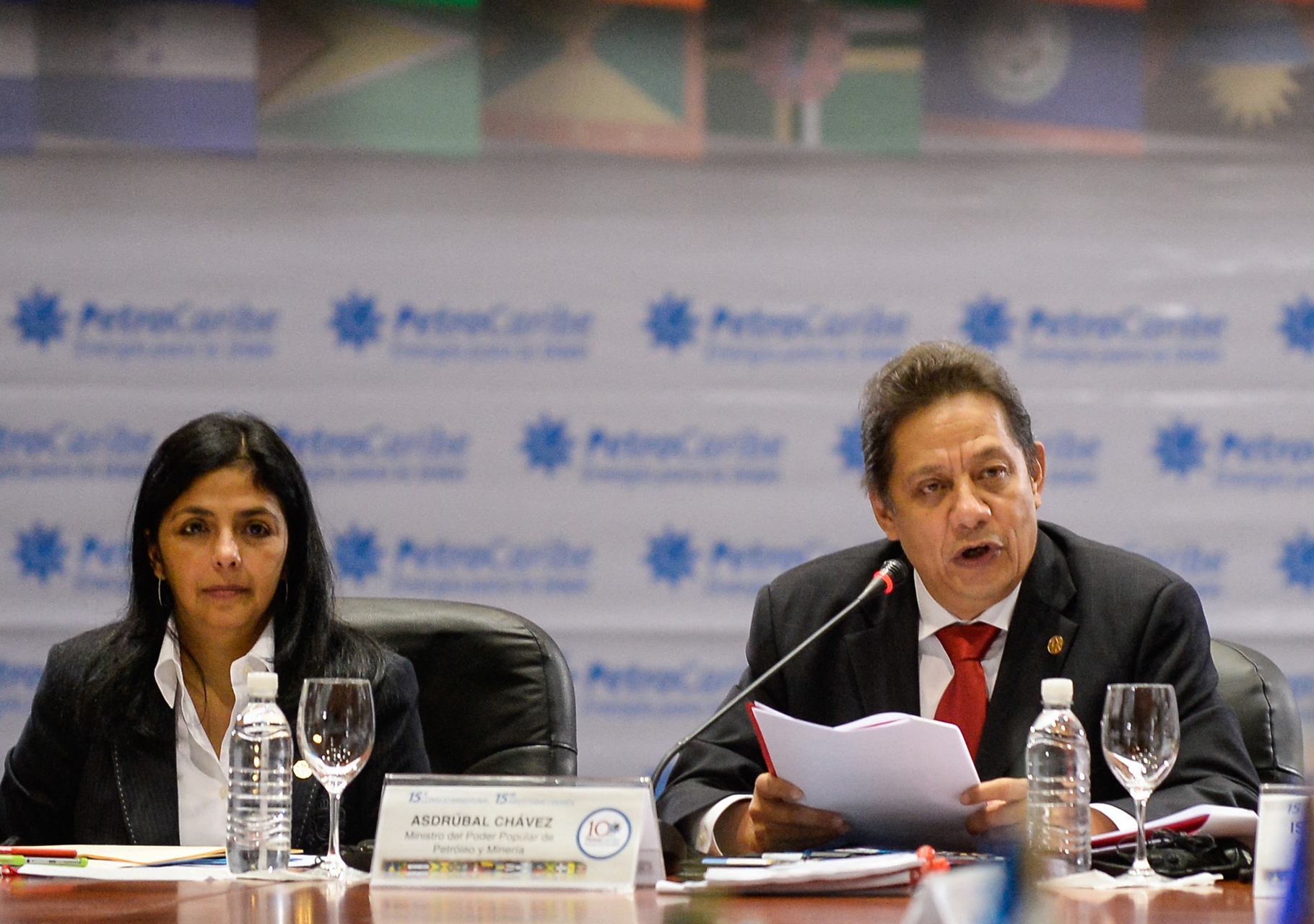
London, United Kingdom – Venezuela’s state oil company, Petróleos de Venezuela, S.A. (PDVSA), has reaffirmed Asdrúbal Chávez as president of its key U.S. Subsidiaries – PDV Holding, Citgo Holding, and Citgo Petroleum – a move complicated by existing U.S. Sanctions and ongoing legal battles over the control of Citgo. The decision, reported by Reuters on March 17, 2026, comes as the Nicolás Maduro government seeks to regain influence over the strategically important U.S.-based refining assets.
The appointment of Chávez, a cousin of the late Venezuelan President Hugo Chávez, is particularly sensitive given his previous difficulties obtaining a U.S. Visa. Prior to the imposition of sanctions against Venezuela in 2019, Chávez was reportedly denied a visa to assume his role at Citgo, highlighting the political obstacles to Venezuelan control of the company. The current situation requires authorization from the U.S. Department of the Treasury for Chávez and his team to effectively manage Citgo’s operations, a process fraught with uncertainty.
Citgo Petroleum is a significant player in the U.S. Energy market, owning and operating three refineries with a combined processing capacity of approximately 769,000 barrels per day, according to the company’s website. Citgo is crucial for supplying gasoline and other refined products to various regions of the United States. The potential shift in control has raised concerns about the future of these operations and their impact on the U.S. Energy supply.
Legal Challenges and U.S. Sanctions
The path to regaining control of Citgo is far from straightforward. A U.S. Court has overseen an auction of PDV Holding, Citgo’s parent company, which could lead to a change in ownership if the Treasury Department approves the results. This auction stems from ongoing legal disputes related to debts owed by Venezuela to creditors. The U.S. Government’s sanctions regime, imposed in response to the political and economic crisis in Venezuela, further complicates matters. Any attempt by Chávez to exert direct control over Citgo would likely be blocked without a specific license from the Office of Foreign Assets Control (OFAC) within the Treasury Department, as noted by Venezuelan constitutional law expert Jose Ignacio Hernández on social media.
Hernández emphasized on X (formerly Twitter) that the designation of administrators at PDV Holding requires OFAC authorization, and that recognition of Delcy Rodríguez, a key figure in the Maduro government, does not circumvent existing sanctions regulations. The U.S. Treasury Department has not yet publicly commented on whether it will grant such a license. The situation is further clouded by the fact that the U.S. Does not recognize the legitimacy of the Maduro government, adding a layer of political complexity to any potential negotiations.
Asdrúbal Chávez’s Background and Previous Roles
Asdrúbal José Chávez, born on May 18, 1954, in Santa Rita, Maracay, Venezuela, has a long history in Venezuelan politics and the oil industry. According to his Wikipedia entry, Chávez is a chemical engineer by training and has held several key positions within the Venezuelan government. Asdrúbal Chávez’s career includes serving as president of Citgo from November 22, 2017, to February 12, 2019, deputy to the National Assembly of Venezuela from January 5, 2016, to June 1, 2017, and Minister of Petroleum and Mining from September 3, 2014, to January 5, 2016. His appointment to these positions reflects his close ties to the ruling United Socialist Party of Venezuela (PSUV).
In April 2020, Nicolás Maduro appointed Chávez to lead Petróleos de Venezuela (PDVSA), Venezuela’s state-owned oil company, signaling a renewed effort to restructure the struggling oil sector. However, the impact of this appointment has been limited by U.S. Sanctions and the ongoing political and economic crisis in Venezuela. PDVSA has faced significant challenges in recent years, including declining oil production, aging infrastructure, and a shortage of skilled personnel.
Implications for U.S.-Venezuela Relations
The move to place Chávez in charge of Citgo’s U.S. Subsidiaries comes at a delicate time in U.S.-Venezuela relations. While the Biden administration has engaged in limited dialogue with the Maduro government, particularly regarding energy security, significant tensions remain. The U.S. Continues to demand democratic reforms and the release of political prisoners in Venezuela. The outcome of this situation will likely depend on the willingness of both governments to compromise and navigate the complex legal and political landscape.
The potential for a change in control at Citgo too raises concerns about the company’s independence and its ability to operate free from political interference. Citgo has historically been a relatively independent entity, even while owned by the Venezuelan government. Any perceived attempt to use Citgo for political purposes could further strain relations with the U.S. And potentially lead to additional sanctions.
The Role of Delcy Rodríguez
The Reuters report also notes that the council of PDVSA has designated Nelson Ferrer, Alejandro Escarra, and Ricardo Gómez as directors of the U.S. Subsidiaries alongside Chávez. The involvement of Delcy Rodríguez, the Venezuelan vice president, in the process is also significant. As Hernández pointed out, the recognition of Rodríguez by the U.S. Government, while not a full endorsement of the Maduro regime, could potentially streamline the process of obtaining OFAC licenses, although this remains uncertain.
Delcy Rodríguez has been a key negotiator for the Maduro government in talks with the U.S. And other international actors. Her role in the Citgo situation underscores the Maduro government’s determination to regain control of its U.S. Assets and potentially leverage them to alleviate Venezuela’s economic crisis. However, any such effort will face significant hurdles, including the ongoing legal challenges and the U.S. Government’s commitment to maintaining sanctions pressure.
The situation remains fluid, and the next steps will likely depend on whether the Maduro government formally requests a license from the U.S. Treasury Department and how the department responds. The outcome will have significant implications for the future of Citgo, U.S.-Venezuela relations, and the global energy market. The U.S. Treasury Department is expected to announce its decision regarding the license request within the next 60 days, according to sources familiar with the matter.
The complexities surrounding Citgo highlight the broader challenges facing Venezuela as it seeks to navigate the international political and economic landscape. The country’s oil industry, once a major source of revenue, has been crippled by years of mismanagement, corruption, and U.S. Sanctions. Regaining control of Citgo would provide a much-needed boost to Venezuela’s economy, but it is unlikely to solve the country’s underlying problems without significant political and economic reforms.
As the situation unfolds, stakeholders will be closely watching for any signs of progress or setbacks. The future of Citgo, and indeed the future of Venezuela’s oil industry, hangs in the balance.
Stay tuned to World Today Journal for further updates on this developing story. We encourage you to share your thoughts and perspectives in the comments below.
Keep reading