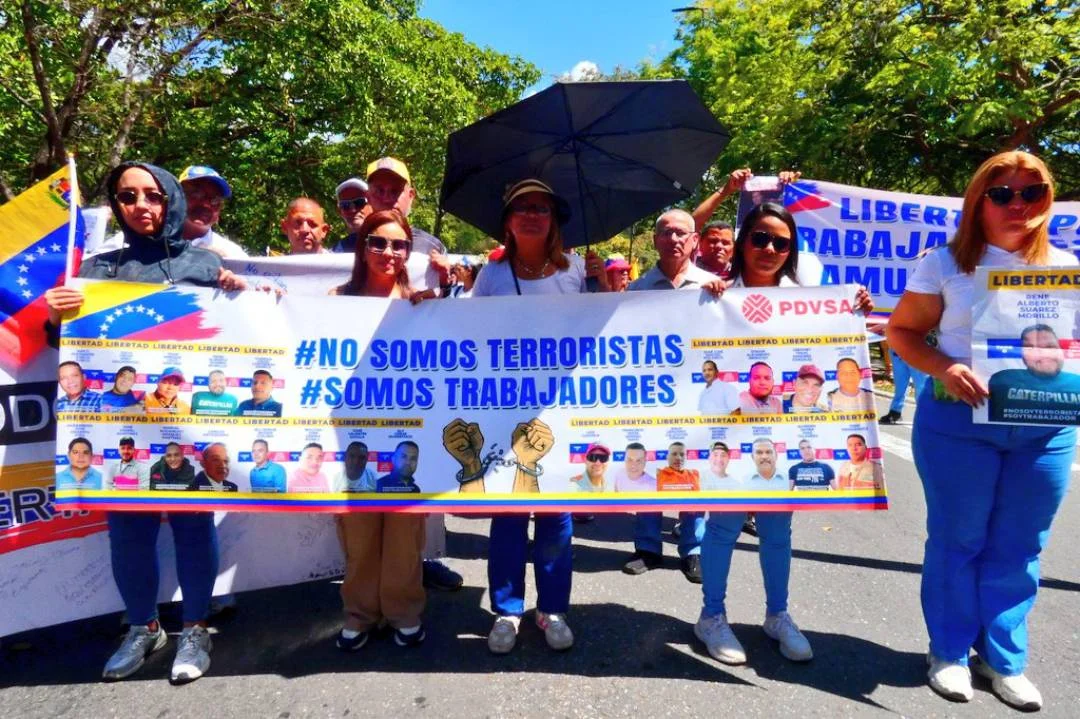
London, United Kingdom – February 20, 2026 – Concerns are mounting over the prolonged detention of 174 workers from Venezuela’s state oil company, Petróleos de Venezuela, S.A. (PDVSA), as families allege they are being held without due process and adequate legal representation. The accusations, made public on February 18th, center on claims that the workers, arrested in 2024 and 2025, have been accused of unspecified crimes without access to evidence or a fair defense. This situation raises serious questions about the rule of law and human rights within Venezuela’s judicial system, particularly as it relates to the country’s vital oil industry.
The allegations come at a sensitive time for Venezuela, which is attempting to navigate a complex economic and political landscape. PDVSA, once a cornerstone of the Venezuelan economy, has faced significant challenges in recent years, including U.S. Sanctions and declining production. The detentions, according to family members, are part of a broader pattern of intimidation and political persecution targeting those associated with the oil sector. The case, dubbed the “Caso Pdvsa Obrero” (PDVSA Worker Case), is fueling anxieties among families and prompting calls for international scrutiny. The core issue revolves around the lack of transparency and the alleged denial of fundamental legal rights to those detained.
Zimaru Fuentes, a lawyer and relative of one of the detained workers, detailed the concerns during a press conference attended by over a hundred mothers and relatives. Fuentes stated that the workers were initially brought before courts without being permitted private legal counsel. She described a process where detainees were presented in telematic hearings and immediately transferred to detention facilities, such as Yare, with limited access to their assigned public defenders. “Our relatives were taken to court for the first time without even allowing them legal private defense,” Fuentes explained. “They were presented in a telematic hearing and when they left there, they went straight to Yare; only some were able to see their public defender two months later.”
Allegations of Due Process Violations and Lack of Transparency
A central claim made by the families is that, nearly two years after their arrests, the detainees remain unaware of the identity of their state-appointed public defenders. This lack of information, they argue, renders the cases fundamentally flawed and in violation of constitutional guarantees. “To this day, none of ours realize their defenders; that makes this case a null case from the beginning, where all constitutional guarantees and rights were violated,” Fuentes asserted. The families fear that the charges against their loved ones are politically motivated and designed to suppress dissent within the oil industry. They believe the cases are being deliberately complicated to prevent them from being included in a potential amnesty law currently being considered by the National Assembly (AN).
The situation is further complicated by the Venezuelan government’s efforts at national reconciliation, spearheaded by “presidenta encargada” (acting president) Delcy Rodríguez. Families are demanding that this reconciliation process be genuine and inclusive, extending to all those affected by political persecution, including the detained PDVSA workers. They argue that a truly inclusive amnesty law is essential to address the grievances of those who have been unjustly imprisoned. “How can we talk about reconciliation when we still have political prisoners?” a family member questioned, highlighting the uncertainty surrounding the number of individuals currently detained for political reasons. “We are talking about a law that is projected to be exclusive, and we truly trust that this project will be inclusive and involve everyone.”
Geographic Distribution of Detainees and Prison Facilities
The 174 detained workers are reportedly spread across various oil installations throughout Venezuela. According to information provided by the families, 73 are from Puerto La Cruz, 3 from La Guaira, 14 from the El Cardón Refinery, 24 from the Amuay Refinery, 2 from the capital district, and 4 from Punto Fijo. These individuals are currently held in four main detention centers: Yare 2, Yare 3, Las Crisálidas, and the Fuerte Guaicaipuro. The Yare prison complex, in particular, has a history of human rights concerns, with reports of overcrowding and inadequate medical care. The geographic distribution of the detainees suggests a widespread crackdown targeting workers across different regions of the country’s oil infrastructure.
The Venezuelan oil industry has been significantly impacted by U.S. Sanctions, which were initially imposed in 2017 and have been modified several times since. According to the Office of Foreign Assets Control (OFAC), sanctions aim to target individuals and entities responsible for undermining Venezuela’s democratic institutions and engaging in corruption. OFAC FAQs detail the complexities of dealing with the Venezuelan government, PDVSA, and its subsidiaries. In February 2024, OFAC issued guidance regarding Venezuela, but the situation remains fluid. The sanctions have contributed to a sharp decline in oil production, exacerbating the country’s economic crisis. In January 2026, Aurora Insights reported that PDVSA production was expected to remain low, representing just 1% of global output. Breaking Down Venezuela’s Oil Outlook
The Role of PDVSA and the Venezuelan Government
PDVSA plays a crucial role in the Venezuelan economy, despite facing significant challenges. The company is responsible for the exploration, production, refining, and marketing of Venezuela’s vast oil reserves. However, years of mismanagement, corruption, and underinvestment have led to a decline in production capacity. The detentions of PDVSA workers raise concerns about the government’s control over the oil industry and its willingness to address the underlying issues that have plagued the sector. The families allege that the arrests are part of a broader effort to silence dissent and consolidate power within PDVSA.
The Venezuelan government has not yet issued a comprehensive response to the allegations made by the families. However, officials have previously defended the arrests as necessary to combat corruption and protect the country’s oil resources. The government maintains that the judicial process is fair and transparent, and that all detainees are entitled to legal representation. However, the families’ claims of due process violations and lack of access to information cast doubt on these assurances. The situation underscores the challenges facing Venezuela as it attempts to rebuild its economy and restore its democratic institutions.
International Scrutiny and Calls for Investigation
The case of the detained PDVSA workers has drawn attention from international human rights organizations and foreign governments. Several groups have called for an independent investigation into the allegations of due process violations and political persecution. They argue that the Venezuelan government has a responsibility to uphold the rule of law and protect the rights of its citizens. The United Nations Human Rights Office has too expressed concern about the situation and urged the government to ensure fair trials and access to legal representation for all detainees. The international community is closely monitoring the developments in Venezuela, and further action may be taken if the situation does not improve.
The families of the detained workers are continuing to advocate for their release and are seeking support from international organizations and foreign governments. They are determined to hold the Venezuelan government accountable for the alleged abuses and to ensure that their loved ones receive a fair trial. The case highlights the ongoing human rights challenges facing Venezuela and the need for greater transparency and accountability within the country’s judicial system. The pursuit of a truly inclusive amnesty law, as advocated by the families, remains a critical step towards national reconciliation and the restoration of democratic principles.
The next key development in this case is expected to be a review of the detainees’ cases by the National Assembly’s human rights committee, scheduled for March 15, 2026. Families are hoping this review will lead to a reassessment of the charges and improved access to legal counsel. We encourage readers to share this article and engage in constructive discussion about the human rights situation in Venezuela. Your voice can help raise awareness and advocate for justice.