
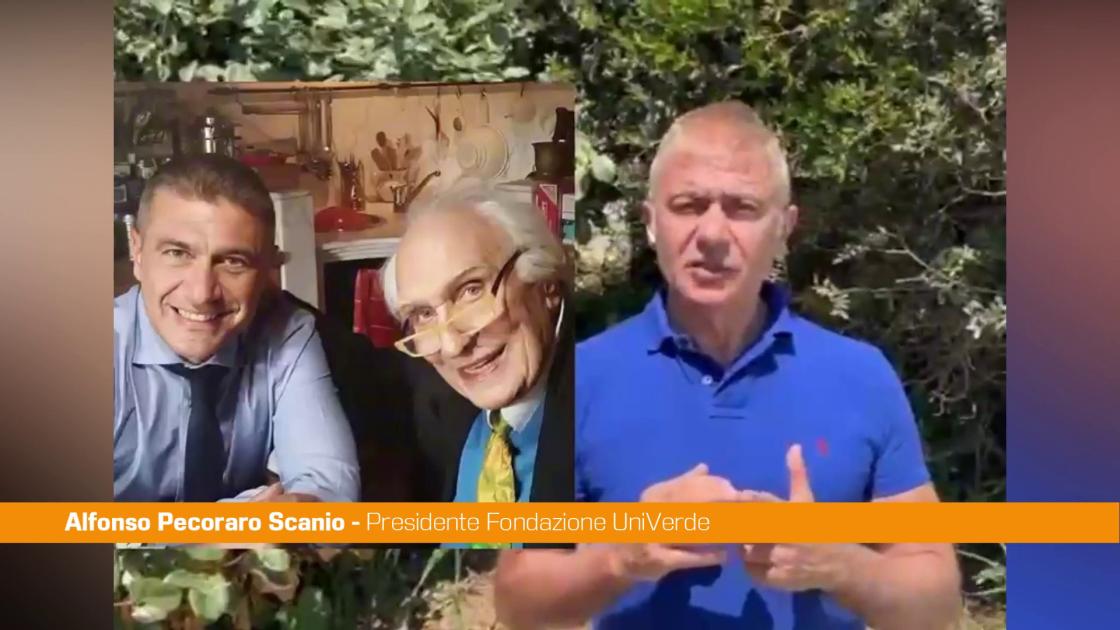
On the anniversary of the birth of Marco Pannella, Alfonso Pecoraro Scanio, President of the Fondazione UniVerde, has highlighted the enduring relevance of the late activist’s political legacy. Speaking on May 2, 2026, Pecoraro Scanio described Pannella as an example of good politics
, emphasizing that his approach to governance and activism remains a vital lesson for contemporary leaders.
Pannella, a towering figure in Italian public life, was renowned for his uncompromising commitment to civil liberties and non-violence. In his tribute, Pecoraro Scanio noted that Pannella profoundly influenced the trajectory of the country through his relentless campaigns for civil rights, environmental protection, legality and the dismantling of partitocrazia
—the systemic dominance of political parties over state institutions.
The tribute comes as Italy continues to navigate complex debates over individual freedoms and institutional transparency, issues that were central to Pannella’s career as a journalist, politician, and leader of the Radical Party. By framing Pannella’s work as good politics
, Pecoraro Scanio suggests that the true measure of political success lies in the pursuit of fundamental rights and the courage to challenge established power structures.
The Legacy of Marco Pannella: Civil Rights and Non-Violence
To understand why Pecoraro Scanio views Pannella’s lesson as still current
, one must glance at the scope of Pannella’s impact on Italian society. Born on May 2, 1930, and passing away on May 19, 2016, Pannella spent decades advocating for policies that were often decades ahead of their time. He was a primary architect of the movements that secured the right to divorce and the right to abortion in Italy, transforming the legal landscape of the country.
Beyond domestic civil rights, Pannella was a global advocate for human rights. His work extended to supporting Tibetan independence and campaigning against the persecution of the Montagnard people in Vietnam. This internationalist perspective, combined with a strict adherence to non-violence, allowed him to bridge the gap between grassroots activism and formal legislative processes.
Pecoraro Scanio’s mention of the environment
reflects a critical, though sometimes overlooked, aspect of Pannella’s legacy. The fight for a sustainable future and the protection of natural resources were integrated into the Radical Party’s broader vision of a society based on rationality and scientific evidence, rather than ideological dogma.
Combatting ‘Partitocrazia’ and the Fight for Legality
A central theme in the remarks by Pecoraro Scanio is the fight against partitocrazia
. In the Italian context, this term refers to a system where political parties exercise excessive control over public administration and the judiciary, often leading to inefficiency and corruption. Pannella spent much of his career arguing that the state should serve the citizen, not the party.
This pursuit of legality was not merely about following laws, but about ensuring that laws were just, transparent, and applicable to all. By championing the use of referendums, Pannella sought to return power to the people, bypassing the intermediaries of party leadership. This methodology of direct democracy is what Pecoraro Scanio identifies as the core of good politics
—the belief that the electorate should have a direct say in the most consequential decisions of the state.
The Role of Fondazione UniVerde and Ecodigital
Alfonso Pecoraro Scanio, in addition to his role as President of the Fondazione UniVerde, is the promoter of the Ecodigital network. His alignment with Pannella’s legacy suggests a synthesis between environmentalism and digital transparency. The Fondazione UniVerde focuses on ecological transition and sustainability, mirroring Pannella’s early warnings about environmental degradation.
By linking the anniversary of Pannella’s birth to current initiatives, Pecoraro Scanio argues that the tools of the modern era—such as digital communication and data transparency—should be used to further the civil rights goals that Pannella championed. The lesson
that remains current is the necessity of using every available tool to hold power accountable and to expand the horizon of human freedom.
Why the ‘Pannella Lesson’ Matters in 2026
In the current political climate, the tension between state security and individual privacy, as well as the ongoing struggle for comprehensive LGBTQ+ rights and end-of-life dignity, echoes the battles Pannella fought in the 1970s and 80s. His insistence on the right to choose
and the autonomy of the individual continues to serve as a benchmark for those advocating for legislative reform.
the rise of populist movements and the perceived detachment of political elites from the general public make the critique of partitocrazia
more relevant than ever. The call for a more direct, transparent, and evidence-based form of politics is a direct inheritance from the Radical tradition.
| Focus Area | Primary Objective | Long-term Impact |
|---|---|---|
| Civil Rights | Divorce and abortion rights | Fundamental shift in Italian family law |
| Governance | Combatting partitocrazia | Promotion of referendums and direct democracy |
| Internationalism | Human rights and self-determination | Global visibility for Tibetan and Montagnard causes |
| Ethics | Non-violence and legality | Mainstreaming of non-violent protest in Italian politics |
As Italy and the broader European community face new challenges regarding the rule of law and the protection of minority rights, the spirit of Marco Pannella—characterized by intellectual rigor and a refusal to compromise on fundamental liberties—provides a roadmap for those seeking to implement good politics
in the 21st century.
The anniversary of Pannella’s birth serves not only as a moment of remembrance but as a call to action for current leaders to prioritize the citizen over the party and the truth over the political convenience.
There are no further official events scheduled regarding this specific tribute; however, the Fondazione UniVerde continues its initiatives regarding the ecological transition. We invite our readers to share their thoughts on the legacy of civil rights activism in the comments below.