Perseverance Rover: Continuing the Search for Life on Mars Despite Sample Return Delays
The ambitious plan to retrieve samples collected by NASA’s Perseverance rover from Mars is facing important hurdles. Currently, the projected cost has risen dramatically, pushing the likely launch date for a sample return mission into the 2030s.This delay means Perseverance,our robotic explorer,must continue its vital work in the challenging Martian habitat for years to come.
Fortunately, the rover is in remarkably good condition. Steve Lee, Perseverance’s deputy project manager at NASA’s Jet Propulsion Laboratory (JPL), confirmed the robot – roughly the size of a small SUV – is operating optimally. All systems are functional, and backup systems remain readily available, ensuring Perseverance can continue its mission for a considerable time.
A Journey Beyond expectations
Since landing within the 28-mile-wide Jezero Crater in February 2021, Perseverance has already exceeded expectations. It has traversed approximately 25 miles (40 kilometers), doubling the original certification for its mobility system.Remarkably, this distance is farther than any other vehicle has traveled on the surface of another planet.
Engineers are now aiming even higher, hoping Perseverance can continue operating well beyond its initial goals. Recent evaluations suggest the rover could remain functional until at least 2031. Its power source, a radioisotope thermoelectric generator utilizing plutonium, ensures a long operational lifespan, mirroring the success of the Curiosity rover wich has been active for over 13 years.
What’s Next for Perseverance?
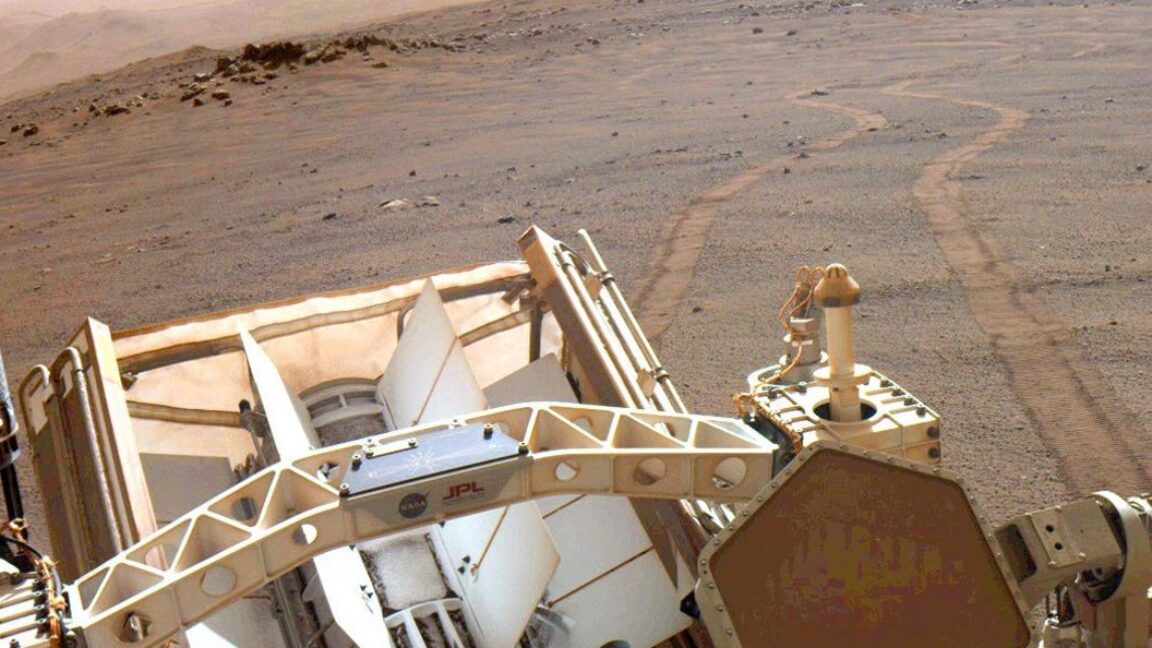
Perseverance’s ongoing mission focuses on exploring the jezero Crater, a region believed to have once held a lake and possibly harbored microbial life. You can see in the accompanying image a view of “Mont Musard” and “Lac de Charmes,” areas where the rover team will be searching for additional rock core samples.
Here’s a breakdown of Perseverance’s key objectives:
* Sample Collection: Identifying and collecting promising rock and sediment samples that could contain evidence of past Martian life.
* Geological Survey: Analyzing the crater’s geology to understand its history and potential habitability.
* Technology Exhibition: Testing technologies for future human exploration of Mars.
* Environmental Monitoring: Gathering data on the Martian atmosphere and environment.
Despite the uncertainty surrounding the sample return mission, Perseverance’s continued exploration is invaluable. It’s providing us with unprecedented insights into the Red Planet and paving the way for future discoveries. The rover’s resilience and ongoing success demonstrate the power of robotic exploration and its crucial role in unraveling the mysteries of our solar system.
Ultimately, Perseverance’s journey is a testament to human ingenuity and our relentless pursuit of knowledge. It reminds us that even in the face of challenges, exploration and finding remain within our reach.
Related reading