
Millions of Peruvians are heading to the polls today in the Peru 2026 general elections, a pivotal democratic exercise taking place against a backdrop of profound political volatility and a deteriorating security situation. More than 27 million citizens have been called to the urns to select a new president and a restructured legislature.
This electoral cycle is being described as the most complex in the nation’s history. Voters are not only choosing the next head of state but are also participating in a fundamental shift in governance: the return to a bicameral Congress. This structural change, combined with a fragmented political landscape and a public exhausted by systemic crisis, makes the outcome of this Sunday’s vote critical for the stability of the Andean nation.
The mood across the country is one of urgency. For many, the Peru 2026 general elections represent a desperate search for an exit from a cycle of political upheaval that has seen a rapid succession of leaders and a growing disconnect between the governing class and the citizenry. With the state grappling with an escalating wave of organized crime, the mandate for the next administration will likely be centered on the immediate restoration of public safety and institutional order.
A Transition Born of Turmoil
The path to this election has been marked by abrupt leadership changes. The political environment was severely destabilized following the tenure of Dina Boluarte, who was removed from office during a period of heightened social unrest and rising crime rates.
In the wake of Boluarte’s removal, José Jerí assumed the presidency. Jerí, a controversial figure in Peruvian politics, has had the task of steering the country toward these general elections while managing a state apparatus strained by internal conflict and a perceived lack of clear direction.
The transition to Jerí’s leadership did not quell the underlying tensions. Instead, it highlighted the fragility of the Peruvian executive branch, which has struggled to maintain legitimacy. As voters cast their ballots, the shadow of this instability looms large, with many hoping for a leader capable of bridging the divide between the fragmented political parties and the disillusioned public.
The Return to a Bicameral Congress
One of the most significant aspects of this election is the transition to a bicameral legislative system. For years, Peru operated under a unicameral system, but the 2026 elections see the return of a two-chamber Congress, consisting of a Senate and a Chamber of Deputies.
This structural change is intended to provide a more balanced legislative process, theoretically allowing for more deliberate debate and a system of checks and balances within the legislative branch itself. However, in the current climate of political fragmentation, there are concerns that a bicameral system could either mitigate the volatility of the legislature or, conversely, add new layers of gridlock to an already dysfunctional political process.
The complexity of voting for both a president and two different legislative bodies has added a layer of logistical difficulty to the day. Election officials have been tasked with ensuring that more than 27 million voters understand the new ballot structure to avoid high rates of spoiled votes, which have plagued previous Peruvian electoral cycles.
Security Crisis as a Primary Voter Driver
While political structure and leadership are central to the debate, the most pressing issue for the average Peruvian voter is the “ola criminal”—a surge in violent crime and organized gang activity. The perception that the state has lost control of public safety has become a dominant theme of the campaign.
Reports indicate that citizens are “exhausted” by the combination of political convulsions and the rise of delinquency. This security vacuum has created a fertile ground for candidates who promise “iron fist” policies or drastic measures to reclaim the streets. The intersection of political instability and physical insecurity has left many voters feeling vulnerable, shifting the electoral priority from long-term economic policy to immediate survival and safety.
The current administration’s inability to curb the crime wave has served as a catalyst for the current electoral urgency. Voters are no longer merely looking for a political administrator but for a commander-in-chief capable of restoring the rule of law in a country where criminal elements are perceived to be operating with increasing impunity.
Key Takeaways of the 2026 Election
- Massive Participation: Over 27 million voters are participating in the process.
- Institutional Shift: The return to a bicameral Congress (Senate and Chamber of Deputies) marks a major change in how laws will be passed.
- Leadership Vacuum: The election follows the removal of Dina Boluarte and the interim presidency of José Jerí.
- Security Priority: Rising crime and organized delinquency are the primary drivers of voter sentiment.
- Political Fragility: The process takes place amid a deep-seated crisis of legitimacy for Peru’s political institutions.
What Happens Next?
As the polls close, the focus will shift to the National Jury of Elections (JNE) and the Office of Electoral Processes (ONPE) for the counting and verification of votes. Given the history of contested results and the high level of political polarization, the transparency of the tallying process will be under intense international and domestic scrutiny.
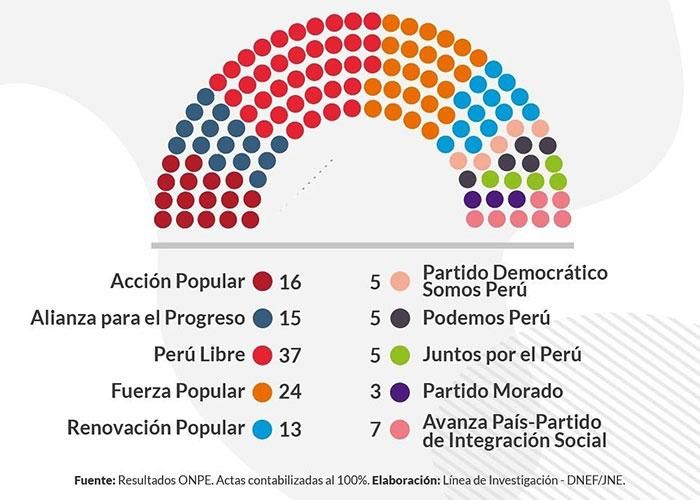
The immediate next checkpoint will be the release of the preliminary official results, which will determine if a candidate has secured an absolute majority or if the country must head toward a presidential runoff. Simultaneously, the composition of the new bicameral Congress will be established, setting the stage for the next legislative period and determining the level of cooperation or conflict the next president will face.
We will continue to monitor the developments in Lima and across the provinces as the results emerge. We invite our readers to share their perspectives on these developments in the comments section below.
Keep reading