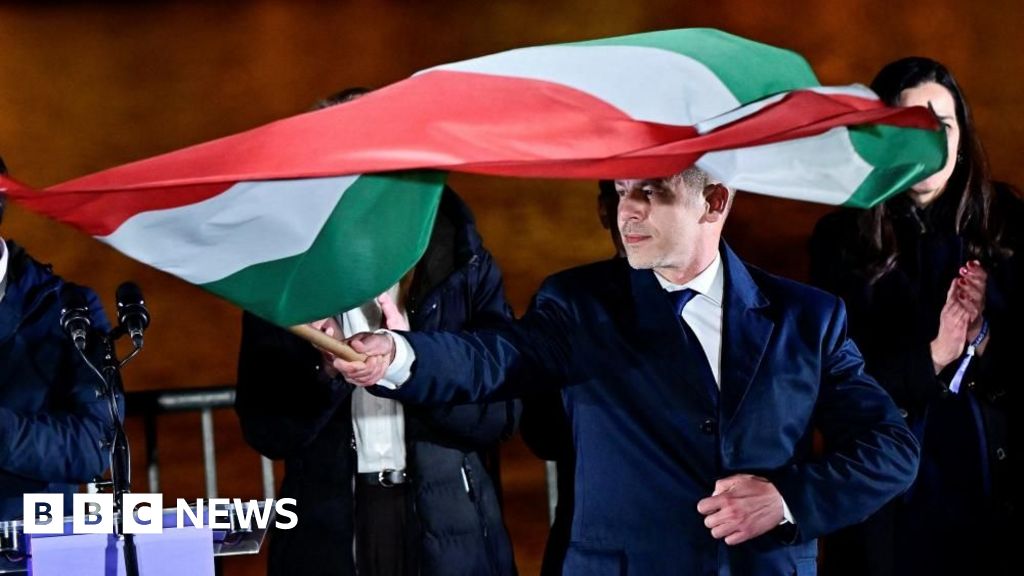
Budapest is preparing for a historic transition of power as Péter Magyar, the leader of the Tisza party, readies himself to be sworn in as Prime Minister. The upcoming ceremony marks the definitive end of a political epoch, following a landslide election victory that has fundamentally reshaped the Hungarian political landscape and signaled a profound “regime change” for the nation.
The transition follows the defeat of Viktor Orbán, whose 16-year tenure has come to an end. For nearly two decades, Orbán presided over a system that critics and observers described as an “electoral autocracy,” characterized by centralized power and increasingly unpopular domestic policies. The shift in leadership is not merely a change in administration but a systemic pivot, as Magyar prepares to lead a government with a mandate to dismantle the structures of the previous era.
The atmosphere in the capital remains electric, reflecting the sentiment of a population that turned out in record numbers to cast their ballots. For many Hungarians, the swearing-in represents the culmination of a rapid political ascent by Magyar, a 45-year-old former party insider who transformed a burgeoning movement into a dominant political force within just two years.
The Magnitude of the Landslide
The scale of the victory achieved by the Tisza party is unprecedented in the history of democratic Hungary. According to preliminary election results based on more than 98% of counted votes, the Tisza party is on course for 138 seats in parliament. This decisive win grants Magyar the constitutional majority necessary to reverse the sweeping reforms implemented during the Orbán years.

In stark contrast, Viktor Orbán’s Fidesz party was reduced to 55 seats, while the far-right Our Homeland party secured only six. The election was marked by an extraordinary level of civic engagement, with a record 79.5% of the electorate turning out to vote. This surge in participation underscored a widespread desire for change, as Magyar campaigned extensively across villages, town squares and cities, focusing on issues of endemic corruption and cronyism.
Reflecting on the outcome, Magyar addressed a cheering crowd beside the River Danube, overlooking the parliament building in Budapest. “We did it,” he declared. “Together we overthrew the Hungarian regime.” He further emphasized the historic nature of the mandate, stating, “Never before in the history of democratic Hungary have so many people voted – and no single party has ever received such a strong mandate.”
From Insider to Reformer: The Rise of Péter Magyar
Péter Magyar’s trajectory from a party insider to the leader of a revolutionary movement has been one of the most unexpected developments in recent European politics. At 45, Magyar leveraged his internal knowledge of the previous administration’s workings to critique the system from a position of perceived authenticity. His campaign focused on the human cost of corruption, resonating with a majority of Hungarians who felt alienated by the Fidesz-led government.
By positioning himself as the primary alternative to the status quo, Magyar was able to consolidate a fragmented opposition and attract a diverse coalition of voters. His ability to mobilize the electorate was evidenced by the record-breaking turnout, suggesting that his platform of transparency and democratic restoration reached beyond traditional political bases into the heart of the Hungarian countryside.
A Geopolitical Pivot: EU, Ukraine, and Russia
Beyond domestic policy, the swearing-in of Péter Magyar signals a dramatic reset of Hungary’s global relationships. For years, Viktor Orbán maintained a contentious relationship with the European Union and Ukraine, while cultivating close ties with Russia’s Vladimir Putin and US President Donald Trump. This alignment often placed Hungary at odds with its NATO and EU allies, particularly regarding the conflict in Ukraine.
Magyar has campaigned on a platform of strategic realignment. He intends to distance Hungary from Russia in favor of fostering more cordial and cooperative ties with the European Union and Ukraine. This shift is expected to alleviate long-standing tensions between Budapest and Brussels, potentially unlocking frozen EU funds and restoring Hungary’s standing within the bloc.
The geopolitical implications are significant. While Orbán’s final campaign weeks saw an appearance by US Vice-President JD Vance, the new administration’s focus appears to be shifting toward a more traditional Western alignment. This pivot is viewed by many international observers as a critical step in strengthening the unity of the EU and NATO’s eastern flank.
Dismantling the ‘Electoral Autocracy’
The primary challenge facing the incoming Prime Minister will be the practical implementation of “regime change.” With a constitutional majority, Magyar has the legal leverage to overturn the reforms that critics argue hollowed out Hungary’s democratic institutions. The focus is expected to be on restoring judicial independence, ensuring media plurality, and addressing the “cronyism” that Magyar highlighted throughout his campaign.

The transition is not expected to be without friction. Dismantling a 16-year-old power structure involves navigating a complex web of institutional influence. However, the strength of the Tisza party’s mandate provides a powerful democratic shield for these efforts. The goal is to transition from a system described as an “electoral autocracy” back to a robust, representative democracy where the rule of law is applied uniformly.
Key Election Results Summary
| Party | Projected Seats | Status |
|---|---|---|
| Tisza Party | 138 | Landslide Victory / Constitutional Majority |
| Fidesz | 55 | Defeated |
| Our Homeland | 6 | Minority Presence |
As Hungary prepares for the swearing-in ceremony, the world watches to see how this new leadership will balance the desire for rapid reform with the need for national stability. The transition represents more than just a change in the Prime Minister’s office. it is a test case for whether a deeply entrenched illiberal system can be overturned through the ballot box.
The next confirmed milestone will be the official swearing-in ceremony and the subsequent announcement of the new cabinet, which will outline the first 100 days of the Magyar administration’s legislative priorities.
We invite our readers to share their perspectives on this historic shift in Hungarian politics in the comments section below.
Related reading