
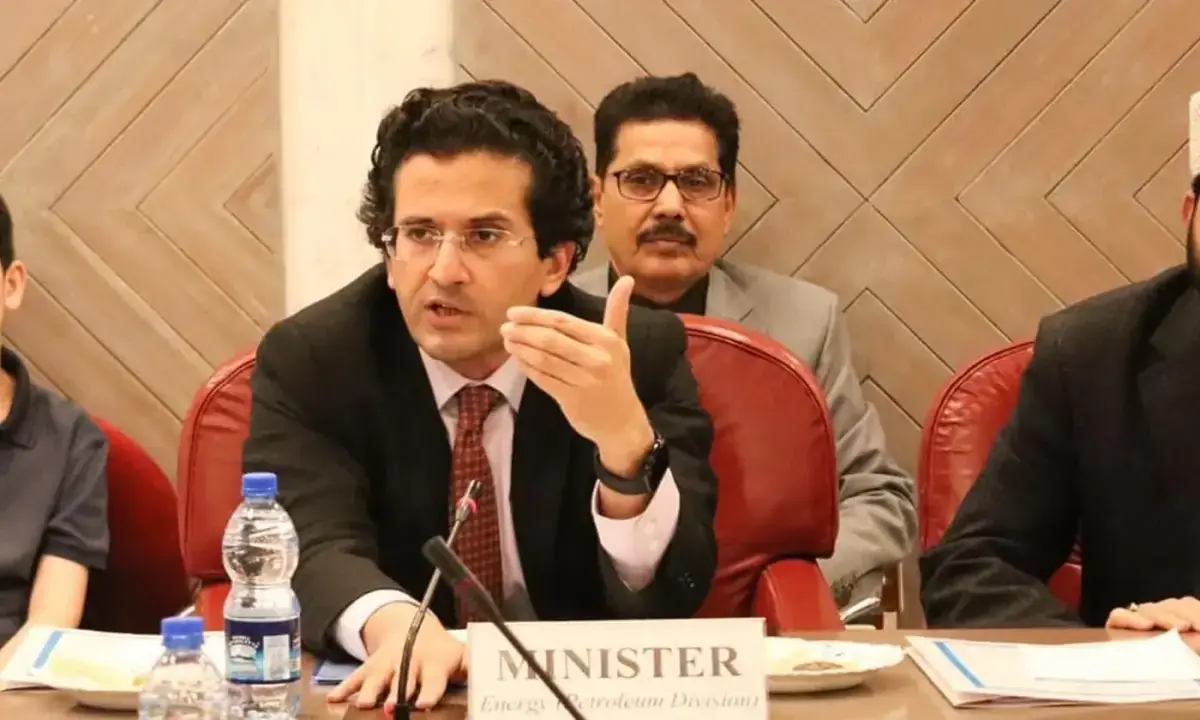
Pakistan’s Petroleum Minister Ali Pervaiz Malik stated on Saturday that the government is not granting preferential treatment to any specific sector following the decision to keep petrol and high-speed diesel (HSD) prices unchanged. The current rates, which remain at Rs299.50 per litre for petrol and Rs311.47 per litre for HSD, will continue “till further orders”.
The decision to maintain these price levels has drawn criticism from political figures and observers who argue that the government should pass on the benefits of fluctuating international oil markets to the public. Minister Malik defended the government’s position by citing international oil price data from late June, asserting that the state is working within its international obligations to manage fuel costs while avoiding placing undue burdens on any single segment of the economy.
Government Stance on Fuel Pricing and Market Obligations
Minister Malik addressed concerns regarding the stability of fuel prices by sharing data on international petroleum trends via the social media platform X. According to the statistics provided, petrol prices fluctuated between $90.36 and $98.35 per barrel during the period of June 22–26. High-speed diesel (HSD) saw trading ranges between $104.79 and $109.09 per barrel during the same timeframe. The minister emphasized that these figures reflect the complexities of the current global energy market.
“The government is neither giving preference to any sector nor imposing any undue burden on the other,” Malik stated. He further noted that Prime Minister Shehbaz Sharif had so far reduced the price of diesel and petrol by Rs200 per litre and Rs155 per litre, respectively.
Political and Public Response to Unchanged Prices
The decision to hold prices steady has faced pushback from opposition members and social critics. Former Sindh governor Mohammad Zubair questioned the move, asking why the financial benefits of international market trends are not being reflected in local pump prices. “Despite international oil prices at the pre-war level, in Pakistan petrol price still remains Rs 300 per litre. Why not pass the benefit to people?” Zubair remarked.
Haleem Adil Sheikh said that fuel prices had “fallen across much of the world”. Sheikh claimed that previous price hikes had resulted in significant profits for oil marketing companies and petrol pumps, arguing that the current maintenance of prices serves vested interests rather than the public. Meanwhile, the Jamiat Ulema-i-Islam (JUI) characterized the government’s approach as indifferent. Spokesperson Aslam Ghauri described the decision to keep petroleum product prices unchanged for a week as “tyrannical,” asserting that the public is bearing the brunt of the economic situation while private sector stakeholders remain protected.
Economic Impact and Historical Context
Fuel pricing in Pakistan serves as a vital economic indicator, as it directly influences the cost of living for the middle and lower-middle classes who rely on petrol for private transport, rickshaws, and two-wheelers. Similarly, diesel price adjustments impact the heavy transport sector, power generation, and large-scale industrial operations. The government shifted to a system of weekly price revisions on Friday nights following the energy market volatility triggered by the blockade of the Strait of Hormuz.

The current debate follows a period of intense price volatility earlier this year. On April 3, fuel prices reached a peak, with petrol rising by Rs137.24 per litre to Rs458.4 and HSD increasing by Rs184.49 per litre to reach Rs520.35. In response to widespread public backlash, the Prime Minister authorized a reduction to Rs378 per litre within 24 hours by cutting the petroleum levy by Rs80 per litre. Last week, the government had previously announced a Rs74 reduction for petrol and a Rs67 reduction for diesel, reflecting a temporary decline in international benchmarks.