
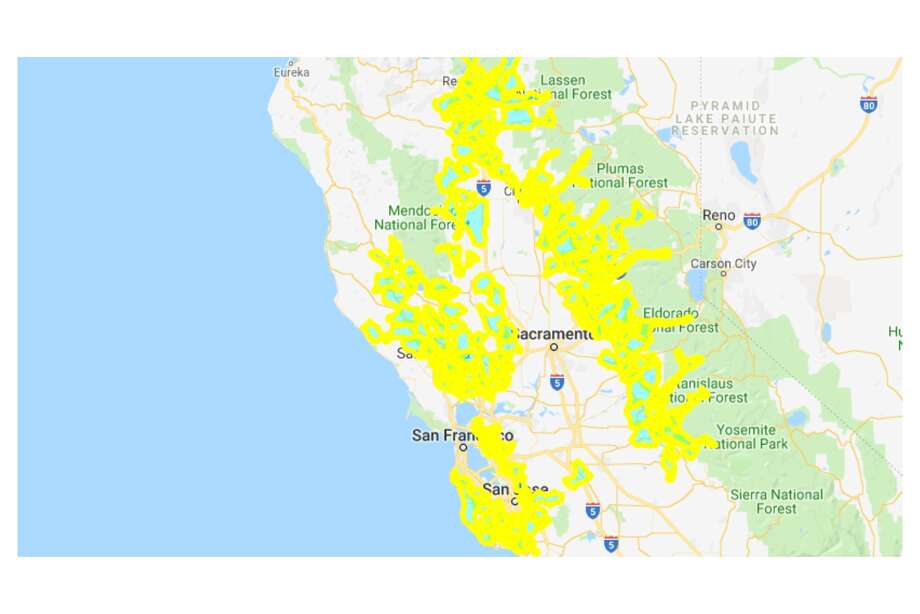
Residents across Northern California’s North Bay are on high alert as Pacific Gas and Electric (PG&E) warns of potential PG&. E power shutoffs Bay Area and surrounding regions in response to a forecast of strong, dry winds. The utility company has signaled that Public Safety Power Shutoffs (PSPS) may be necessary to mitigate the risk of wildfires during a period of elevated weather instability.
The warning comes as a low-pressure system moves south from the Pacific Northwest into the Great Basin, bringing breezy to gusty northerly winds. According to the utility, these conditions create a heightened risk of ignition, particularly in areas with dry vegetation and elevated terrain. While PG&E has not yet finalized which specific circuits will be deactivated, the company is urging customers in affected counties to prepare for possible outages.
These preemptive measures are part of a broader, often controversial, strategy to prevent utility-sparked wildfires in California’s volatile climate. By cutting power to specific lines before wind events occur, the utility aims to prevent downed lines or equipment failure from igniting dry brush, a scenario that has historically led to catastrophic blazes in the region.
Weather Catalyst: High Winds and Fire Risk
The primary driver for the current warnings is a forecast of dry offshore winds expected to impact the region between Sunday and Tuesday. Meteorologically, the situation is being driven by a low-pressure system transitioning from the Pacific Northwest toward the Great Basin, which is expected to generate significant gusty northerly winds.
The utility has indicated that the strongest winds will likely be concentrated along the west side of the Sacramento Valley and across the elevated terrain of the Bay Area. In some locations, localized gusts could exceed 55 mph, significantly increasing the probability of power line failure and subsequent wildfire ignition. These “red flag” conditions—characterized by low humidity, dry fuels and high winds—make the landscape particularly susceptible to rapid fire spread.
Affected Regions and Timing
The potential for power shutoffs is not limited to the immediate coastal Bay Area but extends into several inland and northern counties. PG&E has identified the following counties as potentially affected by these safety measures:

- Napa
- Sonoma
- Colusa
- Glenn
- Lake
- Tehama
- Yolo
The window for these potential shutoffs is currently projected from Sunday through Tuesday. Residents in these areas are encouraged to monitor official channels for real-time updates, as the decision to implement a shutoff is often made on a short-term basis depending on the actual wind speeds and humidity levels recorded on the ground.
Understanding Public Safety Power Shutoffs (PSPS)
A Public Safety Power Shutoff is a proactive measure where a utility intentionally de-energizes electric lines in high-fire-threat districts during extreme weather. Unlike a standard outage caused by a fallen tree or equipment failure, a PSPS is a planned event intended to protect lives and property by removing the source of potential ignition.
For many residents, these shutoffs represent a significant disruption to daily life, affecting everything from home security systems and medical equipment to refrigeration and communication. Local officials often coordinate with the utility to ensure that critical infrastructure, such as hospitals and emergency services, have backup power solutions in place before the grid is deactivated.
To track current status and planned outages, residents can access the PG&E Outage Center for the most current maps and notifications.
Institutional Pressure and Legislative Challenges
The current threat of power shutoffs arrives amidst a period of intense scrutiny and legal pressure for PG&E. The utility is currently facing challenges both in the legislative arena and through independent investigations into its infrastructure management.

In a significant move to increase local autonomy, State Senator Scott Wiener, who represents San Francisco, is advancing a new bill designed to allow cities to “break up” with PG&E. According to Senator Wiener, the legislation is intended to end the utility’s attempts to stall efforts by cities seeking to transition away from the company’s services. This bill reflects a growing trend of municipal frustration over the reliability and safety of the utility’s grid management.
PG&E recently released the findings of an independent investigation into a major power outage in San Francisco that occurred in December. That incident left approximately 130,000 customers without electricity. The investigation concluded that the outage was not the result of a single failure but was caused by a combination of multiple factors. This finding adds to the ongoing debate regarding the utility’s ability to maintain a resilient grid in the face of both environmental threats and technical failures.
The intersection of these legislative efforts and operational failures highlights the precarious balance the utility must strike: maintaining a functional power grid for millions of residents while aggressively mitigating the risk of wildfires that could lead to billions of dollars in liabilities and devastating loss of life.
As the wind event progresses through Tuesday, the focus remains on the immediate safety of the North Bay and Sacramento Valley regions. The next confirmed checkpoint for residents will be the official notification of whether specific power shutoffs are triggered, which will be communicated via the utility’s alert system and local emergency management agencies.
World Today Journal encourages readers to share this update with those in the affected North Bay and Sacramento Valley regions. We welcome your comments and experiences with local utility reliability in the section below.