
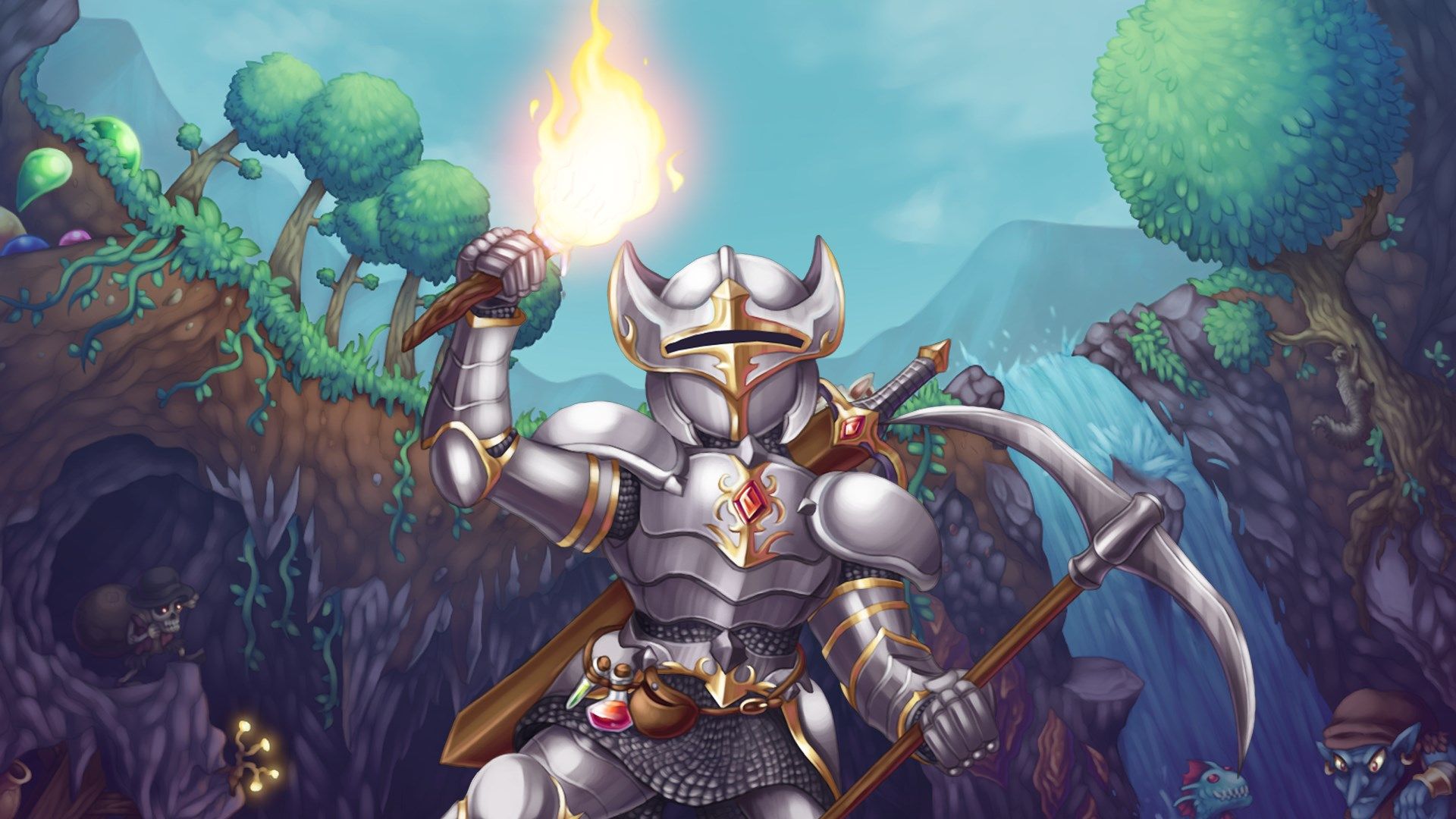
In an era of gaming defined by fleeting trends and “live service” titles that often vanish as quickly as they arrive, few indie titles have maintained the enduring grip of Terraria. The sandbox survival game has not only survived for 15 years but is currently thriving, with developer Re-Logic recently revealing a staggering Terraria average playtime for PC users that exceeds 100 hours.
According to a recent blog post from the developers, the average PC player has logged 101 hours and 18 minutes in the game. This metric is particularly striking when compared to the broader industry trend, where many players purchase expansive RPGs or survival titles only to abandon them before completion. For a game that blends exploration, combat, and construction, these numbers suggest a level of player retention that is rare even among the most successful sandbox titles.
Beyond individual engagement, the game’s commercial reach has reached a new peak. Re-Logic confirmed that Terraria has now sold 70 million copies across all supported platforms, cementing its status as one of the most successful indie games in history. This milestone puts the title in the same conversation as global mega-hits, proving that the “dig, fight, build” loop continues to resonate with a global audience long after its initial release.
Breaking Down the 70 Million: Platform Dominance and Modding
While Terraria is available on a vast array of hardware—ranging from mobile devices to consoles—the PC remains the primary engine of its growth. Of the 70 million total copies sold, the PC version alone accounts for 39.6 million units, according to official developer data from Re-Logic. This dominance is likely attributed to the platform’s flexibility and the robust community-driven ecosystem that surrounds the game.
A significant portion of this PC success is tied to the game’s modding community. Re-Logic highlighted that tModLoader, the essential tool for installing and managing mods, has seen 12.3 million downloads on Steam. By allowing players to fundamentally alter the game’s mechanics, add new bosses, and expand the world’s lore, the developers have effectively crowdsourced the game’s longevity, giving veteran players a reason to return to the world time and time again.
The game’s ability to run on nearly any piece of hardware—a philosophy the developers have leaned into for over a decade—has also expanded its accessibility. By maintaining low system requirements while delivering deep gameplay, Terraria has managed to penetrate markets that more demanding “AAA” titles often overlook.
The Paradox of the ‘Final Update’
For years, Re-Logic has engaged in a playful, almost legendary cycle of announcing a “final update,” only to eventually release another massive expansion. This pattern has become a hallmark of the game’s development cycle, turning the concept of a finished product into a moving target.

In their latest communication, the team has signaled a shift in how they approach these milestones. The developers stated they are moving away from the “final update” narrative, confirming that the game will continue to evolve. While the community has long awaited the 1.4.6 update, Re-Logic clarified that development will not cease once that version is deployed.
The most anticipated feature currently “on deck” is the implementation of crossplay. For a game that thrives on cooperative multiplayer, the ability for players on different platforms to build and battle together is seen as the next logical step in the game’s evolution. The team noted that they will share more details on how this will be implemented and what subsequent updates will entail as they progress.
Why Terraria Persists in a Crowded Market
The survival genre has become incredibly crowded over the last decade, with a constant stream of early-access titles promising the next great adventure. Yet, Terraria continues to maintain a significant presence, often seeing over 35,000 concurrent players on Steam alone. This persistence can be attributed to a few key design philosophies:
- Deep Progression: Unlike some survival games that plateau, Terraria offers a clear, challenging progression path from basic wooden tools to god-tier armor and weapons.
- Variety of Gameplay: By integrating elements of RPGs, platformers, and base-builders, the game appeals to multiple types of players—the “master builder,” the “collector,” and the “action gamer.”
- Consistent Value: Re-Logic has a history of providing gargantuan updates for free, ensuring that the game’s value proposition remains high for both new and returning players.
This commitment to the player base has created a virtuous cycle: high player retention leads to a vibrant community, which in turn attracts new players, providing the developers with the momentum to keep expanding the world. The game’s recent crossover appeal—intersecting with the popularity of other survival hits like Palworld—further demonstrates its timelessness.
What Happens Next for Terraria?
As Terraria moves toward the 1.4.6 update, the focus remains on technical refinement and the highly requested crossplay functionality. By removing the “final update” label, Re-Logic has effectively transitioned Terraria into a permanent state of growth, ensuring that the world will continue to expand regardless of the game’s age.

For players looking to dive in or return, the official Terraria Wiki remains the most comprehensive resource for navigating the game’s complex crafting systems and boss fights. With crossplay on the horizon and a commitment to updates beyond 1.4.6, the game is positioned to maintain its trajectory as a titan of the indie scene.
We will continue to monitor Re-Logic’s official channels for the specific release date of the crossplay update and the detailed roadmap for future content. Do you have hundreds of hours logged in Terraria, or are you just starting your first world? Share your experiences and your favorite builds in the comments below.