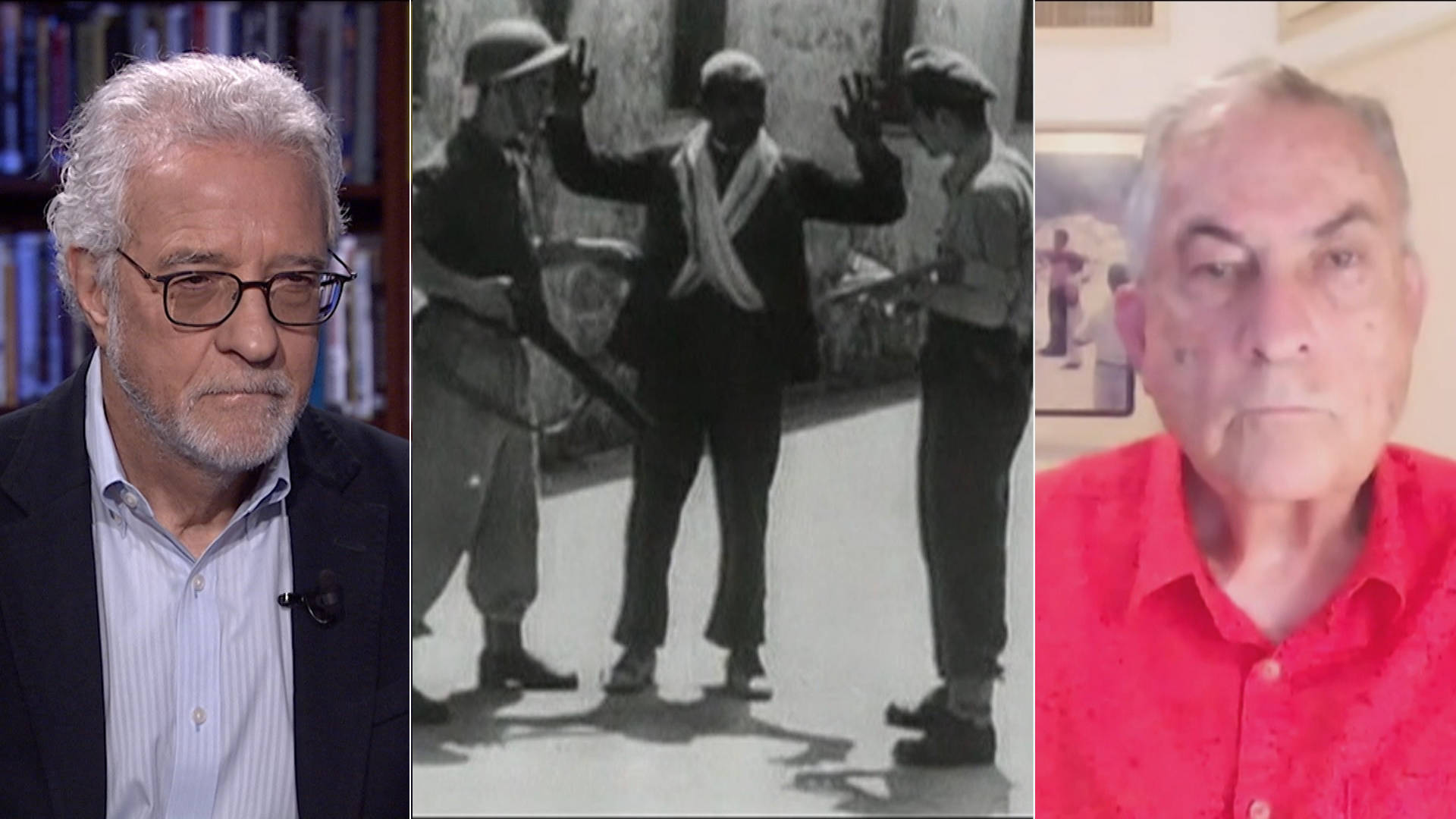
The intellectual discourse surrounding the foundational identity of the Jewish state has reached a critical juncture, as two of Israel’s most prominent thinkers clash over the legacy and future of the national movement. In a profound Zionism and the State of Israel debate, historian Omer Bartov and journalist Gideon Levy have presented diverging theories on whether the current crisis of the state is a result of a historical “wrong turn” or a predetermined outcome of its original design.
At the heart of this contention is a fundamental question: Was the Zionist movement a liberatory project that lost its way, or was it built upon a premise of exclusion and dispossession? This debate arrives at a moment of extreme volatility, as the state grapples with its conduct in Gaza and intensifying international legal scrutiny regarding its treatment of Palestinian populations.
For global observers and policymakers, the outcome of this internal ideological struggle is not merely academic. The trajectory of the Israeli state—whether it moves toward a more inclusive, constitutional democracy or deeper militarization—carries significant implications for regional stability, international law, and the economic landscape of the Levant.
The “Wrong Turn” Theory: A Lost Opportunity for Normalization
Omer Bartov, a professor of Holocaust and genocide studies at Brown University, argues that the early Zionist movement began with liberatory intentions. According to Bartov, the movement sought to emancipate a persecuted Jewish minority in Europe, modeling itself after the ethnonationalist movements of its time. In his recent work, Israel: What Went Wrong?, Bartov posits that the state had a pivotal window of opportunity to evolve into a “normal state.”
Bartov suggests that this normalization would have required the adoption of a constitution that guaranteed equality for all citizens, a clear definition of borders, and a legal framework capable of acknowledging and redressing the Nakba—the displacement of Palestinians during the 1948 conflict .

However, Bartov contends that the state chose a different path. Instead of addressing foundational violence, he argues that the modern Israeli state has become increasingly “militaristic, centralized, expansionist, racist and, as we’ve seen since October 2023, genocidal.” While Bartov does not categorize himself as an anti-Zionist, he asserts that for the state to survive and thrive, it “must discard Zionism” and “put it on the garbage heap of history,” requiring a total redefinition of the state’s identity dating back to its establishment in 1948.
The “Built This Way” Argument: Foundational Flaws
Gideon Levy, a veteran journalist for Haaretz, offers a more searing critique, rejecting the notion that Zionism ever had a “correct” path that was later abandoned. Levy argues that the movement was fundamentally unreformable because it “started wrong, without the belief or the conviction that People can live together.”
In contrast to Bartov’s view of a gradual descent into militarism, Levy maintains that the violent dispossession of Palestinians was not a deviation but was embedded into the very premise of the Zionist movement. In his writing, including the piece titled “Zionism Didn’t Go Wrong, It Was Always Built This Way,” Levy contends that the policies observed since 1948 have remained consistent in their objective, and execution.
From Levy’s perspective, the current state of affairs is not a failure of the system, but the system functioning exactly as intended. He suggests that the belief in a shared existence was absent from the beginning, making any attempt to “reform” the movement from within a futile exercise.
Institutional Aggression and the “Attack on the Messenger”
The debate between Bartov and Levy extends beyond historical theory into the current behavior of the Israeli government toward international critics. Both thinkers pointed to the government’s threat to file a defamation lawsuit against The New York Times following a column by Nicholas Kristof regarding the systemic sexual abuse of Palestinian detainees in Israeli prisons.
Bartov views these allegations of abuse not as isolated incidents but as a reflection of state policy. He characterizes the current environment as one where the state seeks “to abuse, to humiliate, to rape systematically.” the legal threats against journalists are seen as a mechanism of suppression rather than a pursuit of truth.
Levy describes the government’s reaction to such reports as a strategic effort “to attack the messenger.” By shifting the focus from the alleged crimes to the credibility of the reporter, the state avoids addressing the systemic issues within its detention centers and military apparatus.
What Which means for the Future of the Region
The divergence between Bartov and Levy represents a broader schism within the Israeli intellectual community. The “Wrong Turn” school of thought suggests that a return to a perceived original idealism—coupled with a new, inclusive constitution—could provide a path toward peace. The “Built This Way” school suggests that nothing short of a complete dismantling of the state’s foundational ideology can resolve the conflict.
This ideological battle is taking place against a backdrop of unprecedented international pressure. With the International Court of Justice (ICJ) examining claims related to the conflict in Gaza, the internal debate over whether the state’s actions are “genocidal” or “militaristic” has moved from the periphery of academic discussion to the center of global legal proceedings .
For the global business community and economic analysts, this instability creates a high-risk environment. The lack of a settled national identity and the persistence of systemic conflict hinder long-term investment and regional economic integration, as the state’s internal contradictions continue to manifest as external volatility.
Key Perspectives on the Zionist Legacy
- Omer Bartov: Views Zionism as an initially liberatory project that failed to transition into a constitutional, equal democracy, eventually becoming a militarized state.
- Gideon Levy: Argues that Zionism was designed for displacement and exclusion from its inception, making it inherently incapable of reform.
- Institutional Impact: Both agree that the current state apparatus uses legal and military power to silence reports of human rights abuses, particularly regarding detainees.
The next critical checkpoint for this discourse will be the continued rulings and provisional measures issued by the International Court of Justice, which will provide a legal determination on the nature of the state’s conduct in Gaza. These rulings are likely to either validate the concerns raised by Bartov and Levy or provide the Israeli government with the legal cover to maintain its current trajectory.
We invite our readers to share their perspectives on these divergent views of state identity and historical legacy in the comments section below.