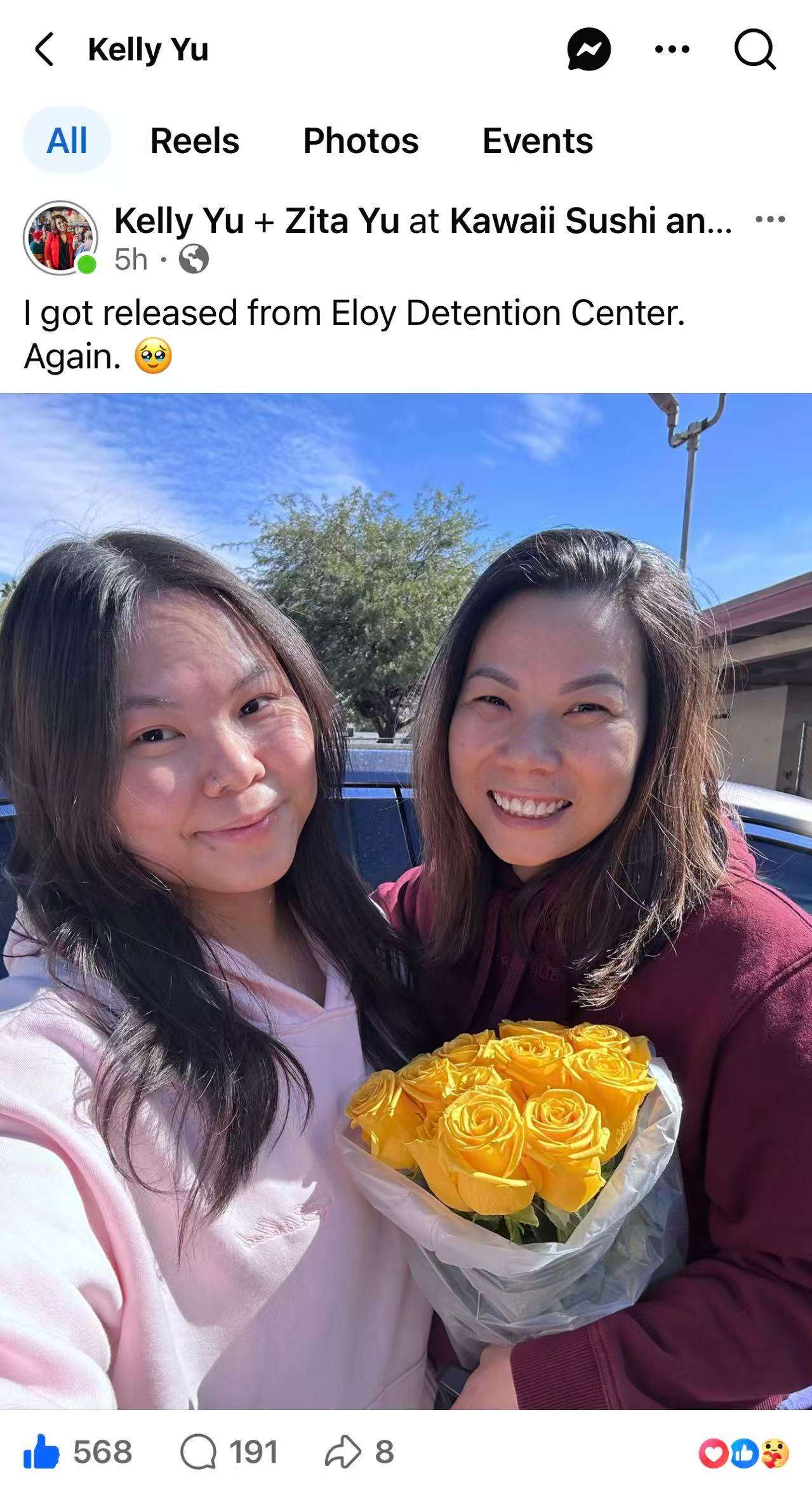
Peoria, Arizona – After months of detention and a groundswell of community support, Kelly Yu, the owner of two popular sushi restaurants in the West Valley, has been released from Immigration and Customs Enforcement (ICE) custody. The release, confirmed by Yu on Facebook, marks a temporary reprieve in a case that has highlighted the precarious situation faced by long-term undocumented immigrants contributing to the local economy and community fabric. The story of Kelly Yu, a dedicated business owner and mother, has resonated deeply, sparking a debate about immigration enforcement and the impact on families and compact businesses.
Yu, who runs Kawaii Sushi and Asian Cuisine in Peoria and Glendale, was initially detained during a routine check-in with ICE in May 2025, according to reports. Her detention ignited a campaign for her release, drawing support from a diverse coalition of community members, lawmakers, and even political figures across the aisle. The case underscores the complexities of the U.S. Immigration system and the challenges faced by individuals seeking asylum, even after decades of establishing roots in the country.
The legal battle for Yu’s release centered on a habeas corpus petition filed by her attorneys, arguing that her detention was unlawful. A judge ultimately agreed, ordering her release under specific conditions. While celebrating her freedom, Yu now faces restrictions, including the requirement to wear an ankle monitor, remain within a 75-mile radius, and regularly check in with the courts. This conditional release underscores the ongoing legal uncertainty surrounding her status in the United States.
A Decades-Long Journey and a Community’s Response
Kelly Yu’s journey to the United States began over two decades ago, fleeing China in 2004 to seek asylum from the country’s one-child policy. Arriving while pregnant with her daughter, Zita, she built a life in the West Valley, establishing a successful business and becoming a valued member of the community. Despite her long-standing presence and contributions, her initial asylum claim was denied in 2005, and subsequent appeals were unsuccessful, including a final rejection by the Ninth Circuit Court of Appeals in 2016, according to 12News.
Kawaii Sushi has become a local favorite, known not only for its cuisine but also for its commitment to the community. Yu and her husband, Aldo, a U.S. Citizen, have consistently supported local organizations, including donating meals to homeless shelters, sponsoring youth sports teams, and supporting law enforcement agencies. This dedication to the West Valley further fueled the campaign for her release.
The outpouring of support wasn’t limited to one political party. Lisa Everett, chairwoman of the 29th District of the Republican Party, and Brent Peak, co-chairman of the progressive group Northwest Valley Indivisible, both visited Yu during her detention, demonstrating the broad appeal of her case. This bipartisan support was also reflected in a joint letter sent to President Biden by Arizona Senators Mark Kelly and Ruben Gallego, urging a review of her case, as reported by KTAR News.
Legal Maneuvering and the Habeas Corpus Petition
The key to Yu’s release was the successful filing of a habeas corpus petition, a legal action challenging the lawfulness of her detention. This petition argued that ICE lacked a legal basis for continuing to hold Yu, and a judge ultimately agreed, ordering her release with the aforementioned conditions. A habeas corpus petition is a fundamental right enshrined in the U.S. Constitution, allowing individuals to challenge unlawful imprisonment. The success of this petition highlights the importance of legal representation and the potential for challenging detention orders.
Despite her release, Yu’s legal battle is far from over. She remains subject to ongoing court proceedings and continues to seek a path to legal status in the United States. She expressed her hope for a future resolution, stating, “I hope that [someone] can help me in the future that can change my status in the United States,” according to FOX 10 Phoenix.
Impact on the West Valley Chinese Community
Yu’s case has had a profound impact on the West Valley’s Chinese community, raising awareness about the legal risks faced by immigrants and fostering a sense of unity. Many Chinese merchants have expressed concern about the potential for similar situations, emphasizing the require for greater legal awareness and community support. The incident has also prompted increased patronage of Kawaii Sushi, with customers demonstrating their solidarity through their business.
The broader implications of Yu’s case extend beyond the local community, highlighting the challenges faced by small business owners and long-term immigrants in navigating the complex U.S. Immigration system. Community observers note that the case underscores the uncertainty and vulnerability experienced by individuals who have built lives and contributed to the economy for decades, yet lack secure legal status.
The release of Kelly Yu is a victory for her family, her community, and her supporters. However, it also serves as a stark reminder of the ongoing challenges faced by immigrants in the United States. As Yu continues to navigate the legal system, her story will undoubtedly continue to inspire and advocate for immigration reform and fair treatment for all.
Yu’s next scheduled check-in with immigration authorities is currently set for March 2026, according to sources familiar with the case. She will continue to comply with the conditions of her release, including the ankle monitor and travel restrictions, while her legal team explores options for obtaining permanent legal status. The community remains committed to supporting Yu and her family during this ongoing process.
What are your thoughts on Kelly Yu’s case? Share your comments below and help spread awareness about the challenges faced by immigrants in our communities.