
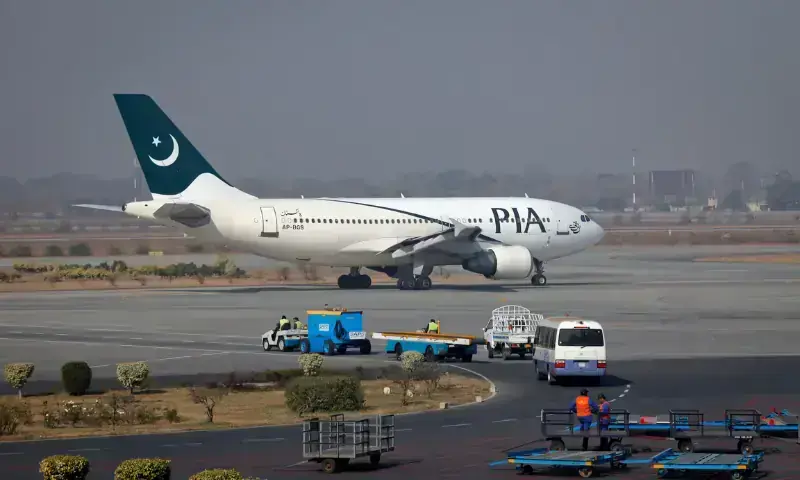
The landscape of South Asian aviation is witnessing a historic shift as the process to fully privatize Pakistan’s national carrier reaches its final stage. The Privatisation Commission announced on Thursday that a consortium led by Arif Habib Corporation Limited has formally notified its intent to acquire the remaining 25 per cent equity stake in Pakistan International Airlines Corporation Limited (PIACL).
This move marks the culmination of a strategic effort to transition the airline from state control to full private-sector ownership. The Arif Habib-led consortium PIA acquisition is not merely a change in shareholding but a massive financial undertaking designed to rescue and modernize a carrier that has long struggled with operational inefficiencies and mounting debt.
The total private-sector investment associated with this final transaction is expected to reach approximately Rs180 billion. This figure is split into two distinct streams: a minimum of Rs55 billion will be paid directly to the government as divestment proceeds, while the remaining Rs125 billion will be injected as fresh equity into PIACL to facilitate the airline’s essential recapitalisation per official announcements.
A Strategic Blueprint for Recapitalisation
From an economic perspective, the injection of Rs125 billion in fresh equity is the most critical component of this deal. Recapitalisation is the process of replacing a company’s debt with equity or adding new capital to improve its financial health. For PIACL, this capital is earmarked for a comprehensive overhaul of its current capabilities.
According to the Privatisation Commission, the planned equity injection will be utilized to support fleet expansion and modernisation, the development of new routes, and significant improvements in both operational systems and customer service. By updating its fleet and diversifying its routes, the new owners aim to restore the airline’s competitiveness in a crowded international market.
Timeline and Legal Framework
The transition of management control is moving rapidly. The Privatisation Commission has indicated that control is expected to be transferred on or before May 25, which serves as the first closing date. This timeline is subject to the fulfilment of specific conditions outlined in the Share Purchase and Subscription Agreement (SPSA), which was signed on January 29 on that date.

To secure this final 25 per cent stake—which functions as a call option—the consortium has already submitted the necessary financial guarantees. This includes a standby letter of credit and a bank guarantee, ensuring that the funds are available and the intent to acquire is backed by verified capital. The Privatisation Commission, the government of Pakistan, PIACL, and the consortium are currently working jointly to satisfy all conditions precedent before the May 25 deadline.
The Consortium’s Composition
The acquisition is being driven by a powerful group of diverse corporate entities, combining expertise in finance, agriculture, and education. The consortium comprises the following members:
- Arif Habib Corporation Limited
- Fatima Fertiliser Company Limited
- Lake City Holdings (Private) Limited
- The City School (Private) Limited
- AKD Group Holdings (Private) Limited
- Fauji Fertiliser Company Limited
Context: The Path to Full Ownership
This final acquisition is the second phase of a larger privatization strategy. The consortium first entered the fray in December 2025, when it acquired a 75 per cent stake in the national flag carrier for Rs135 billion during the initial transaction. By exercising the option to buy the remaining 25 per cent, the Arif Habib-led group is moving toward 100 per cent ownership.
For the Pakistani government, this represents a significant divestment. By transferring the airline to the private sector, the state reduces its financial exposure to the carrier’s losses while securing a substantial sum in divestment proceeds to bolster the national treasury.
| Phase | Stake Acquired | Investment/Value | Date |
|---|---|---|---|
| Initial Acquisition | 75% | Rs135 Billion | December 2025 |
| Final Acquisition | 25% | ~Rs180 Billion (Total) | April/May 2026 |
| Total Equity Injection | 100% | Rs125 Billion (Fresh Capital) | Ongoing |
What So for the Aviation Sector
The complete privatization of a national carrier is often a complex maneuver. The success of this transition will depend on how effectively the consortium manages the “recapitalisation” phase. Injecting Rs125 billion is a strong start, but the real challenge lies in operational execution—specifically, reducing turnaround times, improving safety records, and optimizing route profitability.
For passengers, the promise of “improvements in customer service and operational systems” is the most tangible benefit. If the consortium can successfully modernize the fleet and streamline management, PIACL could return to its former status as a competitive player in the global aviation market.
Key Takeaways for Stakeholders
- Government of Pakistan: Receives at least Rs55 billion in immediate divestment proceeds and removes a significant liability from the state balance sheet.
- PIACL: Gains a massive capital infusion of Rs125 billion for fleet and route modernization.
- The Consortium: Assumes 100% risk and reward of the national carrier, with management control expected by late May.
- Global Markets: Signals Pakistan’s commitment to private-sector-led growth and the privatization of state-owned enterprises (SOEs).
The next critical checkpoint for this transaction is May 25, the announced first closing date for the transfer of management control. Whether the conditions of the SPSA are met in full will determine if the transition happens on schedule.
Do you believe full privatization is the right move for national carriers in emerging markets? Share your thoughts in the comments below or share this analysis with your professional network.