AI Revolutionizes Healthcare Workforce Management: Planbase Secures $2.1M to Tackle Staffing Challenges
The healthcare industry faces a unique adn escalating challenge: managing a complex workforce amidst rising patient demand and increasingly stringent regulations. Now,a new player is entering the field with a bold promise – to fully automate employee management using the power of Artificial Intelligence. Planbase, the first AI-native employee management platform designed specifically for healthcare, has officially launched, backed by $2.1 million in seed funding led by Y Combinator, LocalGlobe, and a consortium of prominent angel investors.
This isn’t simply another scheduling tool. planbase aims to fundamentally reshape how healthcare clinics operate, freeing up valuable time for clinicians to focus on what matters most: patient care. But can AI truly navigate the intricate landscape of healthcare staffing? Let’s delve into the details.
The Pain Points of Healthcare Workforce Management
For healthcare administrators,the daily reality is a labyrinth of tasks. Predicting staffing needs accurately, ensuring compliant scheduling across multiple states, and meticulously tracking licenses and credentials – these are traditionally manual processes, often requiring dedicated teams and consuming notable resources. The margin for error is high, with potential consequences ranging from costly fines to compromised patient care.
“today clinics are overwhelmed with all the complex tasks required with workforce management,” explains Joe Shearman, Planbase co-founder.”this set of tasks around scheduling and pay, and also patient volume predictions, are ideal for AI to automate so doctors and nurses can spend more time on patient care, and clinics reduce risks of costly human errors.”
The current system isn’t just inefficient; it’s unsustainable. Healthcare is already grappling with widespread staff shortages, and administrative burdens onyl exacerbate the problem. A solution that streamlines these processes is not just desirable – it’s essential.
Planbase: An AI-Powered Solution with Proven results
Planbase isn’t built with AI; it’s native to AI. This distinction is crucial. The platform was designed from the ground up to leverage the capabilities of artificial intelligence, rather than attempting to retrofit existing systems. This allows for a level of automation and insight previously unattainable.
Early results demonstrate the platform’s potential. Planbase has already secured multiple customers managing thousands of providers and collectively serving over 30 million patients. The impact is tangible:
* Significant Time Savings: Clinics are reporting reductions of hundreds, even thousands, of hours per month in administrative tasks.
* Increased Patient Volume: OpenLoop, a telehealth platform utilizing Planbase, has seen a 40% increase in patient volume.
* Streamlined Scheduling: OpenLoop also reported a 70% reduction in scheduling time across their entire provider operations team, as highlighted by Practice Manager noah Van Eldik.
These aren’t incremental improvements; they represent a fundamental shift in operational efficiency. The ROI is clear: by automating complex tasks, Planbase allows healthcare organizations to do more with less, ultimately improving both patient care and financial performance.
Core AI Features Driving the Transformation
Planbase’s success hinges on three core AI features designed to simplify and automate critical workflows:
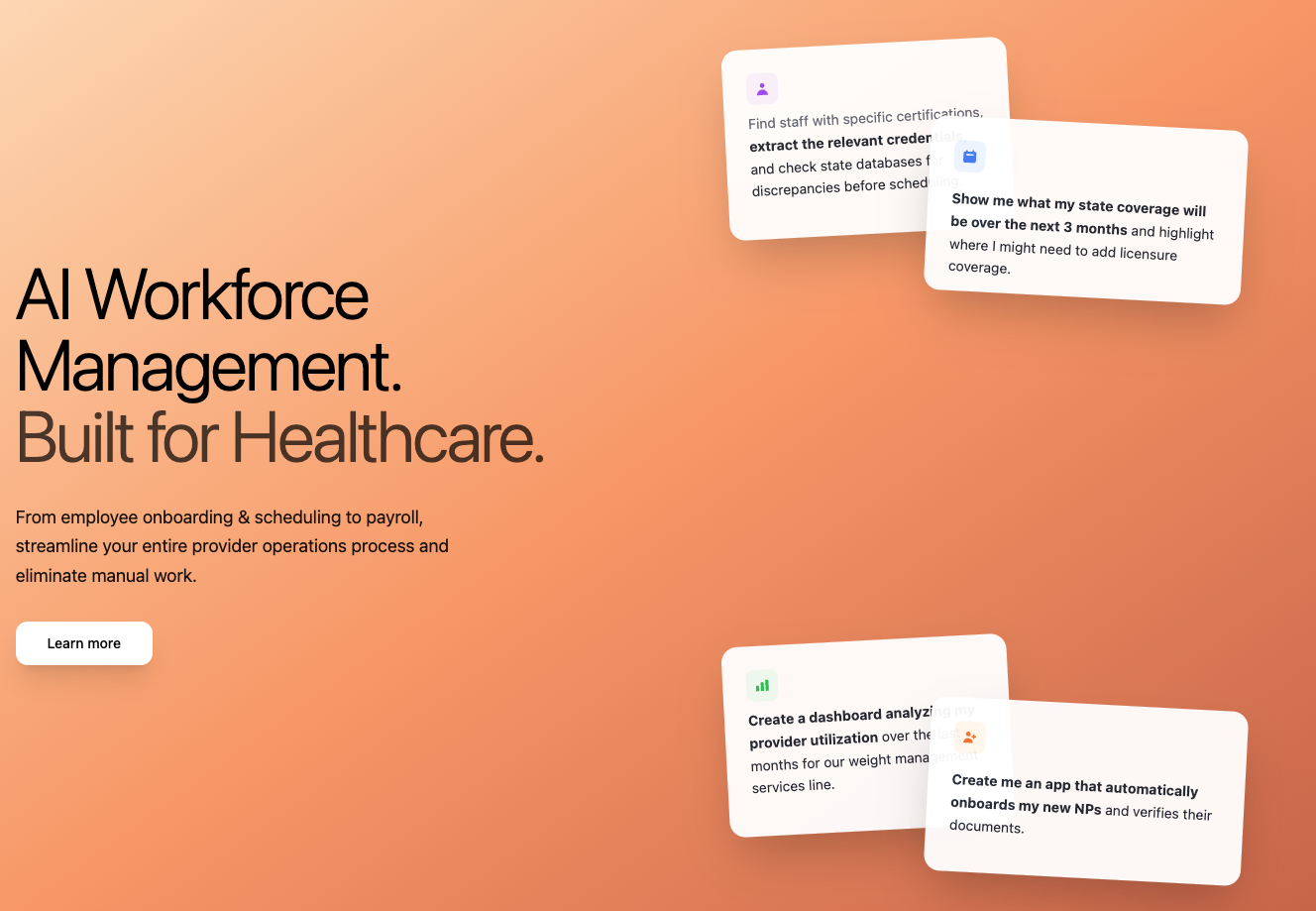
- Interactive Interface with Natural Language Processing: Forget clunky dashboards and complex reports. Planbase allows users to interact with the platform using plain language. Need to know staffing requirements for the Friday after Thanksgiving? Simply ask, “how many nurses and physicians do I need to schedule for the friday after Thanksgiving?” The platform will generate a customized UI or provide an immediate, accurate answer tailored to your clinic’s specific needs. This intuitive approach democratizes data access and empowers users at all levels.
- Predictive Analytics for Proactive staffing: Accurately forecasting patient visit volumes is paramount to effective staffing. Planbase’s predictive analytics engine goes beyond simple historical data, factoring in seasonal trends (like flu season), local demographics, and other relevant variables to provide highly accurate forecasts. This allows clinics to proactively adjust staffing levels, ensuring adequate coverage without unnecessary costs.
- Agentic Workflows for Autonomous Task Management: Perhaps the most groundbreaking feature is Planbase’s use of AI agents. these autonomous agents handle time-consuming, repetitive tasks such as verifying provider licenses across state lines, flagging expiring credentials, and building compliant staffing plans. This not only reduces the risk of human error but also frees up staff to focus on higher-value activities.
The Future of Healthcare Workforce Management
Planbase’s launch represents a significant step towards a more efficient and sustainable healthcare system.The $2.1 million in seed funding will be used to expand the platform’s reach to more
Worth a look