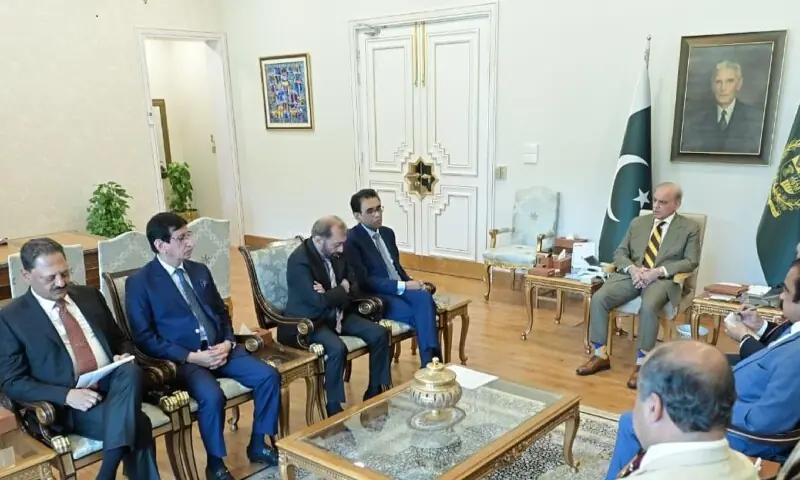
In a move aimed at strengthening coalition synergy, the Prime Minister’s Office (PMO) announced on Thursday that Dr. Khalid Maqbool Siddiqui, the Minister for Education and leader of the Muttahida Qaumi Movement-Pakistan (MQM-P), has been appointed as a member of the Economic Coordination Committee (ECC). The decision follows a series of high-level consultations between the government and its coalition partners regarding fiscal policy and regional development.
The appointment of Dr. Siddiqui signals an effort by the administration to broaden the consultative base of the cabinet’s most influential economic body. Prime Minister Shehbaz Sharif, in an official statement, expressed confidence that the inclusion of the MQM-P leader would bolster the government’s efforts toward national progress and economic stability. The move comes as the government prepares for the upcoming federal budget, a critical juncture for the nation’s financial planning and public welfare initiatives.
Strategic Integration of Coalition Partners
The inclusion of Dr. Siddiqui in the ECC follows a meeting held on Wednesday between Prime Minister Sharif and an MQM-P delegation. During these discussions, the delegation presented a series of proposals focused on budget priorities and public development projects. The government has prioritized the progress of Sindh and Karachi, and the PMO noted that these discussions were integral to aligning the coalition’s vision for the country’s socio-economic trajectory.
The Prime Minister acknowledged the role of the MQM-P as a vital partner in the federal government. According to the PMO, the administration has directed relevant authorities to thoroughly review the budget proposals submitted by the party, with the aim of integrating feasible and comprehensive measures into the national plan. This collaborative approach is intended to ensure that the diverse needs of regional constituencies are reflected in federal economic policy.
The Role and Structure of the ECC
The Economic Coordination Committee serves as the cabinet’s primary forum for addressing urgent financial matters and ensuring inter-departmental harmony. Its mandate is broad, covering everything from the oversight of monetary and credit conditions to the formulation of policies designed to curb inflation and promote export-oriented growth. The committee is essential for maintaining a cohesive economic policy across various government divisions, acting as the central engine for decisions that impact the country’s fiscal health.
In 2025, the government implemented significant structural reforms within the ECC to enhance its operational efficacy. Under these changes, the chairmanship of the committee was formally assigned to the Finance Minister, Muhammad Aurangzeb. This departure from previous practices—where the finance minister would preside over meetings without a defined structural role—was designed to provide clearer accountability and leadership within the committee. The committee’s ongoing work remains central to the government’s stated objective of fostering a welfare state through sustainable economic management.
Looking Ahead: Budgetary Consultations
As the government moves closer to the finalization of the annual budget, the role of the ECC will become increasingly prominent. The committee is tasked with reviewing fiscal data and coordinating the implementation of development projects, including those specifically earmarked for the urban centers of Sindh. For the public and stakeholders, the integration of coalition leadership into these high-level discussions suggests a focus on consensus-driven policy making.
The government has not yet announced the date for the next formal ECC session, though the inclusion of new members is expected to influence the upcoming policy debates. As the administration continues to navigate complex economic challenges, the focus remains on balancing fiscal discipline with the need for public investment. We will continue to monitor official updates from the Prime Minister’s Office regarding the progress of these budget consultations and any subsequent economic policy announcements.
We invite our readers to join the conversation on these developments. How do you believe the inclusion of coalition partners in high-level economic committees will impact regional development? Share your thoughts in the comments section below.
Related reading