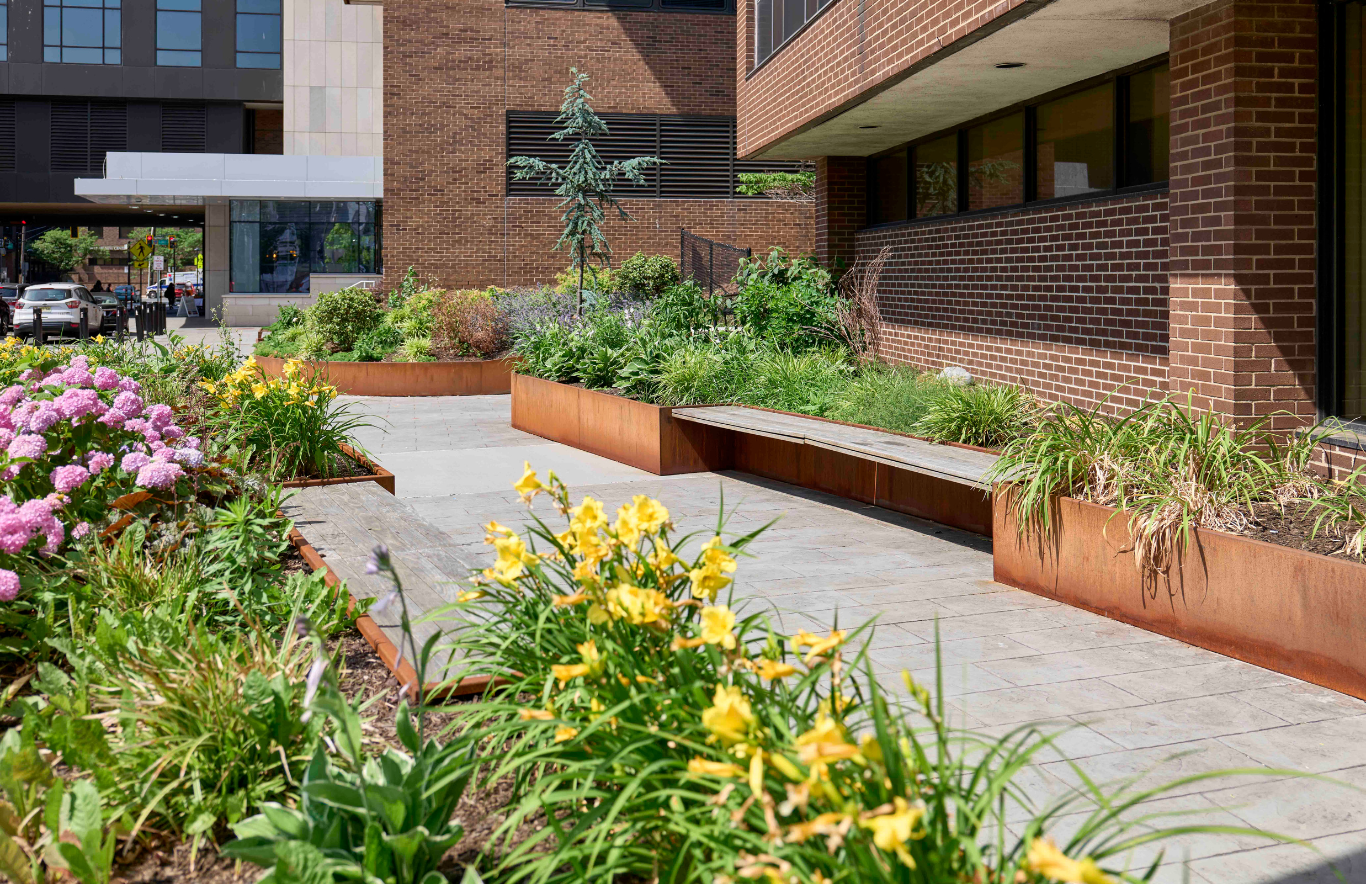
Healthcare facilities across the United States are increasingly integrating pocket gardens into their urban campuses to provide essential green space in densely developed areas. These small-scale, strategically placed landscapes offer patients, staff, and local residents immediate access to nature, helping to mitigate the environmental and psychological impacts of urban density. By repurposing underutilized land, healthcare institutions are finding that these interventions can improve public health outcomes and campus walkability without the need for large-scale, disruptive redevelopment projects.
As modern cities face the dual challenges of population growth and aging infrastructure, the role of green infrastructure in institutional settings has become more pronounced. Recent design initiatives at facilities like the Newark Beth Israel Medical Center (NBI) in New Jersey demonstrate how intentional exterior design can soften the transition between a medical campus and its surrounding historic residential neighborhoods. According to architectural planning assessments, such projects focus on enhancing the “legibility” of campus entries while simultaneously addressing climate-related issues like stormwater runoff and the urban heat island (UHI) effect.
Improving Patient and Community Well-Being
The primary health-focused objective of a pocket garden is to create a restorative environment that supports both physical and emotional recovery. For patients, these spaces provide a necessary change of pace from clinical settings, while for hospital staff, they offer a brief, accessible respite during high-stress shifts. The design strategy often involves the installation of shade-providing trees, integrated seating, and intuitive lighting that ensures the spaces remain safe and usable throughout the day and evening.

Beyond the immediate clinical benefits, these gardens serve as a form of social infrastructure. In urban settings, where medical centers have historically been viewed as walled-off, inaccessible institutions, pocket gardens function as a “soft” boundary. By opening these spaces to the public, hospitals can foster a better relationship with their local communities. Residents of surrounding neighborhoods can utilize these green pockets for leisure, which in turn helps integrate the medical facility into the daily fabric of the city rather than isolating it behind fences or parking lots.
Environmental Performance and Climate Resilience
Pocket gardens provide measurable environmental services that help healthcare campuses meet sustainability goals. The strategic planting of understory vegetation and trees helps to reduce the UHI effect—a common phenomenon in cities where concrete and asphalt absorb and re-radiate heat. Research indicates that increasing canopy cover in urban areas can significantly lower surface temperatures, providing a more comfortable environment for pedestrians.

Furthermore, these installations act as green infrastructure for stormwater management. By replacing impermeable surfaces with planting beds and permeable plazas, campuses can increase rainwater absorption, thereby reducing the burden on municipal sewer systems during heavy rain events. For large-scale institutional campuses that lack the square footage for expansive parks, pocket gardens offer a flexible and cost-effective method for implementing climate-resilient design. This approach allows for incremental, phased implementation, making it an attractive option for healthcare systems managing tight capital improvement budgets.
Scalability and Future Design Trends
The success of the Newark Beth Israel project—which involved the addition of more than 50 new trees and the creation of mini-plazas across an 11-acre campus—highlights the potential for scalability. The project served as a direct response to leadership requests for an improved sense of place and safety, demonstrating that even modest physical interventions can have a profound impact on the user experience. By embedding green infrastructure into the initial design process, healthcare providers can ensure that sustainability and community connectivity are not afterthoughts, but core components of the campus plan.
As healthcare systems continue to expand in urban environments, the gap between interior clinical spaces and the exterior urban landscape remains a critical focus for planners. The shift toward human-centric design suggests that future healthcare developments will prioritize these restorative, small-scale green interventions. This trend is expected to grow as more institutions recognize the value of connecting their facilities to the broader community, ensuring that their physical presence contributes to, rather than detracts from, the health of the neighborhood.

The integration of these gardens remains a voluntary design choice for most healthcare organizations, though many are adopting these practices as part of broader environmental, social, and governance (ESG) reporting frameworks. Readers interested in the specific design standards for healthcare landscapes can find resources through the Center for Health Design or by reviewing individual hospital campus master plans, which are frequently updated to reflect new urban design guidelines.
We invite readers to share their experiences with green spaces in clinical settings in the comments section below. As more institutions adopt these strategies, tracking the long-term impact on patient satisfaction and community health will be a central topic in the ongoing conversation about sustainable hospital design.