
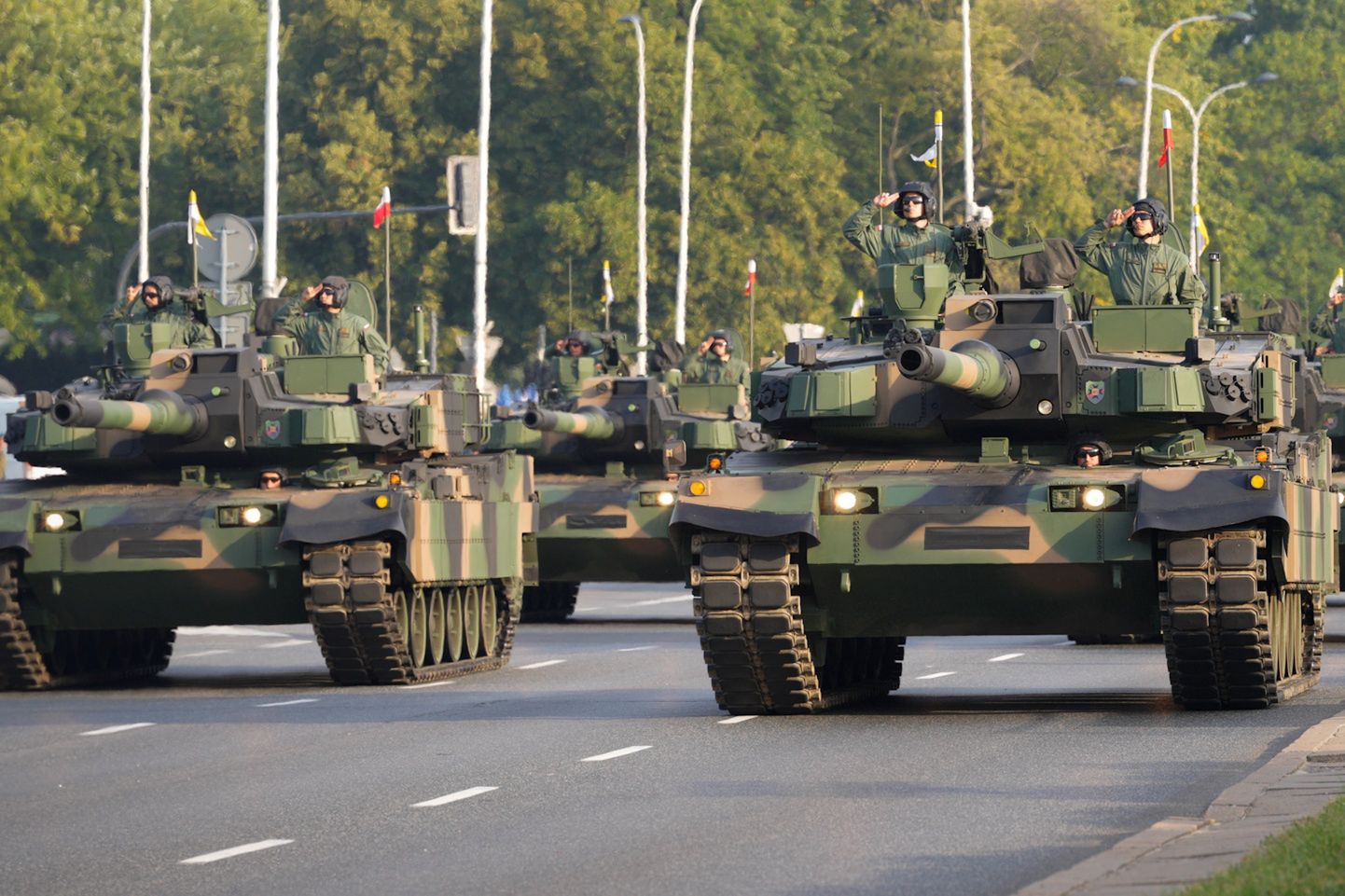
For decades, the strategy of many Central European nations regarding defense procurement was characterized by a reliance on “off-the-shelf” purchases—buying finished systems from global superpowers and accepting the terms provided. However, Poland is currently executing one of the most aggressive military transformations in modern history, fundamentally rewriting its playbook. The nation is moving away from what some officials describe as a period of “naivety,” shifting toward a sophisticated model of technology transfer, domestic co-production and strategic industrial autonomy.
This pivot is not merely about adding hardware to the inventory; it is a calculated economic and security maneuver. By demanding that foreign partners share intellectual property and establish local production lines, Poland aims to evolve from a primary consumer of arms into a regional hub for the European defense industry. The scale of this ambition is reflected in the budget: in 2024, Poland’s defense spending reached approximately 158 billion PLN, representing more than 4% of its GDP, one of the highest percentages among all NATO members NATO Defense Expenditure.
As a financial journalist who has tracked global market shifts for nearly two decades, I view this as more than a military buildup. It is an industrial policy. Poland is leveraging its current security urgency to build a sustainable defense-industrial complex that can provide high-skilled jobs and export potential for decades to reach. The goal is clear: to ensure that the next generation of weaponry is not just used by the Polish Armed Forces, but built within Polish borders.
The South Korean Catalyst: Beyond Simple Procurement
The centerpiece of this new strategy is Poland’s strategic partnership with South Korea. Unlike traditional deals with U.S. Or European firms, which can often be bogged down by slow delivery timelines and restrictive technology clauses, the South Korean agreements were designed for speed, and localization. Poland has secured contracts for 48 FA-50 light combat aircraft, 1,000 K2 main battle tanks, over 600 K9 howitzers, and approximately 288 K239 Chunmoo rocket launchers Ministry of National Defence of Poland.
The “end of naivety” is most evident in how these contracts are structured. Poland is no longer content with simply receiving crates of equipment. The current framework emphasizes the “transfer of technology” (ToT), requiring South Korean firms to collaborate with Polish state-owned enterprises, such as PGZ (Polska Grupa Zbrojeniowa). This ensures that Polish engineers learn the intricacies of K2 tank assembly and K9 howitzer maintenance, eventually allowing for the production of these systems locally.
This approach mitigates a critical strategic risk: dependency. In a prolonged conflict, relying on a supply chain that spans half the globe is a vulnerability. By establishing domestic production capabilities, Poland is securing its “ammunition sovereignty,” ensuring that the means of production and repair are located near the front lines of the NATO eastern flank. This shift represents a move toward strategic autonomy, reducing the risk that political shifts in distant capitals could compromise Poland’s operational readiness.
Economic Implications: Building a Defense Industrial Hub
From an economic perspective, the surge in defense spending is acting as a massive stimulus for the Polish industrial sector. The defense industry is no longer a niche enclave of state-owned factories; it is becoming a driver of broader economic growth. The sector currently employs over 50,000 people directly, with estimates suggesting that when subcontractors and related sectors are included, the number rises to approximately 100,000 Industrial Development Agency (ARP).

This growth is creating a “talent war” in fields such as aerospace engineering, cybersecurity, and artificial intelligence. To meet this demand, the Polish government and private firms are investing heavily in upskilling programs and public-private partnerships. The objective is to attract professionals from the automotive and machinery sectors—where Poland already possesses a strong competitive advantage in labor costs and technical skill—and transition them into defense manufacturing.
However, this rapid expansion brings significant macroeconomic challenges. The sheer volume of investment risks overheating specific labor markets and increasing inflationary pressure within the industrial sector. The sustainability of spending over 4% of GDP requires a disciplined fiscal approach to avoid destabilizing the national deficit. The challenge for the Polish Ministry of Finance will be balancing these essential security investments with long-term economic stability.
The Role of Private Capital and European Funding
While state-owned enterprises have led the charge, there is a growing movement to integrate private business into the defense ecosystem. Private firms are increasingly being tapped for specialized components, software development, and logistics. This diversification is essential for innovation, as private sector agility often outpaces the bureaucratic nature of state-run entities.
Poland is aggressively pursuing European Union funds to modernize its defense infrastructure. By aligning national goals with EU initiatives for defense cooperation, Poland can offset some of the costs of modernization while ensuring its systems are interoperable with other NATO allies. This dual-track funding strategy—combining national budgets with EU grants—is critical for maintaining the pace of procurement without overburdening the taxpayer.
Strategic Ambitions: A Leader in the European Arms Market
Poland’s ultimate goal is to transition from a buyer to a seller. By mastering the production of advanced South Korean systems and integrating them with domestic innovations, Poland is positioning itself as a primary supplier for other nations in Central and Eastern Europe. Many of Poland’s neighbors face similar security threats and are looking for proven, cost-effective hardware that can be delivered quickly.
If Poland can successfully establish itself as a maintenance and production hub for the K2 and K9 platforms, it will create a powerful “lock-in” effect. Other nations buying the same equipment will naturally look to the nearest high-capacity production and repair center, effectively turning Poland into the “service station” for the eastern flank of NATO. This would provide a steady stream of export revenue and further solidify Poland’s geopolitical influence within the alliance.
This ambition is supported by a broader shift in the European security architecture. The war in Ukraine has proven that the era of “peace dividends” is over. European nations are now prioritizing quantity and readiness alongside technological sophistication. Poland’s strategy of “mass and modernization” aligns perfectly with this new reality, making it a blueprint for other medium-sized powers seeking to enhance their deterrence capabilities.
Key Strategic Shifts in Polish Procurement
| Feature | Previous Approach (“Naivety”) | Current Strategy (“Autonomy”) |
|---|---|---|
| Sourcing | Off-the-shelf foreign purchases | Co-production and tech transfer |
| Goal | Immediate capability gap filling | Long-term industrial sovereignty |
| Supply Chain | Dependent on foreign OEMs | Localized production and maintenance |
| Economic Impact | Capital outflow | Job creation and industrial growth |
| Partner Relation | Buyer-Seller | Strategic Industrial Partnership |
Challenges and the Road Ahead
Despite the momentum, the path to becoming a defense leader is fraught with obstacles. The most immediate concern is the “human capital gap.” The demand for specialized engineers and technicians is currently outpacing the supply. Without a concerted effort to reform technical education and attract international talent, the ambition of full-scale domestic production could be throttled by a lack of skilled labor.

There is also the risk of “over-diversification.” By purchasing systems from the U.S., South Korea, and domestic sources, Poland must manage a complex array of logistics and maintenance protocols. Ensuring that a K2 tank, an M1 Abrams, and domestic armored vehicles can all operate seamlessly within the same division requires an immense effort in standardization and integration.
Finally, the geopolitical environment remains volatile. Any shift in the political landscape—either within Poland or among its primary partners—could impact the delivery schedules and funding of these massive projects. The success of this strategy depends on the continued political will to prioritize defense spending even during periods of economic downturn.
For the global business community, Poland’s transformation is a signal that the defense sector is undergoing a structural shift. The “center of gravity” for arms production is moving eastward, and the willingness of traditional powers to share technology is being tested by the emergence of agile competitors like South Korea and the strategic demands of nations like Poland.
The next critical checkpoint for this strategy will be the first full-scale domestic assembly of the K2 tanks under license, which will serve as the ultimate test of whether the “technology transfer” promises have translated into actual industrial capability. This milestone will determine if Poland has truly ended its era of procurement naivety or if it has simply traded one form of dependency for another.
We want to hear from you. Does Poland’s aggressive shift toward defense autonomy provide a viable model for other European nations, or is the economic risk too high? Share your thoughts in the comments below.