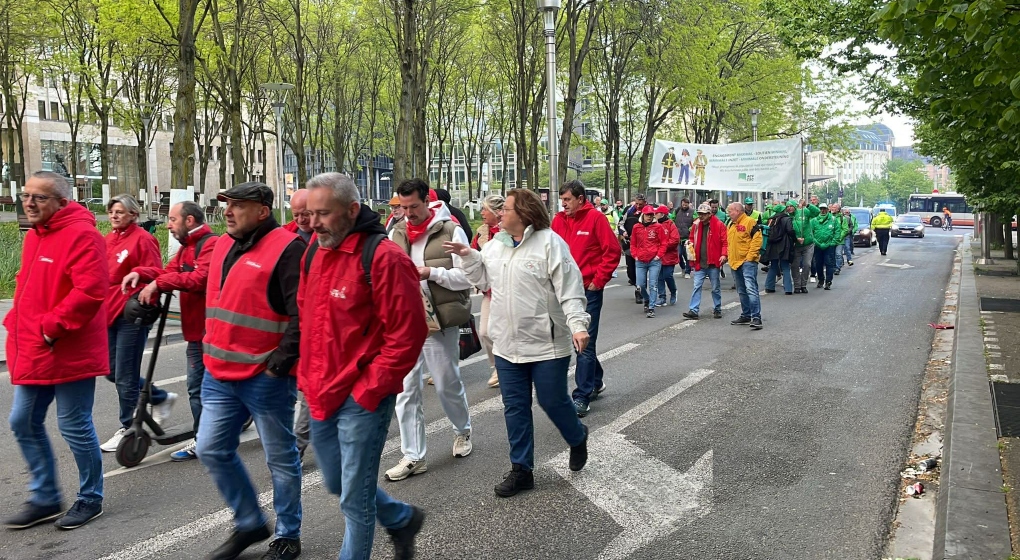
Police officers across Belgium have taken to the streets in protest against the policies of the federal Arizona government, citing long-standing grievances over pay, pensions, working conditions, and recruitment challenges. The demonstrations, which began early Friday morning in Brussels, reflect months of mounting frustration within law enforcement unions who say they feel ignored by the current coalition government.
The protests are centered on demands for the implementation of previously promised salary increases, improvements to pension systems, and greater investment in making the police profession more attractive amid ongoing staffing shortages. Union representatives argue that despite repeated discussions with Interior Minister Bernard Quintin, concrete actions have failed to materialize, leaving officers feeling undervalued and overburdened.
According to Eddy Quaino, a permanent representative of the CGSP union for police, the revalorization of salaries was first announced by former Interior Minister Annelies Verlinden during the Vivaldi government in early 2024 but has yet to be implemented. “We’ve talked a lot, but nothing concrete has come of it,” Quaino stated, summarizing the sentiment shared by many officers participating in the demonstrations.
The SNPS (National Union of Police and Security Personnel) echoed these concerns, with its president Carlo Medo emphasizing that any modern initiatives aimed at improving recruitment or working conditions must first be preceded by the fulfillment of existing agreements. “For us, the promised salary increase must be implemented and prior agreements respected before we can support new projects,” Medo said.
Protesters marched from Brussels Central Station toward the headquarters of the MR party, of which Minister Quintin is a member, to directly address the government’s handling of police affairs. The Arizona coalition, formed after the 2024 federal elections, has outlined several reform intentions for law enforcement, including simplifying recruitment procedures and extending initial training to at least two years in collaboration with universities and higher education institutions.
However, critics within the police unions argue that these proposals do not adequately address immediate concerns about compensation and workload. They point to what they perceive as a disparity in resource allocation, noting that while significant funding has been discussed for defense — with figures of 30 to 35 billion euros mentioned in public debate — comparable investments for the integrated police force remain absent.
The CGSP union highlighted this imbalance, stating that the lack of visible progress on police resourcing stands in stark contrast to the financial commitments being debated for other sectors. Officers involved in the protests stressed that improving attractiveness of the profession requires more than procedural reforms; it necessitates tangible improvements in remuneration and working conditions.
The demonstrations are part of a broader pattern of industrial action by public sector workers in Belgium seeking to pressure the Arizona government on issues related to public services, workforce retention, and social dialogue. As of Friday afternoon, no official response had been issued by the Interior Ministry or federal government representatives regarding the specific demands raised by the marching officers.
Observers note that the outcome of these protests could influence ongoing negotiations over the federal budget and public sector wage agreements, particularly as Belgium continues to navigate post-election governance under the Arizona coalition. The government has previously stated its intention to strengthen federal judicial police resources, including boosting capacity in Antwerp to match levels in Brussels, and ensuring prosecutors can handle increased case loads resulting from expanded investigative efforts.
For now, the police unions maintain that their mobilization will continue until meaningful progress is made on core demands. They urge the government to move beyond discussion and implement concrete measures that reflect the risks and responsibilities inherent in police work.
Those seeking updates on the situation can monitor official statements from the Belgian Interior Ministry, federal parliament proceedings, or reputable news outlets covering Belgian domestic affairs. Public engagement remains encouraged through peaceful and lawful channels of expression.
Share your thoughts on this developing story in the comments below, and help spread awareness by sharing this article with others interested in European public service labor relations.
Worth a look