
For decades, a persistent tension has simmered at the heart of the American democratic experiment: the intersection of private wealth and public power. Recent polling underscores a profound sense of disillusionment among the electorate, with 72 percent of Americans stating that there is too much money in U.S. Politics. This sentiment is not merely a partisan grievance but a broad consensus that transcends party lines, reflecting a widespread belief that the mechanisms of governance have been skewed in favor of the highest bidder.
This perception of systemic imbalance is rooted in a legal and financial landscape that has evolved rapidly over the last fifteen years. From the rise of “dark money” to the proliferation of Super PACs, the volume of capital flowing into federal elections has reached unprecedented levels. For many voters, the concern is not just the amount of money spent, but the perceived “capture” of policy outcomes by a compact cadre of wealthy donors and corporate interests, leaving the average citizen feeling sidelined in their own democracy.
As the United States continues to navigate a polarized political climate, the debate over campaign finance reform remains a critical flashpoint. The disparity between public opinion and the current legal framework suggests a growing legitimacy crisis. While only a small fraction of the population—approximately 5 percent—disagrees that money’s influence is excessive, the legislative appetite for restrictive reform remains stalled by the very systems it seeks to dismantle.
To understand why this issue resonates so deeply across the American spectrum, one must look beyond the polling numbers and into the structural shifts that have redefined how political campaigns are funded and how influence is brokered in Washington, D.C.
The Catalyst: Citizens United and the Legal Shift
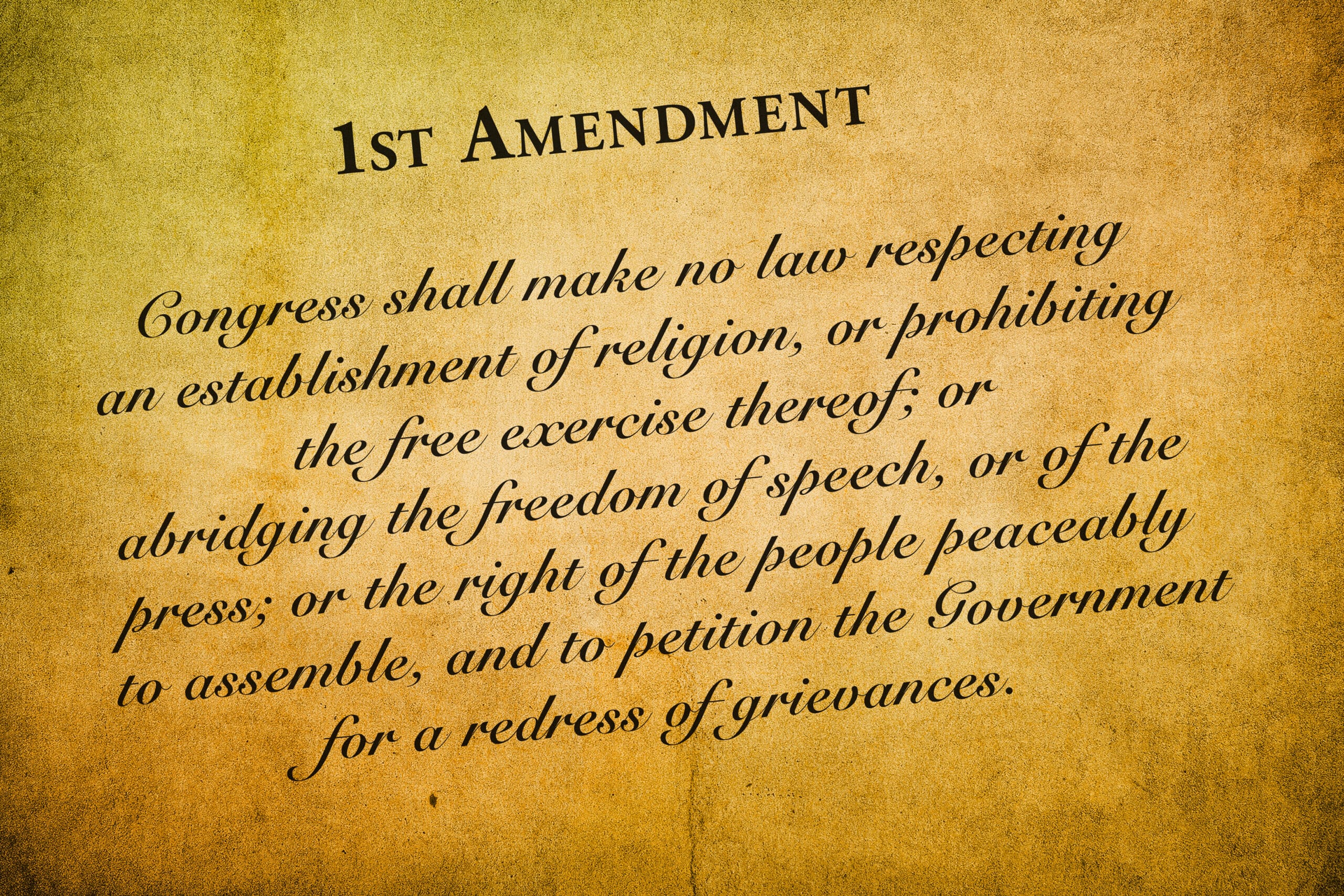
The modern era of campaign spending was fundamentally reshaped by the 2010 Supreme Court decision in Citizens United v. Federal Election Commission. In a landmark 5-4 ruling, the Court held that the government cannot restrict independent expenditures by corporations and unions for political communications, arguing that such spending is a form of protected speech under the First Amendment. This decision effectively removed limits on how much corporations and labor unions could spend to influence elections, provided those expenditures were not coordinated directly with a candidate’s campaign.

The immediate consequence of this ruling was the birth of the “Super PAC” (independent expenditure-only political committee). Unlike traditional PACs, which are subject to strict contribution limits, Super PACs can raise unlimited sums of money from individuals, corporations, and unions. This has created a dual-track system where candidates maintain official campaigns subject to federal limits, while parallel, often nominally independent, Super PACs spend hundreds of millions of dollars on “issue advocacy” and attack ads.
For the average voter, the distinction between a coordinated campaign and an “independent” expenditure is often invisible. The result is a saturation of the airwaves with high-production advertising funded by a handful of ultra-wealthy individuals. This concentration of financial power has led to what political scientists often call “plutocratic” influence, where the ability to gain access to lawmakers is directly proportional to the size of one’s contributions.
Decoding the Financial Architecture: PACs, Super PACs, and Dark Money
To grasp the scale of the problem, it is necessary to differentiate between the various vehicles used to inject capital into the political system. The complexity of these structures often serves to obscure the original source of the funds, a phenomenon commonly referred to as “dark money.”
Traditional PACs (Political Action Committees): These are organizations that pool contributions from members and donate those funds to campaigns for or against candidates. They are subject to strict limits on how much an individual can contribute and how much the PAC can give to a specific candidate per election.
Super PACs: Formed in the wake of Citizens United, these entities can raise unlimited sums. While they cannot give money directly to a candidate’s campaign, they can spend unlimited amounts on “independent expenditures,” such as television ads or digital campaigns, to support or oppose a candidate. According to data from OpenSecrets, the spending by these groups has surged in every single election cycle since their inception, often eclipsing the spending of the candidates themselves.
501(c)(4) Organizations: These are “social welfare” organizations under the tax code. Unlike PACs or Super PACs, they are not required to disclose their donors to the public. When a 501(c)(4) donates to a Super PAC, the Super PAC reports the donation as coming from the non-profit, not the original individual or corporation. This creates a loop of anonymity that allows donors to influence elections without facing public scrutiny or corporate accountability.
This layering of financial vehicles makes it nearly impossible for the public to track who is actually funding the political messages they encounter. When 72 percent of the public expresses concern over money in politics, they are often reacting to this lack of transparency and the feeling that the “real” decisions are being made in closed-door meetings between candidates and anonymous billionaires.
The Impact on Policy and Democratic Integrity
The core of the public’s frustration lies in the perceived gap between voter preferences and policy outcomes. Critics of the current system argue that the necessity of constant fundraising forces lawmakers to prioritize the needs of the “donor class” over the needs of their constituents. This is not necessarily a matter of explicit “quid pro quo” corruption—which is illegal and difficult to prove—but rather a matter of “access.”
Donors who contribute millions to Super PACs gain a level of access to elected officials that is unavailable to the general public. This access allows them to shape the language of legislation, influence regulatory appointments, and ensure that their industry’s interests are protected. When a significant majority of the population believes there is too much money in politics, they are often identifying this systemic bias where the priorities of the wealthy are institutionalized into law.
the reliance on large donors has shifted the focus of political campaigning. Instead of spending time in town halls or meeting with diverse groups of constituents, candidates spend a disproportionate amount of their time “dialing for dollars.” This creates a feedback loop where candidates are incentivized to adopt positions that appeal to wealthy donors, even if those positions are unpopular with the broader electorate.
Comparing the American Model to Global Standards
The American approach to campaign finance is an outlier among developed democracies. In many European nations, for example, there are strict limits on campaign spending and a heavy reliance on public financing to ensure a level playing field. In the United Kingdom, there are rigorous caps on how much parties and candidates can spend during the “regulated period” before an election, and political advertising on television is largely prohibited to prevent the “arms race” of spending seen in the U.S.
The U.S. System, by contrast, treats political spending as a form of protected speech. This philosophical difference—viewing money as speech—is the primary legal hurdle to reform. While the public overwhelmingly views the current situation as a threat to democratic integrity, the judiciary continues to protect the right of corporations and individuals to spend unlimited sums as a constitutional liberty.
This divergence creates a paradox: the American people are among the most supportive of campaign finance reform globally, yet they live in one of the most expensive and least transparent electoral systems in the democratic world.
The Path Forward: Reform Efforts and Public Financing
Despite the legal hurdles, several proposals have gained traction among advocates seeking to reduce the influence of wealth in politics. These efforts generally fall into three categories: transparency, limits, and public funding.
- The DISCLOSE Act: This proposed legislation aims to eliminate “dark money” by requiring any organization that spends a significant amount of money in federal elections to disclose its donors. The goal is to return transparency to the system, allowing voters to know who is paying for the ads they see.
- Public Financing (Small-Donor Matching): Some jurisdictions have implemented systems where the government matches small individual donations (e.g., a 6-to-1 match). This is designed to incentivize candidates to spend more time engaging with small-dollar donors rather than relying on a few mega-donors.
- Constitutional Amendments: Because the Supreme Court has tied spending to the First Amendment, some activists are pushing for a constitutional amendment that would explicitly allow Congress and the states to regulate political spending.
The challenge for these reforms is the “incumbency effect.” Because the current system benefits those already in power—who have established donor networks—there is little appetite within Congress to pass laws that would limit their own fundraising capabilities. This legislative stalemate only deepens the public’s cynicism, reinforcing the belief that the system is designed to protect itself from change.
Key Takeaways on Campaign Finance Trends
- Public Consensus: An overwhelming majority (72%) of Americans believe money has an outsized and detrimental influence on politics.
- Legal Framework: The Citizens United ruling shifted the landscape, enabling the rise of Super PACs and unlimited independent expenditures.
- The Anonymity Gap: 501(c)(4) organizations allow “dark money” to enter the system, hiding the original source of political funding.
- Policy Distortion: There is a perceived correlation between high-dollar donations and preferential legislative access, distancing representatives from their constituents.
- Global Divergence: The U.S. Remains an outlier in its lack of spending caps compared to other Western democracies.
The conversation around money in politics is ultimately a conversation about the definition of equality. If “one person, one vote” is the ideal, the current financial reality suggests a system of “one dollar, one vote.” As long as the disparity between public desire for reform and the legal reality persists, the trust in American democratic institutions is likely to remain fragile.
The next critical window for monitoring these trends will be the upcoming Federal Election Commission (FEC) quarterly filing deadlines, where the latest spending data from the current cycle will be made public. These filings often reveal the sudden emergence of new Super PACs and the shifting priorities of the donor class.
Do you believe campaign finance reform is possible under the current legal framework, or is a constitutional amendment the only way forward? Share your thoughts in the comments below.
Keep reading