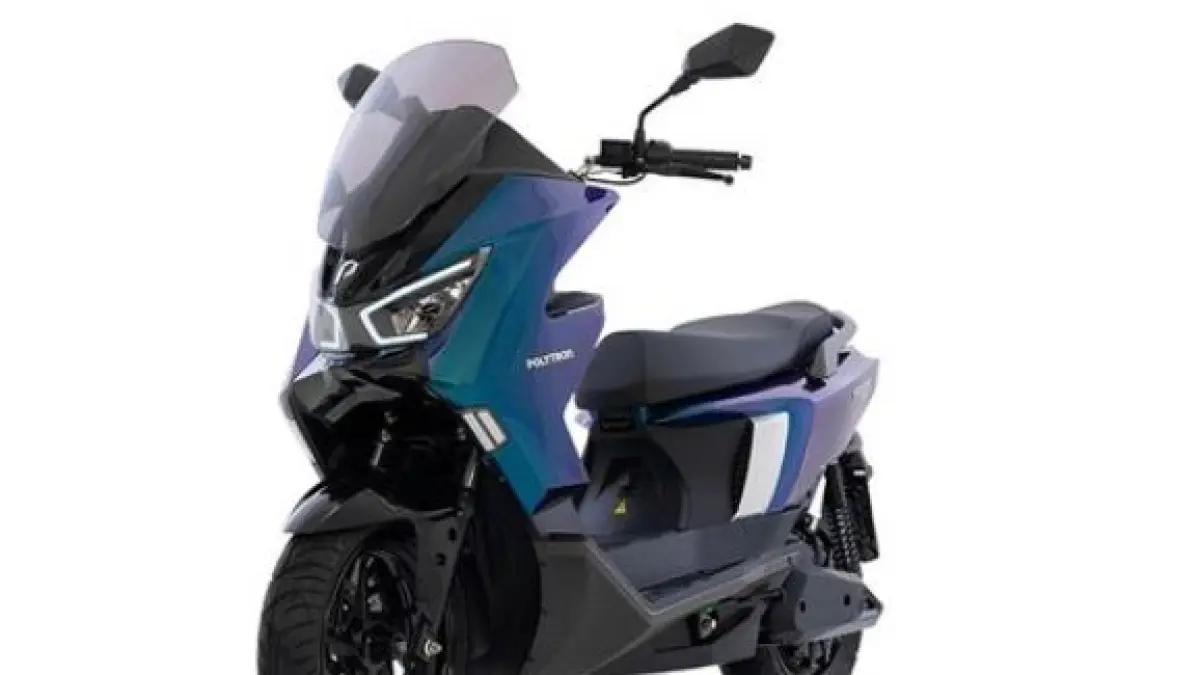
Polytron’s Fox 350 electric motorcycle has demonstrated notable real-world performance in recent testing, covering nearly 350 kilometers in daily use according to field reports from Tulungagung, East Java. This achievement highlights the vehicle’s potential for practical urban mobility even as drawing attention to both its strengths and limitations in the growing electric two-wheeler market.
The Fox 350, positioned as a maxi-scooter variant in Polytron’s electric lineup, features a 3,000-watt electric motor delivering 187 Nm of torque, powered by a lithium iron phosphate (LiFePO4) battery pack. Official specifications indicate a certified range of 130 kilometers per full charge under standard test conditions, though real-world usage patterns—such as those observed in the Tulungagung trial—suggest variability based on riding conditions, payload and ambient temperature.
During the extended field test, riders reported the Fox 350 delivered strong acceleration and consistent power output, particularly in stop-and-go traffic common to Indonesian urban centers. The motorcycle’s full LED lighting system with daytime running lights (DRL) was noted for enhancing visibility, while its dual-disc braking system and telescopic front suspension contributed to stable handling across varied road surfaces.
Although, the trial also revealed important considerations for prospective buyers. While the LiFePO4 battery chemistry offers advantages in thermal stability and cycle life compared to other lithium-ion variants, the actual achievable range fell short of the 350-kilometer mark recorded during cumulative daily use—not a single-charge distance. This distinction is critical for understanding the vehicle’s operational parameters, as the 130-kilometer figure represents the maximum distance achievable on one full charge under ideal conditions.
Charging infrastructure remains a key factor in electric motorcycle adoption. The Fox 350 supports standard AC charging, though specific charging times were not detailed in the verified sources. For context, similar LiFePO4-based electric scooters in its class typically require 4 to 6 hours for a full charge using a conventional 220V household outlet, though this can vary based on charger specifications and battery state of health.
The motorcycle’s dimensions—2,000 mm in length, 735 mm in width, and 1,170 mm in height—position it between traditional scooters and maxi-scooters, offering a planted feel attributed to its 13-inch front wheel and wide rear tire (130/70). This configuration contributes to stability at speed but may affect maneuverability in tight urban spaces compared to narrower models.
Polytron officially launched the Fox 350 in November 2025 as part of its strategy to expand beyond entry-level electric models like the Fox 200, which retails for approximately 11 million Indonesian rupiah. The Fox 350 carries a higher price point reflective of its increased power output, extended feature set, and larger battery capacity, though exact pricing was not specified in the available verified sources.
In the broader Indonesian electric vehicle landscape, the Fox 350 enters a competitive segment that includes offerings from established manufacturers such as Yamaha, Honda, and emerging domestic brands. Government incentives for electric motorcycles vary by region, with some provinces offering subsidies or tax reductions to encourage adoption, though national-level policies remain under development.
Environmental considerations continue to drive interest in electric two-wheelers, particularly in densely populated areas where air quality concerns are pronounced. Electric motorcycles produce zero tailpipe emissions, contributing to reduced urban pollution when charged using increasingly renewable energy grids—a factor relevant to Indonesia’s ongoing energy transition efforts.
For consumers evaluating the Fox 350, key considerations include verifying real-world range expectations against individual commuting needs, assessing access to reliable charging at home or work, and understanding the long-term implications of battery ownership. LiFePO4 batteries typically offer longer lifespans than nickel-manganese-cobalt (NMC) alternatives, often exceeding 2,000 charge cycles before significant capacity degradation, though actual performance depends on usage patterns and environmental exposure.
As electric mobility evolves in Southeast Asia, models like the Polytron Fox 350 represent part of a broader shift toward alternative propulsion systems. Continued advancements in battery technology, charging infrastructure, and supportive regulatory frameworks will likely influence the trajectory of adoption in the coming years.
Those interested in updates on Polytron’s electric vehicle offerings or developments in Indonesia’s electric motorcycle market can follow official announcements from the company’s communications channels or monitor transportation policy releases from the Ministry of Transportation.
We encourage readers to share their experiences with electric vehicles or ask questions about emerging mobility technologies in the comments below. Your insights help foster informed discussions about sustainable transportation options.
Worth a look
- Jelly Roll Announces Indefinite Touring Hiatus Following Divorce from Bunnie Xo
- US and Japan Intervene to Stop Yen Crash: Impact on Global Currencies and the Korean Won
- China’s AI Sector Challenges US Rivals With High-Performance Models (archyworldys.com)
- Kreios Space to Demo Air-Breathing Electric Propulsion in Very Low Earth Orbit (time.news)