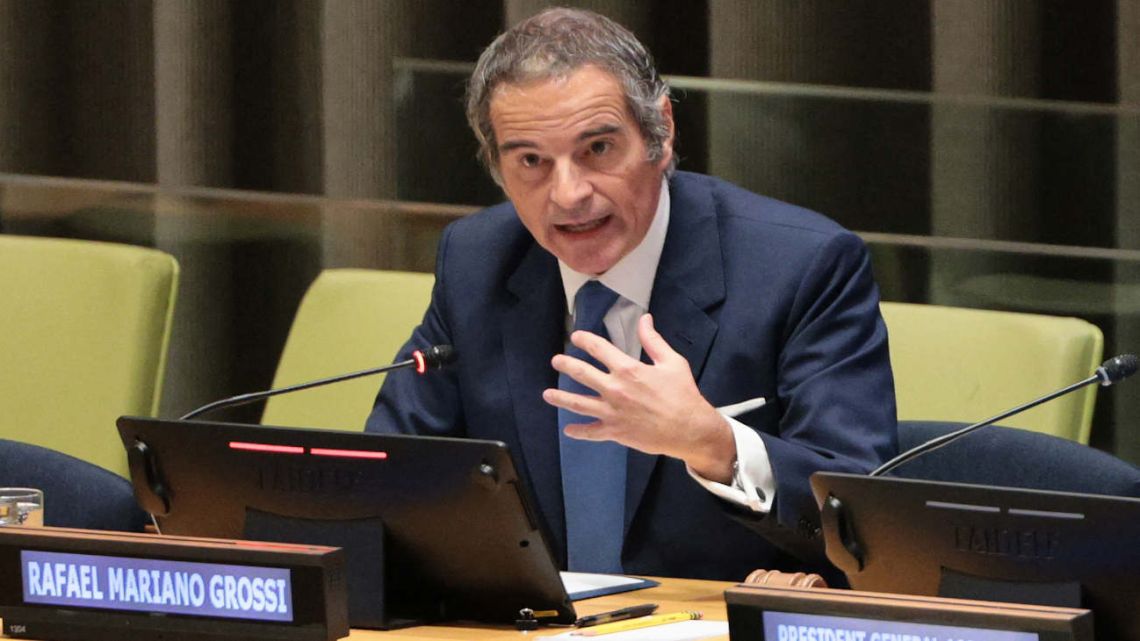
Rafael Mariano Grossi, the Argentine diplomat and current head of the International Atomic Energy Agency (IAEA), has intensified his campaign for the United Nations Secretary-General position, drawing attention for both his diplomatic outreach and the broader geopolitical context shaping the race. As the selection process advances toward a decision expected later in 2026 for the term beginning in 2027, Grossi has positioned himself as a reform-minded candidate capable of reinvigorating an institution facing growing skepticism about its relevance in a multipolar world marked by renewed conflicts and institutional fatigue.
His candidacy gained visibility following a three-hour public hearing at the United Nations headquarters in New York on April 21, 2026, where he addressed representatives from all 193 member states and civil society observers. During the session, Grossi offered a candid assessment of the UN’s current state, describing an atmosphere dominated by cynicism, frustration and sadness among those working within the system. He emphasized that restoring faith in the organization requires a return to its foundational mission: saving humanity from the scourge of war, a goal he said feels increasingly elusive as conflicts flare across Europe, Africa, the Americas, and Asia.
Central to Grossi’s pitch is the argument that the UN must shift from a reactive to a proactive posture, particularly in preventing escalations before they erupt into full-scale crises. He pointed to his experience at the IAEA, where he has managed sensitive nuclear verification challenges, as evidence of his ability to navigate complex technical and political environments. In interviews following his presentation, Grossi warned that Iran retains sufficient enriched uranium stockpiles to potentially produce more than ten nuclear weapons, though he clarified that this does not equate to possessing operational warheads. He noted ongoing informal contact with both Iranian, and U.S. Officials amid renewed diplomatic efforts to manage tensions surrounding Tehran’s nuclear program.
The race for the UN’s top post has also highlighted regional and gender dynamics, with increasing pressure from member states to appoint a woman to the role for the first time in the organization’s history. While several female candidates are in contention, Grossi’s bid has received notable attention from France, a permanent member of the UN Security Council whose support is considered vital for any aspirant. Analysts have observed diplomatic signals suggesting Paris may be open to backing his candidacy, though no formal endorsement has been made public.
Beyond the immediate political maneuvering, the broader contest reflects deeper debates about the UN’s effectiveness in an era of great power rivalry and declining multilateral cooperation. Candidates from Latin America, including figures from Brazil, Costa Rica, and Chile, have advocated for structural reforms aimed at increasing transparency, improving crisis response mechanisms, and ensuring greater representation from the Global South. These proposals echo longstanding calls to make the Security Council more reflective of contemporary geopolitical realities, though such changes remain subject to the veto power of the current five permanent members.
As the process moves into its final stages, the selection will ultimately depend on deliberations within the UN Security Council, where any of the five permanent members—China, France, Russia, the United Kingdom, and the United States—can block a candidate. The General Assembly then votes on the nominee put forward by the Council. No official timeline has been released for the final decision, but historical precedent suggests the outcome is typically known by the autumn preceding the incumbent’s term expiration, which in this case is January 2027.
The next key step in the process involves closed-door consultations among Security Council members, followed by straw polls to gauge support. These informal straw votes, while not binding, often serve as reliable indicators of a candidate’s viability. Observers note that achieving consensus among the permanent members remains the most significant hurdle, particularly given divergent views on how the UN should respond to ongoing conflicts in Ukraine, Gaza, and Sudan.
For readers seeking to follow the developments, the United Nations provides regular updates on the selection process through its official website and press briefings. Transcripts of candidate hearings, when made available, are archived in the UN’s official documents system. Continued coverage will depend on access to verified diplomatic sources and official statements from the candidate campaigns and member state delegations.
What do you think about the qualities needed in the next UN Secretary-General? Share your perspective in the comments below, and consider sharing this article to assist others stay informed about this pivotal global leadership race.
Worth a look
- Woman Recovers €1 Million Lottery Ticket From Italian Trash
- Ukraine Drone Strikes Cripple Russian Black Sea Shipping and Logistics
- Marlen Reusser wins Stage 4 time trial to claim Tour de France Femmes yellow jersey (time.news)
- Alaska Primary Election 2020: Early In-Person Voting Begins (news-usa.today)