Lifeguards at public swimming pools are increasingly warning parents that smartphone use during child supervision significantly increases the risk of drowning, as children can slip under the water silently and within seconds. According to water safety experts and organizations like the American Red Cross, drowning often occurs without splashing or shouting, making constant, undistracted visual contact essential for child safety.
The trend of “distracted parenting” at public pools has prompted staff at various facilities to issue verbal warnings to guardians who prioritize mobile devices over active monitoring. Safety officials emphasize that while lifeguards are present, they serve as a secondary layer of protection; the primary responsibility for a child’s immediate safety rests with the parent or guardian.
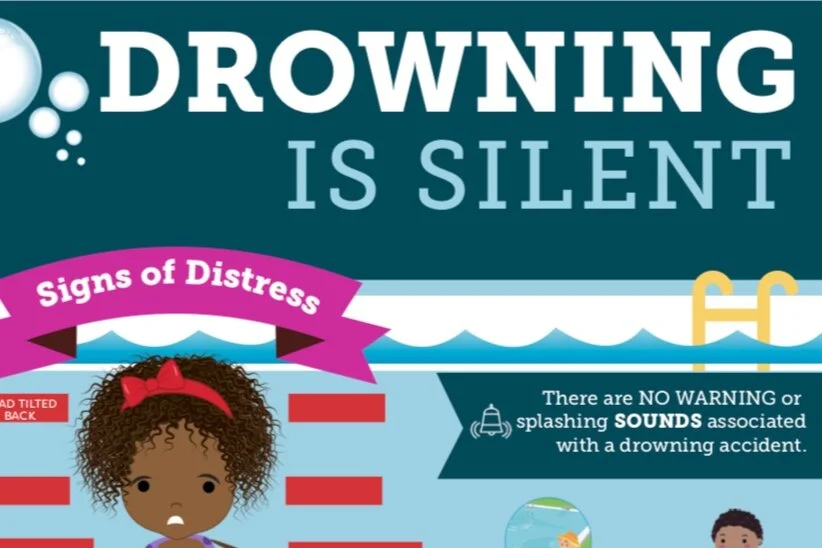
The danger is compounded by a common misconception that drowning is a loud, dramatic event. In reality, the “instinctive drowning response” prevents victims from calling for help or waving their arms, as the body prioritizes breathing over speech. This physiological reality means a child can disappear beneath the surface without a sound, often while a parent is looking at a screen just a few feet away.
Why Drowning is Often Silent
Contrary to cinematic depictions, drowning is rarely characterized by splashing or screaming. The American Red Cross notes that when a person is drowning, they cannot breathe, and since the mouth is used for breathing, it cannot be used to call for help. This makes the process nearly silent to an observer who is not fully attentive.
The process happens rapidly. A child can lose consciousness in as little as 60 seconds after inhaling water, and permanent brain damage can begin within four minutes of oxygen deprivation. This narrow window leaves no room for the delay caused by checking a notification or responding to a text message.
Lifeguards report that the “presence” of a parent does not equal “supervision.” A guardian may be physically at the poolside, but if their attention is diverted by a smartphone, they are effectively absent from the safety loop. This gap in attention is where most preventable accidents occur.
The Difference Between Passive and Active Supervision
Water safety professionals distinguish between passive supervision—being in the general vicinity of a child—and active supervision. Active supervision requires the adult to be within arm’s reach of non-swimmers and to maintain a constant line of sight with all children in the water.

According to the Centers for Disease Control and Prevention (CDC), active supervision is the most effective way to prevent childhood drowning. This involves removing all distractions, including phones, books, or engaging in long conversations with other adults, to ensure the child’s movements are monitored every second.
When parents engage with smartphones, they enter a state of “inattentional blindness,” where the brain fails to perceive an unexpected stimulus even when it is in plain sight. In a pool environment, this means a parent might “see” their child in the water but fail to “notice” that the child has stopped moving or has slipped under the surface.
The Role and Limits of Lifeguards
A critical point of tension at public pools is the assumption that lifeguards are the sole protectors of swimmers. While certified lifeguards are trained to scan zones and perform rescues, they are not a substitute for parental supervision.
Lifeguards must monitor dozens of people simultaneously, often in environments with glare, crowds, and varying water depths. Their role is to provide a professional safety net, but the proximity and familiarity of a parent allow for the immediate detection of a child’s distress, which is faster than a lifeguard’s scan cycle.
Many pool facilities have now implemented policies where lifeguards are encouraged to proactively remind parents to put away phones. These interventions are not intended as policing, but as life-saving reminders that seconds are the only margin between a close call and a tragedy.
Essential Water Safety Guidelines for Parents
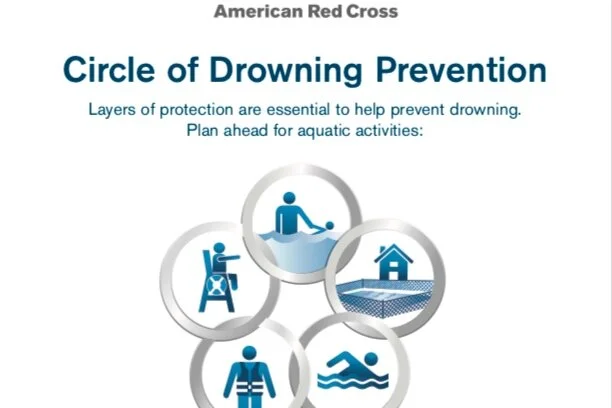
To ensure child safety at public and private pools, health and safety organizations recommend several non-negotiable practices:
- The “Water Watcher” System: Designate one adult as the sole supervisor. This person does not read, talk on the phone, or multitask. The role is rotated every 15 to 30 minutes to prevent fatigue and loss of focus.
- Touch Supervision: For infants and toddlers, or children with limited swimming ability, adults should remain within arm’s reach at all times.
- Phone-Free Zones: Treat the pool deck as a phone-free zone. Store devices in bags or lockers to remove the temptation of quick checks.
- Swimming Proficiency: Ensure children have formal swimming lessons, though experts warn that even “strong” swimmers can panic or suffer cramps.
- Life Jacket Usage: Use U.S. Coast Guard-approved life jackets for weak swimmers rather than inflatable armbands or “floaties,” which can deflate or slip off.
Global Impact of Childhood Drowning
The urgency of these warnings is supported by global health data. The World Health Organization (WHO) identifies drowning as a leading cause of unintentional injury death worldwide. In many regions, it remains one of the top causes of death for children under the age of five.
The WHO emphasizes that most of these deaths are preventable through simple interventions: barriers around pools, constant supervision, and basic swimming skills. The introduction of the smartphone into the poolside environment has added a new, pervasive risk factor that safety officials are now fighting to mitigate.
For parents, the takeaway is clear: the digital world can wait, but a child underwater cannot. The transition from a playful swim to a critical emergency happens in a timeframe shorter than it takes to send a single text message.
For those seeking further guidance on water safety, official checklists and training courses are available through national Red Cross chapters and local health departments.
World Today Journal will continue to monitor updates on public safety regulations and swimming pool guidelines as they evolve. We invite readers to share their experiences with pool safety policies in the comments below.