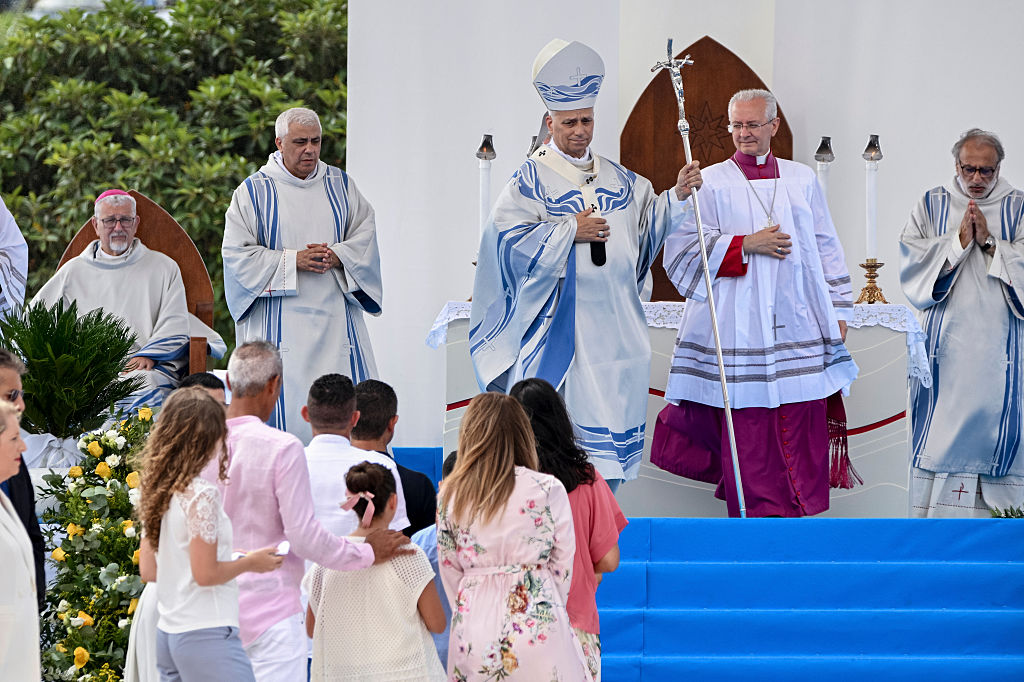
Pope Leo XIV, the first American-born pontiff, marked the 250th anniversary of the United States’ founding on July 4, 2026, by issuing a formal letter that urged the nation to uphold its historical tradition of “welcoming, protecting and assisting immigrants.” The Pope, who is a Chicago native, synchronized this message with a high-profile visit to the Italian island of Lampedusa, a gateway for migrants crossing the Mediterranean to European sanctuaries.
In his letter, titled “Letter of his Holiness Pope Leo XIV on the 250th Anniversary of the Founding of the United States of America,” the pontiff emphasized the “God-given dignity of every human life.” He argued that the protection of human life is inextricably linked to the treatment of those seeking refuge. “Defending human life,” the Pope wrote, “also includes welcoming, protecting and assisting immigrants, whose hopes, sacrifices and contribution have formed part of the history of this country from its very beginning.”
A Call for Global Immigration Reform
The Pope’s July 4th message functioned as both a reflection on American values and a broader appeal to international leaders. During his visit to Lampedusa—Italy’s southernmost port—Leo called for a “comprehensive” approach to immigration. He urged European leaders to address immigration “in a comprehensive manner, integrating immediate relief efforts into a long-term strategic plan capable of receiving, protecting, supporting and integrating migrants.”

The Vatican had confirmed the Pope’s travel plans in February 2026. Since his appointment in May of last year, Pope Leo has consistently centered his papacy on the rights of displaced persons. He has frequently invoked his own family history, noting before diplomats at the Vatican that his story is that of a “citizen, the descendant of immigrants, who in turn chose to emigrate.”
The urgency of his advocacy was underscored in October, when the Pope met with representatives from the Hope Border Institute. According to Dylan Corbett, the executive director of the organization who was present at the meeting, the Pope was moved to tears after viewing footage of individuals expressing fear regarding U.S. deportation policies.
Strained Relations with the U.S. Administration
The Pope’s recent correspondence continues a pattern of public friction between the Vatican and the Trump Administration. Throughout his tenure, Leo has served as a persistent critic of the Trump Administration’s immigration crackdown, characterizing certain policies as “inhumane.” While the Pope often avoids naming specific political figures, his rhetoric has occasionally been met with direct rebuttals from the White House.
In June, following criticism from the Catholic Church regarding the U.S.-Israel war with Iran, President Trump reportedly labeled the Pope as “WEAK on Crime” and “terrible for Foreign Policy.” In response to these remarks, the Pope maintained his position, stating that he had “no fear of the Trump Administration, or of speaking out loudly about the message of the Gospel.”
Beyond immigration, the Pope’s July 4th letter addressed the concept of religious freedom. He described it as “central to the American promise,” while cautioning against recent trends in the U.S. that have sought to blur the lines between church and state. He argued that religious liberty is essential for the “peaceful coexistence of a diverse people.”
Advocacy in the Chicago Community
The Pope’s focus on vulnerable populations extends to his hometown of Chicago. During earlier efforts to address local immigration crackdowns, Leo met with union leaders to discuss the impact of federal policies on city residents. He urged those leaders to advocate for the “human dignity of the most vulnerable,” while acknowledging the necessity of maintaining safe communities.

Readers interested in the official texts from the Holy See can find updates and full transcripts of the Pope’s addresses on the official Vatican website.