
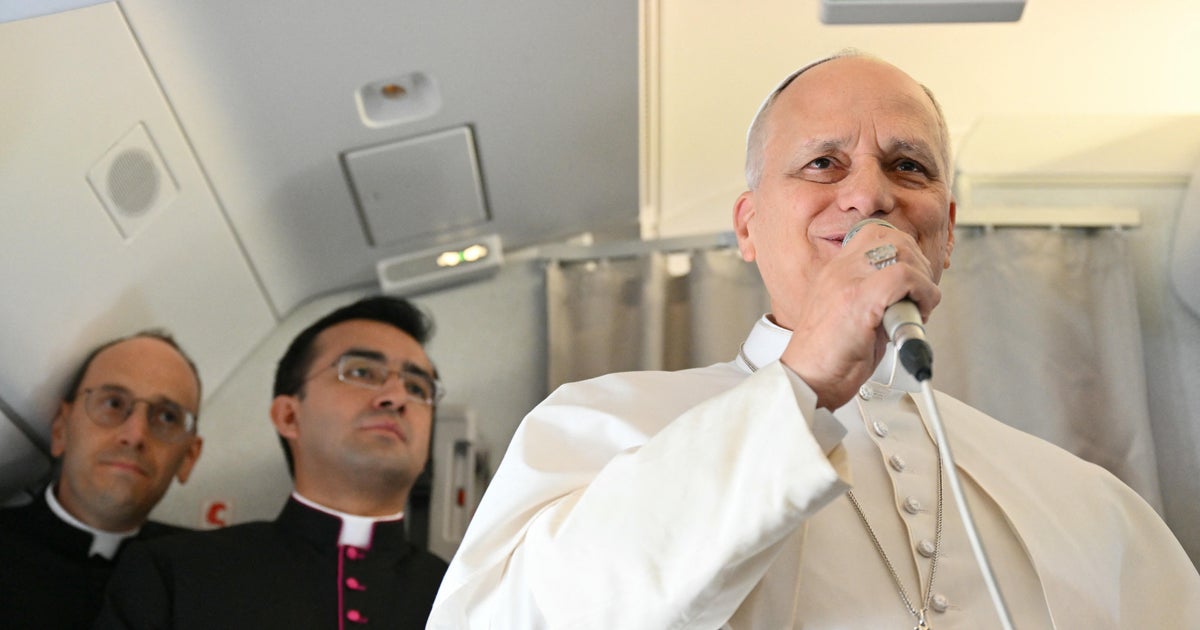
The relationship between the Holy See and the United States government has entered a period of acute tension following a series of direct confrontations between Pope Leo XIV and President Donald Trump. In a surprising turn of diplomatic friction, the Pope has signaled that he has no fear of the Trump administration after the U.S. President launched a scathing personal attack against the pontiff.
The escalating conflict follows a pattern of ideological clashes over global violence and the nature of power. While President Trump has used forceful language to characterize the Pope as “weak” and “terrible,” Pope Leo XIV has remained steadfast in his call for nonviolence and diplomatic dialogue, asserting that true power is found in peace rather than domination.
This diplomatic rift comes at a time when the Pope is actively campaigning against the normalization of war. On a recent flight to Algiers, Pope Leo described war as “madness,” a statement that drew significant global attention and occurred shortly after he faced criticism from the U.S. President during an African tour. Despite the rhetoric from Washington, the Pope indicated to reporters that he does not wish to argue, though he remains committed to his moral stance against global violence.
Trump’s Direct Attack on the Papacy
The tension reached a boiling point late Sunday, April 12, 2026, when President Donald Trump issued an unusual and direct attack on the leader of the Catholic Church. According to reports, the U.S. President used “scathing” language, specifically calling Pope Leo “terrible” and “weak” in a direct critique. Such an attack is considered highly unusual given the traditional diplomatic protocols governing the relationship between the U.S. Presidency and the 1.4-billion-member Catholic Church.

The President’s comments appear to be a reaction to the Pope’s consistent messaging regarding the dangers of military aggression and the misuse of religious language to justify violence. The clash highlights a fundamental disagreement between the Trump administration’s approach to global strength and the Vatican’s emphasis on nonviolence as the only effective means of overcoming evil.
The Vatican’s Stance on Nonviolence and Power
Pope Leo XIV has spent the recent Lenten and Easter seasons emphasizing that the world must stop growing accustomed to wars. During his Easter morning Mass on April 5, 2026, the Pope urged those in power to end conflicts through dialogue rather than domination. He explicitly called for those with weapons to lay them down and for leaders to choose a peace that is not “imposed by force,” but achieved through the desire to encounter others during his Easter address.
The Pope’s philosophy centers on the belief that nonviolence is the “true power over evil.” He has warned that the faithful cannot remain indifferent or resign themselves to the evil present in the world. By framing peace not merely as the “silence of weapons” but as a transformative force for the heart, the Pope has positioned his moral authority in direct opposition to the “strength-through-force” narrative often championed by the current U.S. Administration.
Key Pillars of Pope Leo XIV’s Peace Initiative
- Rejection of Normalization: Warning humanity against becoming accustomed to systemic violence and war.
- Dialogue Over Domination: Advocating for international resolutions based on mutual encounter rather than the desire to dominate.
- Moral Urgency: Asserting that indifference to global evil is unacceptable for the faithful.
- Spiritual Mobilization: Organizing collective prayer as a means to make the “cry for peace” heard globally.
A Call to Action: The Prayer Vigil for Peace
In response to the prevailing global instability and the friction with political leaders, Pope Leo XIV has announced a concrete step to mobilize the global Catholic community. He has invited the faithful to join him in a special prayer vigil for peace, scheduled to be celebrated in St. Peter’s Basilica on April 11 as part of his Easter appeals.
This vigil serves as both a spiritual gathering and a symbolic statement against the “madness” of war. By calling for a mass gathering at the heart of the Vatican, the Pope is attempting to transform the “cry for peace” from an individual sentiment into a collective, audible demand for a change in global political behavior.
Analysis: The Implications for Global Diplomacy
The public friction between a U.S. President and a Pope is rare and carries significant implications for international relations. The Trump administration’s willingness to label the Pope as “weak” suggests a departure from traditional diplomatic deference toward the Holy See. Conversely, Pope Leo’s assertion that he has “no fear” of the administration suggests that the Vatican is prioritizing its moral mandate over political expediency.
For the global audience, this conflict represents a clash of two diametrically opposed worldviews: one based on the projection of power and national interest, and another based on universal nonviolence and the ethical imperative to protect human life. As the Pope continues his tour and speaks out against the normalization of violence, the tension between the Vatican and the White House is likely to remain a focal point of international observation.
The next major milestone in the Pope’s peace efforts was the prayer vigil held on April 11. Observers will now glance to see if the Trump administration responds to the Pope’s continued calls for dialogue or if the rhetoric continues to escalate.
We invite our readers to share their perspectives on this diplomatic clash in the comments below. How should global religious leaders interact with national political leaders in times of conflict?