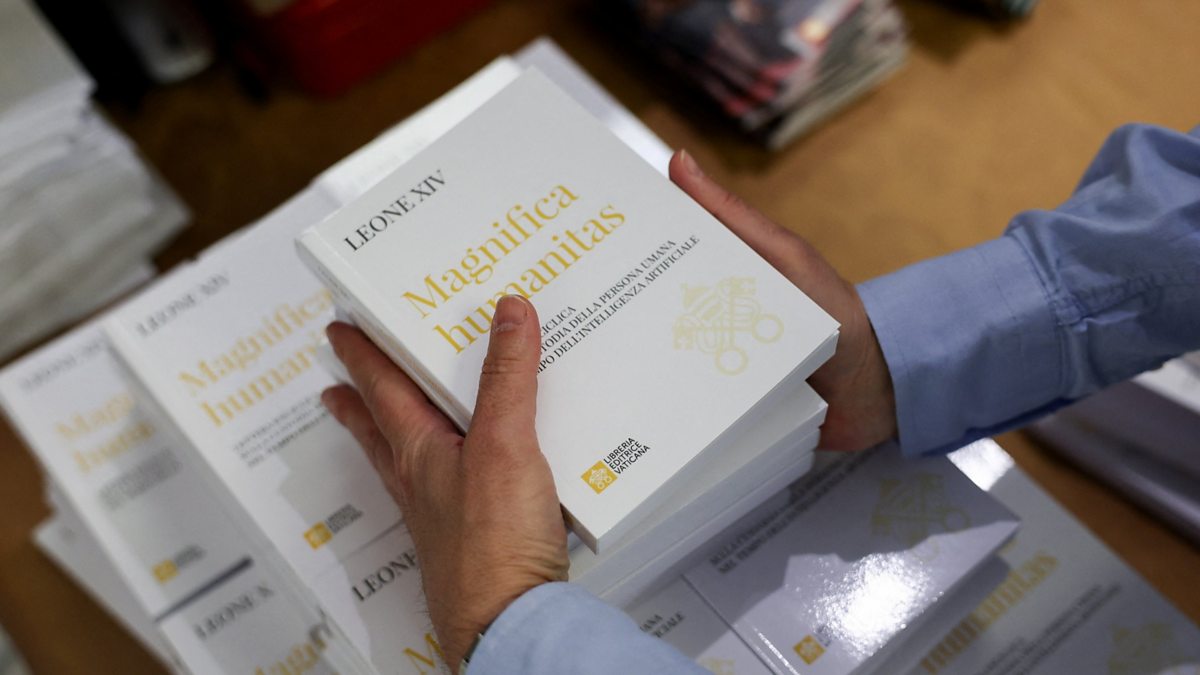
Pope Leo XIV Issues Urgent Warning on AI’s Role in Fueling Global Conflict
In a landmark theological intervention, Pope Leo XIV has warned that artificial intelligence threatens to accelerate global conflicts and undermine humanity’s ethical foundations, calling for stricter controls on its development. The pontiff’s first major encyclical, Magnifica Humanitas, issued today, declares that AI must not remain concentrated in the hands of “a few” and urges rigorous ethical constraints on its military applications. The document marks a significant expansion of the Vatican’s engagement with technological ethics, framing AI as both a tool and a potential existential threat.
The encyclical, released during a Vatican gathering attended by leading AI ethicists and industry figures, reflects growing concerns among global religious and political leaders about the unchecked proliferation of AI systems in warfare, and governance. Pope Leo’s warnings come as nations increasingly integrate autonomous weapons and predictive algorithms into military strategy, raising questions about accountability and the future of just warfare.
“The construction of a world in a state of perpetual conflict is an evil and must be named for what it is,” the pope writes, adding that humanity possesses “far more effective and capable tools for promoting human life and resolving conflicts, such as dialogue, diplomacy, and forgiveness.” The document explicitly challenges the traditional Christian doctrine of “just war,” declaring it “now outdated” in an era where AI-driven systems can make life-and-death decisions without human oversight.
“Control of artificial intelligence must not remain in the hands of a few while warning that technology is fueling world conflicts.”
—Pope Leo XIV, Magnifica Humanitas (May 25, 2026)
The encyclical’s release coincides with escalating tensions in multiple global hotspots, where AI-powered surveillance and targeting systems have been deployed. While the Vatican has historically engaged with technological ethics—particularly in debates over bioethics—the document represents its most direct intervention in the AI governance debate. Experts gathered at the Vatican for the encyclical’s presentation included representatives from major AI research institutions and ethicists from the United Nations and European Union.
Key Proposals: Ethical Constraints and Global Governance
The encyclical outlines three core proposals to address AI’s ethical risks:
- Democratization of AI: The pope calls for decentralizing control of AI development to prevent concentration in the hands of private corporations or nation-states. This includes advocating for open-source models where possible and international oversight mechanisms.
- Military AI Regulations: The document demands “the most rigorous ethical constraints” on AI used in warfare, explicitly questioning the morality of autonomous weapons systems. It echoes recent calls from the UN and human rights organizations for a preemptive ban on lethal autonomous AI.
- Human Dignity Framework: Pope Leo proposes a new “litmus test” for social justice centered on the treatment of migrants and refugees, framing these issues as moral benchmarks for AI policy. The encyclical includes a historic apology for the Catholic Church’s role in legitimizing slavery and its delayed response to the transatlantic slave trade.
The document also critiques the “just war” theory, a centuries-old Christian doctrine that has justified military intervention under specific conditions. “In an age where machines can decide who lives or dies, the theory is no longer sufficient,” the pope states. Instead, he advocates for a return to principles of nonviolence and conflict resolution, arguing that AI’s predictive capabilities should be directed toward peacebuilding rather than warfare.
Global Reactions: From Tech Leaders to Geopolitical Powers
Initial reactions to the encyclical have been mixed but largely positive among AI ethics communities. The co-founder of Anthropic, an AI safety research lab, attended the Vatican event and described the document as “a timely moral compass” for the field. “The pope’s call for global governance aligns with our own research on aligning AI with human values,” the executive said in a statement released after the event.
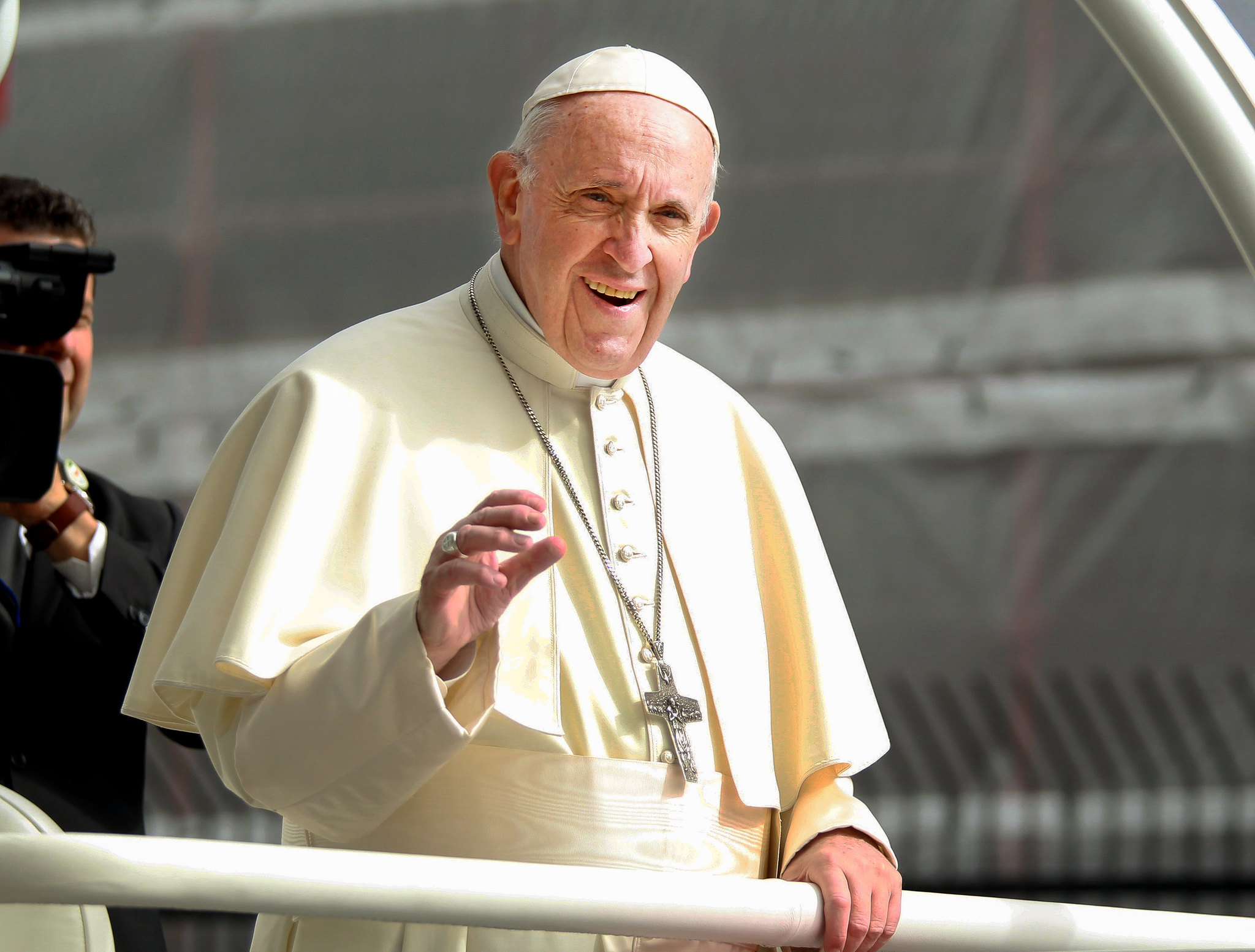
Geopolitical responses have been more cautious. The European Union, which has been developing its AI Act—a landmark regulation to govern AI development—has welcomed the Vatican’s intervention as a “valuable contribution to the ethical debate.” However, officials noted that the EU’s legal framework would require concrete policy proposals rather than theological arguments. “We need actionable guidelines, not just moral exhortations,” said a spokesperson for the European Commission’s digital affairs directorate.
In contrast, some AI industry leaders have expressed skepticism about the feasibility of the pope’s proposals. A representative from a major tech conglomerate stated that “while ethical concerns are valid, the practical challenges of implementing global AI governance are immense.” The Vatican has not yet outlined specific mechanisms for enforcement, leaving open questions about how its proposals would translate into policy.
Why This Matters: The Intersection of Faith and Technology
Pope Leo XIV’s intervention is significant for several reasons:
- Moral Authority: As the spiritual leader of 1.3 billion Catholics, the pope’s words carry unprecedented weight in shaping global ethical debates. The encyclical is likely to influence discussions in the UN, where AI governance has become a contentious issue.
- Timing: Released amid rising geopolitical tensions and AI arms races, the document arrives at a critical juncture. Recent conflicts have seen the deployment of AI-powered drones and cyber warfare tools, raising concerns about escalation.
- Broader Themes: The encyclical extends beyond AI to address climate change, migration, and economic inequality—issues the pope has previously linked to technological disruption. By framing AI as part of a broader crisis of human dignity, the document seeks to unite disparate ethical concerns.
The Vatican has historically played a role in shaping global ethics, from the abolition of slavery to modern bioethics debates. This encyclical builds on that legacy, positioning the Catholic Church as a key voice in the AI governance conversation. However, critics argue that without clear policy proposals, the document may remain largely symbolic.
What Happens Next: The Path Forward
The release of Magnifica Humanitas is expected to catalyze several developments:
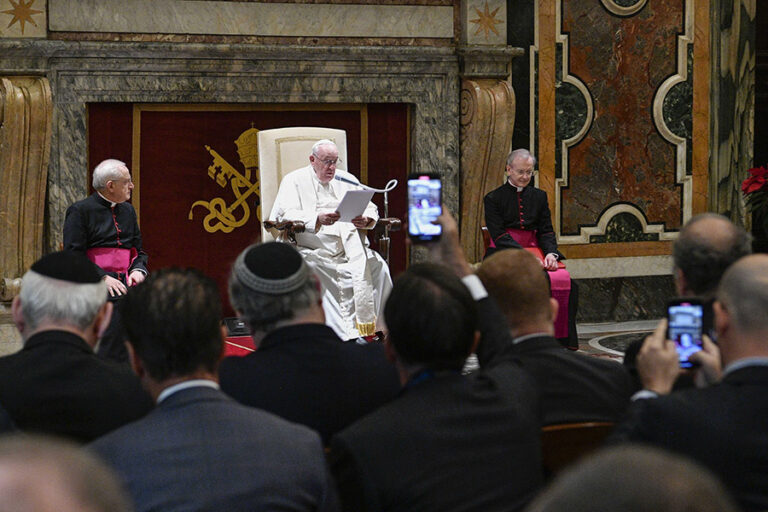
- UN Engagement: The Vatican has indicated it will present the encyclical’s key proposals to the UN General Assembly in September 2026, where AI governance is a priority topic. A working group is already drafting a resolution on lethal autonomous weapons.
- EU-AI Act Revisions: The European Commission may incorporate elements of the encyclical into its ongoing reviews of the AI Act, particularly regarding military applications.
- Industry Dialogues: Tech companies and AI researchers are likely to respond with their own ethical frameworks, potentially leading to public-private partnerships on AI governance.
- Academic Research: Universities and think tanks will analyze the encyclical’s theological and philosophical arguments, with particular focus on its critique of the “just war” theory.
The next major checkpoint will be the Vatican-hosted “Global AI Ethics Summit” scheduled for November 2026, where Pope Leo is expected to expand on the encyclical’s proposals. In the meantime, the document has already sparked debates among theologians, ethicists, and policymakers about the role of faith in shaping technological governance.
This story is developing. For updates on the Vatican’s AI governance initiatives, follow Vatican News and the European Commission’s digital affairs. Share your thoughts in the comments below or on our social media channels.
Keep reading