
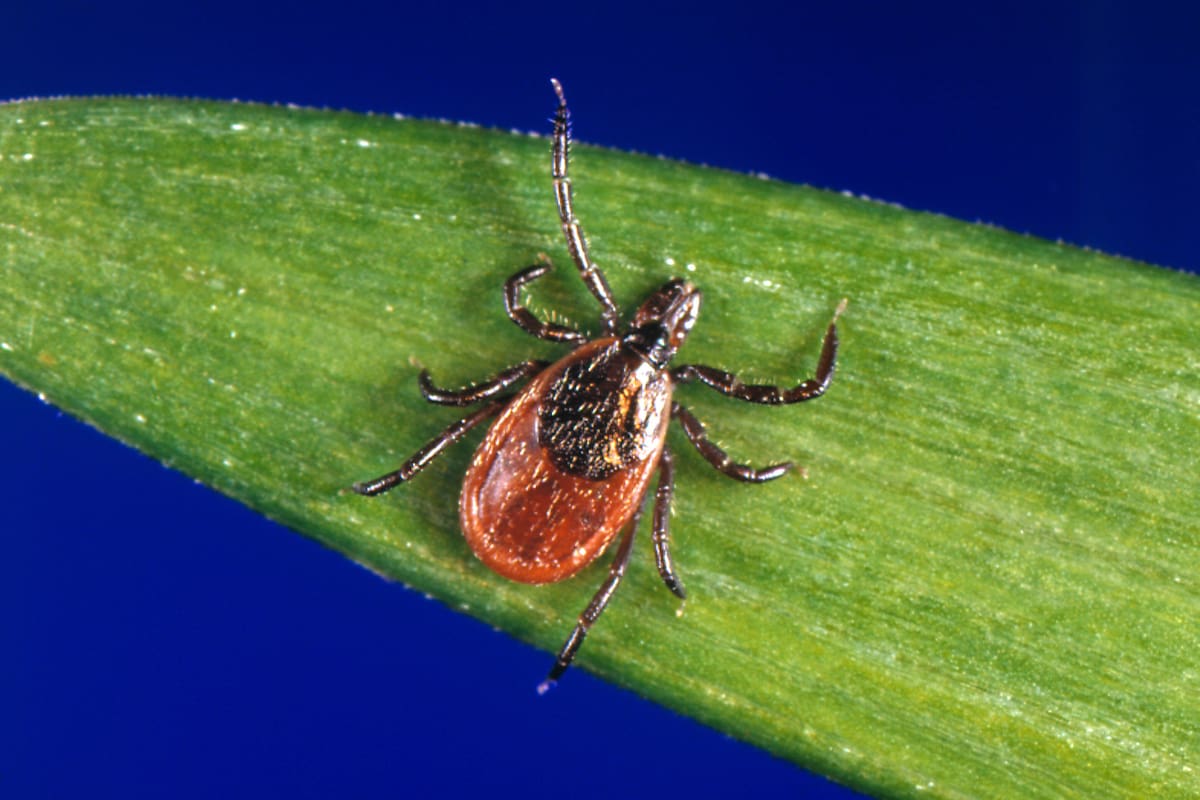
The Powassan virus is a rare but severe tick-borne illness causing neurological disease, which is seeing an increase in reported cases across the Northeastern United States. According to the Centers for Disease Control and Prevention (CDC), the virus is transmitted to humans through the bite of the deer tick (Ixodes scapularis) and the blacklegged tick (Ixodes pacificus), as well as through the bite of infected mosquitoes.
Public health officials in states such as New Jersey and New Hampshire have noted a rise in activity, highlighting the virus’s ability to cause rapid onset of symptoms. Unlike Lyme disease, which often requires a tick to be attached for several hours to transmit bacteria, the Powassan virus can be transmitted within minutes of a tick bite, according to CDC clinical guidelines.
The virus primarily targets the central nervous system, leading to encephalitis or meningitis. Because the disease is rare, it is often underdiagnosed or mistaken for other tick-borne pathogens. Health departments emphasize that early detection is difficult because the initial symptoms are non-specific and mirror those of the flu.
What are the symptoms of Powassan virus?
Infection typically begins with a prodromal phase. According to the CDC, patients often report fever, headache, nausea, vomiting, and joint pain. These symptoms can appear anywhere from a few days to three weeks after the initial tick bite.
The disease can then progress to a neurological phase. This stage is characterized by severe headache, confusion, disorientation, and seizures. In some cases, the virus causes acute encephalitis, which is inflammation of the brain. The CDC symptoms page notes that the neurological impact can be permanent, leading to long-term cognitive or motor deficits in survivors.
Medical providers are urged to include Powassan virus in their differential diagnosis for any patient presenting with aseptic meningitis or encephalitis who has a history of tick exposure in endemic areas. Because there is no widely available vaccine for the Powassan virus, clinical management focuses on supportive care to reduce brain swelling and manage seizures.
Where is the risk highest in the U.S.?
The virus is most prevalent in the Northeast and Great Lakes regions of the United States. State health departments in New Hampshire and New Jersey have issued alerts in recent years as the geographical range of the vector ticks expands. This expansion is often linked to changing land-use patterns and climate shifts that allow ticks to survive in new territories.
The risk is highest in wooded, brushy, or grassy areas where deer ticks are common. Because the virus can also be spread by mosquitoes, the risk extends to areas where these insects are prevalent, although tick-borne transmission remains the primary driver of human cases. The CDC’s “About” section on the virus confirms that while cases are rare, the high fatality rate and severity of the disease make it a significant public health concern.
How does Powassan differ from Lyme disease?
While both are transmitted by the same species of tick, the biological mechanisms and outcomes differ sharply. Lyme disease is caused by the bacterium Borrelia burgdorferi, whereas Powassan is caused by a flavivirus. This means Lyme is treated with antibiotics, while Powassan, being viral, does not respond to antibacterial medication.
Transmission speed is another critical difference. A tick usually must be attached for 36 to 48 hours to transmit Lyme disease. In contrast, the Powassan virus can enter the human bloodstream almost immediately after the tick begins feeding. This makes “tick checks” less effective as a sole prevention method for Powassan compared to their role in preventing Lyme.
The clinical trajectory also varies. Lyme disease often manifests as a “bullseye” rash (erythema migrans) and joint pain. Powassan virus rarely produces a characteristic rash and instead moves quickly toward neurological impairment. According to the CDC, the mortality rate for Powassan is significantly higher than that of Lyme disease.
How can people prevent tick-borne infections?
Preventing tick bites is the only reliable way to avoid the Powassan virus. The CDC recommends using EPA-registered insect repellents containing DEET, picaridin, or IR3535. Treating clothing with 0.5% permethrin is also recommended for those spending significant time in high-risk environments.

Practical safety measures include:
- Wearing long-sleeved shirts and long pants tucked into socks to minimize exposed skin.
- Walking in the center of trails to avoid brushing against tall grass and shrubs.
- Showering within two hours of returning from the outdoors to wash off unattached ticks.
- Performing thorough tick checks on the entire body, including the scalp and behind the ears.
If a tick is found, it should be removed immediately using fine-tipped tweezers. The CDC advises pulling the tick straight out with steady pressure to avoid squeezing the body, which could push more pathogens into the skin.
What happens next for public health monitoring?
Public health agencies continue to monitor tick populations and human cases to map the expanding footprint of the virus. The next official updates on case counts and regional alerts are typically released by state health departments during the peak tick season (spring and summer) and summarized in annual CDC surveillance reports.
Healthcare providers are being encouraged to increase awareness of the virus to reduce the time between symptom onset and diagnosis. Continued research into a vaccine remains a priority for medical innovators seeking to prevent the neurological complications associated with the virus.
If you have experienced a tick bite and are developing a fever or severe headache, contact a healthcare provider immediately. Please share this information with others who spend time in the outdoors to help increase awareness of this rare but serious condition.