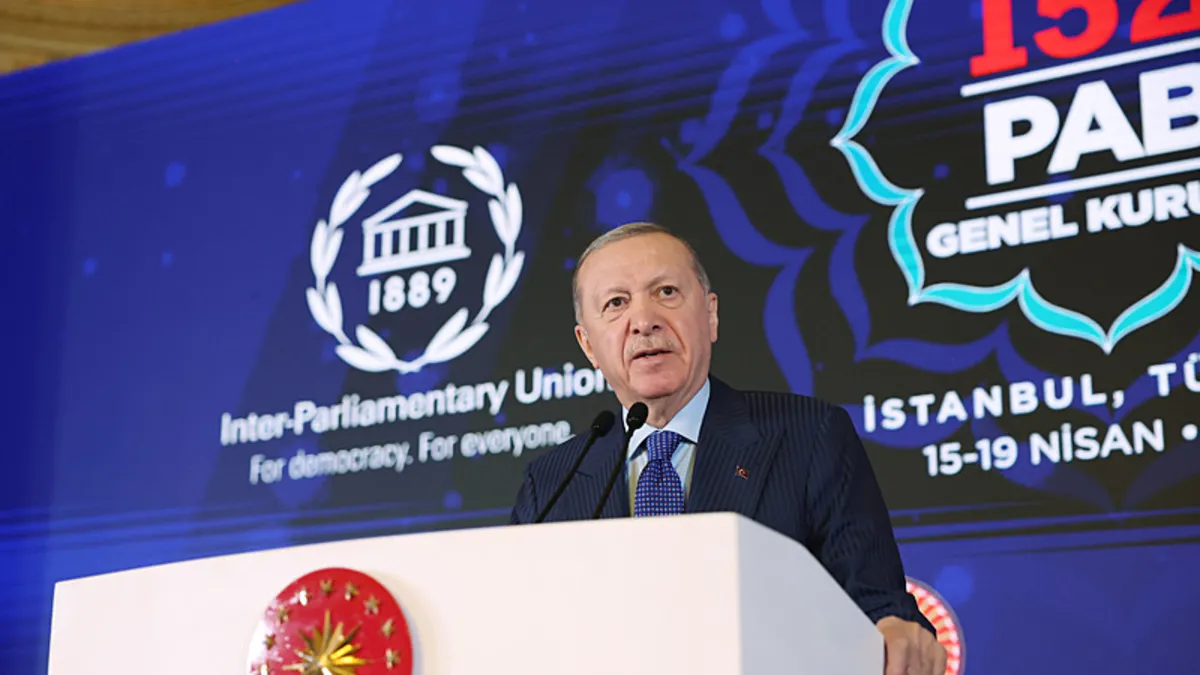
Turkish President Recep Tayyip Erdoğan has identified Israel as the primary obstacle to peace in the Middle East, asserting that the country’s actions are the main barrier to achieving regional stability. His comments come amid ongoing international concern over the humanitarian crisis in Gaza and escalating tensions across the region.
Erdoğan made the remarks during a press conference following his return from Azerbaijan, where he addressed journalists’ questions about foreign policy and regional conflicts. He emphasized that resolving the Middle East conflict requires collective action, stating that “everyone must put their hand under the stone” to achieve peace—a metaphor underscoring shared responsibility.
The Turkish leader has consistently criticized Israel’s military operations in Gaza, describing them as disproportionate and harmful to civilians. He has called for an immediate ceasefire and urged the international community to take concrete steps toward ending the violence, arguing that diplomatic solutions have been sidelined in favor of military escalation.
In recent statements, Erdoğan has too warned that the current global order is facing a “legitimacy crisis,” suggesting that international institutions are no longer perceived as fair or effective by many nations. He linked this perception to double standards in how conflicts are addressed, particularly referencing the Middle East situation as a test of global justice.
These views align with broader Turkish foreign policy under Erdoğan, which has positioned Ankara as a vocal advocate for Palestinian rights and a critic of Western-backed initiatives perceived as biased. Turkey has repeatedly called for investigations into alleged war crimes in Gaza and supported UN resolutions calling for humanitarian access and protection of civilians.
Erdoğan’s framing of Israel as the central impediment to peace reflects his long-standing stance that sustainable stability in the region cannot be achieved without addressing what he views as the root cause of the conflict: Israeli policies toward Palestinians. He has urged world leaders to move beyond rhetoric and take measurable actions to restore trust in international diplomacy.
As of Thursday, April 16, 2026, no immediate diplomatic breakthrough has emerged from these appeals, and regional tensions remain high. Erdoğan continues to use international platforms to call for accountability and renewed peace efforts, maintaining that lasting peace requires confronting what he describes as the core obstacle to reconciliation.
For ongoing updates on Middle East peace efforts and international responses to the Gaza conflict, readers are encouraged to follow official statements from the United Nations, the Turkish Presidency, and credible international news outlets.
Share your thoughts on this development in the comments below, and help spread awareness by sharing this article with your network.
Related reading
- Is the American Dream Still Alive? Susan Wachter’s Perspective
- Uganda Military Unveils Statue of Netanyahu Brother at Entebbe Airport
- Oxford Homeowner Faces Storm Damage and Bridgeport Fire Chief Retires (news-usa.today)
- Ceuta Humanitarian Crisis as 60,000 Moroccans Cross Into Spanish Enclave (archyworldys.com)