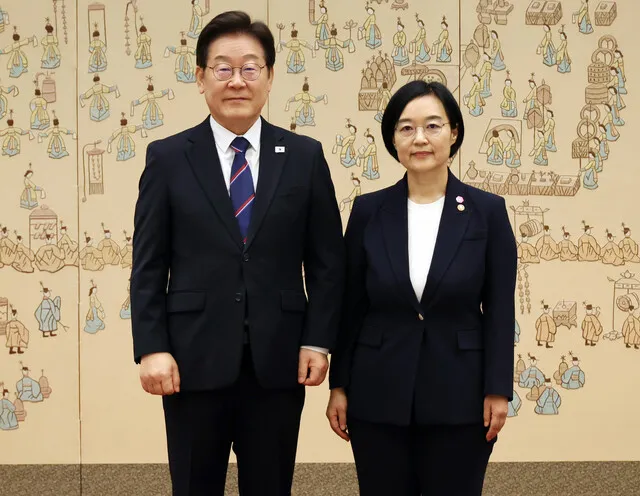
In a significant political development, South Korean President Lee has nominated Han Seong-sook, the current Minister of SMEs and Startups, as the nation’s new Prime Minister. The appointment, announced as part of a broader push for national administrative reform, marks a departure from traditional political appointments, signaling a strategic focus on pragmatic, business-oriented leadership to address pressing economic challenges.
The nomination of Han, a former executive known for her background in the technology and startup sectors, suggests an effort by the administration to minimize overt political coloring in the cabinet. Observers note that by selecting a figure with a proven track record in the private sector, the President intends to prioritize tangible economic outcomes and innovation-driven growth, aiming to realign the government’s focus with public expectations for reform.
A Departure from Political Tradition
Han Seong-sook’s career is primarily defined by her tenure in the tech industry, where she was instrumental in the growth of major platforms and the promotion of startup ecosystems. Her leadership style, often described as “practical” or “field-oriented,” emphasizes results and hands-on management. By elevating a leader from the business sector to the premiership, the administration is signaling a desire to shift the national discourse away from partisan friction and toward structural economic improvements.

The decision to appoint a non-politician to the second-highest executive office is viewed by many as a calculated move to stabilize the administration’s standing. In the wake of recent public feedback, the President appears to be seeking a “reset” by installing a technocrat capable of navigating complex economic policy without the baggage of traditional political affiliations. This move is intended to foster a more collaborative atmosphere between the executive branch and the private sector.
Prioritizing Economic Results
With the nomination, the administration has signaled that the coming months will be heavily focused on economic performance. As the former Minister of SMEs and Startups, Han has championed policies aimed at fostering entrepreneurship and supporting small-to-medium enterprises, which are seen as the backbone of the national economy. The expectation is that her premiership will center on deregulation, the promotion of digital innovation, and the creation of a more favorable environment for businesses to thrive.
This shift toward a “pragmatic” governance model is intended to address stagnation and boost competitiveness. Supporters of the move argue that a Prime Minister with deep experience in the private sector is uniquely positioned to implement reforms that streamline government processes and encourage private-sector investment. The focus remains on achieving measurable progress that the public can identify, particularly regarding job creation and sustainable growth.
Navigating the Legislative Process
While the nomination has been met with interest from across the political spectrum, the path forward involves navigating the legislative confirmation process. As a nominee for Prime Minister, Han must undergo parliamentary scrutiny to confirm her suitability for the role. This period will likely serve as a litmus test for the administration’s broader reform agenda, as lawmakers assess whether her business-focused background can effectively bridge the gap between policy goals and legislative reality.
The administration has framed this nomination as a response to the public’s desire for change. By emphasizing “practicality over politics,” the President is betting that the public will favor a leader who prioritizes economic stability over traditional power struggles. Whether this strategy will succeed depends on the nominee’s ability to translate her corporate experience into effective public administration and whether the government can maintain momentum in its reform efforts.
The next major checkpoint in this process will be the formal confirmation hearings, where the nominee will present her vision for the cabinet and respond to questions from members of the National Assembly. These hearings are expected to provide further clarity on the specific policy shifts expected under the new leadership. We will continue to track updates regarding the confirmation schedule and official statements from the presidential office.
Have thoughts on this political shift? Share your views in the comments below.
Related reading
- Pernyataan Keluarga soal Kematian Jubir Otorita IKN di Rusun ASN – detikNews
- MLS: Juan Manuel Sanabria convirtió en la derrota de Real Salt Lake ante Portland Timbers
- Data Centers Spur Economic Growth, But Who Reaps the Benefits? (world-today-news.com)
- Govt Accelerates FBR Reforms and Cashless Economy Drive (newsdirectory3.com)