
Private Credit Markets Face Turbulence as BlackRock Adds to Investor Concerns
The private credit market is experiencing a period of heightened scrutiny and liquidity concerns, following recent restrictions on withdrawals from funds managed by Blue Owl and now, disclosures from BlackRock regarding loan writedowns. While private credit has boomed in recent years, offering investors access to higher yields than traditional fixed income, its inherent illiquidity and increasing investor caution are creating a challenging environment. The situation is prompting a reassessment of valuations and risk assessments within the sector, particularly concerning exposure to the technology industry.
The appeal of private credit stemmed from its ability to provide financing to companies that may not have access to traditional bank loans, often supporting infrastructure development and, increasingly, ventures in artificial intelligence. But, this expansion into less-established areas, coupled with a broadening investor base that includes those with lower risk tolerance, has amplified vulnerabilities. Recent events suggest that some firms may have overestimated the returns achievable in these areas, and are now facing the consequences.
BlackRock’s Writedown and Rising Concerns
BlackRock, one of the world’s largest asset managers, recently disclosed a loan writedown, adding fuel to the anxieties surrounding the private credit market. While the specific details of the writedown weren’t immediately available, the move signals a potential reassessment of asset values within the firm’s private credit portfolio. This follows Blue Owl’s decision to restrict withdrawals from one of its funds, a move that initially sparked concerns about the solvency and valuations of other firms in the space. The combined effect has led to unprecedented outflows from private credit funds, creating a demanding situation given the sector’s limited liquidity.
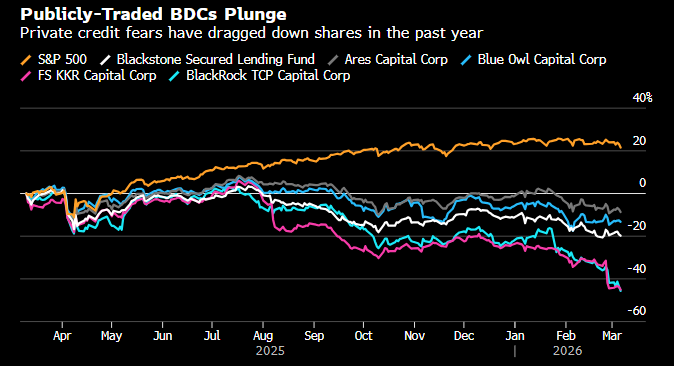
The lack of liquidity in private credit isn’t necessarily a cause for panic in itself; illiquidity is an inherent characteristic of these investments. However, a report by Bloomberg highlighted a potentially more significant issue: a possible underreporting of exposure to the software sector by many private credit funds. This raises concerns that firms may be concealing their true level of risk to attract investment without accounting for the associated premium. Such practices, if confirmed, could indicate a more precarious situation for both technology companies and the broader private credit market than current financial metrics suggest.
Hidden Exposure and the Tech Sector
The alleged underreporting of software sector exposure is particularly troubling. Funds may be incentivized to downplay their risk to avoid higher funding costs. If a significant portion of private credit portfolios are tied to software companies, a downturn in that sector could have cascading effects. The potential for hidden exposure evokes memories of the 2007 financial crisis, where opaque financial instruments masked underlying risks. The current situation demands greater transparency and scrutiny of fund holdings.
The increasing involvement of retail investors in private credit adds another layer of complexity. These investors typically have a different risk profile and a lower tolerance for illiquidity compared to institutional investors. As concerns mount, the ability of private credit funds to meet redemption requests could be severely tested. The financing of infrastructure projects and the burgeoning field of artificial intelligence are heavily reliant on private credit, and any disruption to this funding source could have broader economic consequences.
BlackRock’s Stock Performance and Market Sentiment
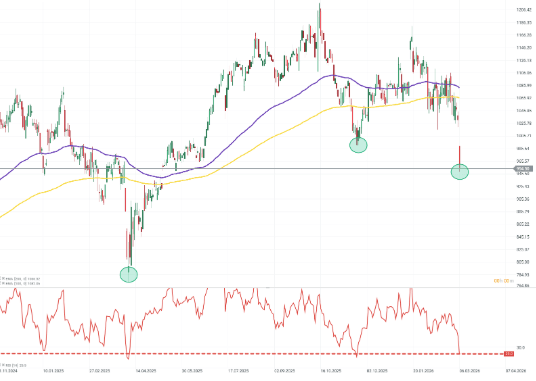
Despite the broader concerns surrounding the private credit market, BlackRock’s stock performance appears to be undergoing a temporary correction driven by emotional reactions, according to technical analysis. As of March 9, 2026, an Relative Strength Index (RSI) around 25 points suggests a potential “floor” in the stock’s price, mirroring patterns observed during previous sell-offs. However, this doesn’t negate the underlying risks within the private credit sector, and the situation could worsen over time.
The current volatility underscores the importance of due diligence for investors considering private credit. Understanding the underlying assets, the fund’s risk management practices, and the potential for illiquidity are crucial. The market’s reaction to BlackRock’s disclosures and Blue Owl’s restrictions highlights the sensitivity of investor sentiment and the potential for rapid shifts in market conditions.
What Does This Imply for Investors?
The recent turbulence in the private credit market serves as a stark reminder of the risks associated with illiquid investments. While private credit can offer attractive returns, it’s not without its challenges. Investors should carefully assess their risk tolerance and liquidity needs before allocating capital to these funds. Increased scrutiny from regulators and investors alike is likely, which could lead to greater transparency and improved risk management practices within the industry.
The situation also raises questions about the sustainability of the rapid growth experienced by the private credit market in recent years. The expansion of private credit was fueled, in part, by the search for yield in a low-interest-rate environment. As interest rates have risen, the attractiveness of private credit may diminish, potentially leading to further outflows and downward pressure on valuations. The long-term impact of these developments remains to be seen.
Looking ahead, investors will be closely watching for further disclosures from major players in the private credit market, as well as any regulatory responses to the recent events. The next key development to watch will be the release of BlackRock’s first-quarter earnings report, expected in April 2026, which may provide further insights into the extent of the firm’s exposure to troubled assets. Continued monitoring of fund flows and valuation trends will also be essential for assessing the health of the private credit market.
The private credit landscape is evolving rapidly, and investors must remain vigilant and informed. A thorough understanding of the risks and opportunities is crucial for navigating this complex market and making sound investment decisions.
Disclaimer: This article provides general information and should not be considered financial advice. Investors should consult with a qualified financial advisor before making any investment decisions.