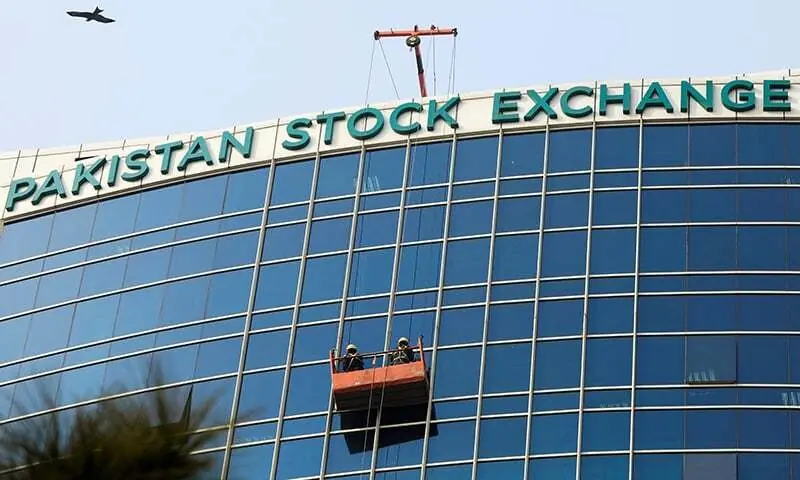
Karachi, Pakistan – Pakistan’s stock market experienced a turbulent week, closing at a six-week low as geopolitical anxieties intensified. The benchmark KSE-100 index plummeted 6.3 percent, or 10,566 points, finishing the session at 157,496 points. This decline reflects growing investor concerns surrounding escalating conflicts in the Middle East and heightened regional security risks, particularly along the Pakistan-Afghanistan border. The week’s performance marks the sixth consecutive week of losses for the Pakistani stock market, signaling a period of sustained uncertainty for investors.
The initial shock came on Monday, with the KSE-100 index suffering a dramatic 9.57 percent drop – wiping out over 16,089 points in a single day. This substantial loss translated to approximately Rs1.7 trillion in investor wealth, as panic selling gripped the market. While bargain-hunting on Tuesday and Thursday offered a temporary reprieve, the underlying sentiment remained fragile. The volatility underscores the interconnectedness of global markets and Pakistan’s vulnerability to external geopolitical shocks. Investors are closely monitoring developments in the Middle East, particularly the impact on global energy supplies and potential inflationary pressures.
Geopolitical Tensions Drive Market Downturn
The primary driver of the market’s decline is the escalating conflict in the Middle East. Disruptions to oil supplies, triggered by major shipping companies halting operations in the Gulf, have fueled concerns about energy security and rising prices. This has prompted the Pakistani government to implement contingency measures, including weekly reviews of petroleum prices to pass on increased costs to consumers and exploring measures to conserve energy, such as encouraging remote work and online learning. Brecorder reported that negative sentiments prevailed at the Pakistan Stock Exchange (PSX) as the conflict continued to escalate.
Adding to the anxieties, Pakistan’s recent retaliatory airstrikes targeting terrorist camps inside Afghanistan have raised security concerns. These developments have created a climate of uncertainty, prompting investors to reduce their exposure to riskier assets like equities. The combination of regional instability and domestic security challenges is weighing heavily on investor confidence. The situation highlights the complex interplay between geopolitical events and financial market performance.
Foreign and Domestic Investor Activity
Throughout the week, foreign investors remained net sellers, offloading equities worth $25.5 million. Mutual funds also contributed to the selling pressure, with redemptions totaling approximately $54.5 million. This outflow of foreign capital further exacerbated the market’s decline. However, domestic institutions provided some support, with banks purchasing equities worth $36 million, while insurance companies and local corporates added $15.7 million and $14.3 million, respectively. This demonstrates a degree of resilience within the domestic market, but it was not enough to offset the impact of foreign selling.
The divergence in investor behavior reflects differing risk appetites and perspectives on the long-term outlook for the Pakistani economy. Foreign investors may be more sensitive to geopolitical risks, while domestic institutions may have a longer-term investment horizon and a greater understanding of the local market dynamics. The interplay between these forces will continue to shape market performance in the coming weeks.
Macroeconomic Concerns Add to Pressure
Beyond geopolitical factors, macroeconomic headwinds are also contributing to the market’s woes. Inflation rose to 6.98 percent year-on-year in February, up from 5.8 percent in January, reaching its highest level since October 2024. This increase in inflation erodes purchasing power and puts pressure on corporate earnings. Pakistan’s trade deficit widened to $2.98 billion in February, increasing 8 percent month-on-month and 25 percent year-on-year. Exports stood at $2.3 billion, down 8 percent year-on-year, while imports were recorded at $5.3 billion, down 1.6 percent. Data from the Pakistan Stock Exchange (PSX) shows the KSE-100 index currently trades at a price-to-earnings ratio of 8.1 times, offering a dividend yield of about 6.3 percent.
The widening trade deficit and rising inflation raise concerns about Pakistan’s external account and its ability to manage its debt obligations. The country’s total public debt rose by 1 percent month-on-month in February to Rs79.3 trillion, representing a 10 percent increase compared with the same period last year. These macroeconomic challenges create a difficult environment for businesses and investors, further dampening market sentiment.
Sector Performance
Sector-wise, refinery stocks were the only major gainers during the week, rising 0.5 percent. This suggests that investors are anticipating increased demand for refined petroleum products due to the rising oil prices and supply disruptions. In contrast, vanaspati and allied industries, property, and transport sectors recorded the steepest declines, reflecting their vulnerability to macroeconomic headwinds and geopolitical risks. The construction sector showed some resilience, with cement despatches rising 12.53 percent year-on-year to 4.19 million tonnes in February, but fertilizer demand remained weak, falling 28 percent year-on-year.
The divergent performance across sectors highlights the uneven impact of the current economic and geopolitical environment. Sectors that are less sensitive to external shocks and have strong domestic demand are likely to fare better, while those that are heavily reliant on imports or exposed to global commodity price fluctuations are likely to struggle.
Looking Ahead: Key Factors to Watch
Analysts believe the market’s direction in the coming weeks will largely depend on developments in the Middle East and the State Bank of Pakistan’s upcoming monetary policy announcement. Any de-escalation in the Middle East conflict could trigger a rebound in equities, as the recent correction has made valuations more attractive. However, a further escalation of tensions could lead to additional selling pressure. The State Bank’s monetary policy decision will also be crucial, as it will signal the central bank’s stance on inflation and economic growth.
The market’s volatility is likely to persist in the near term, as investors grapple with uncertainty and assess the evolving geopolitical and economic landscape. Prudent risk management and a long-term investment horizon will be essential for navigating these challenging conditions. Investors should carefully consider their risk tolerance and diversification strategies before making any investment decisions.
Pakistan’s liquid foreign exchange reserves currently stand at $21.4 billion, with $16.3 billion held by the State Bank of Pakistan and $5.1 billion by commercial banks. The rupee remained relatively stable against the dollar, appreciating marginally by 0.02 percent week-on-week to Rs279.41. These figures provide a snapshot of the country’s external financial position, but they are subject to change depending on global economic conditions and geopolitical events.
The government raised Rs581.7 billion through a treasury bill auction during the week, with yields increasing across all tenors by 21.5 to 39.3 basis points. This indicates rising borrowing costs for the government, reflecting concerns about its fiscal sustainability. The discovery of oil and gas by OGDC in Kohat is a positive development, but its impact on the overall energy landscape will depend on the scale of the reserves and the speed of development.
Key Takeaways:
- The KSE-100 index experienced a significant decline this week, driven by geopolitical tensions and macroeconomic concerns.
- Foreign investors remained net sellers, while domestic institutions provided some support.
- Inflation is rising, and Pakistan’s trade deficit is widening, adding to economic pressures.
- The market’s future performance will depend on developments in the Middle East and the State Bank’s monetary policy.
Investors will be closely watching for any signs of de-escalation in the Middle East and for the State Bank of Pakistan’s upcoming monetary policy announcement, scheduled for [date to be confirmed]. Stay tuned to World Today Journal for continued coverage of the Pakistani stock market and its response to evolving global events. We encourage readers to share their perspectives and insights in the comments section below.
Keep reading