
In an era defined by unprecedented volatility, the modern professional landscape is no longer just about managing a calendar or meeting a quarterly target. From the lingering systemic shocks of global pandemics and the escalating urgency of climate change to the daily friction of inflation and rising living costs, the stressors we face are increasingly unpredictable. While we are taught to be disciplined and hardworking, these traditional virtues are often insufficient when the ground shifts beneath our feet.
The difference between those who succumb to chronic burnout and those who manage to thrive amidst chaos often comes down to a single, critical attribute: psychological flexibility. This is not merely “positive thinking” or a stubborn refusal to acknowledge hardship. Rather, it is the willingness and ability to remain agile in how we think, feel and respond to stress, ensuring that our actions are guided by our long-term values rather than immediate, knee-jerk emotional reactions.
As someone who has spent nearly two decades analyzing the intersection of economic policy and human behavior, I have observed that the most successful leaders and entrepreneurs are rarely those with the most rigid plans. Instead, they are the ones who can pivot. In the realm of health, this same agility serves as a powerful buffer against the erosion of mental and physical well-being. When we stop fighting the inevitable discomfort of life and start navigating it with fluidity, we unlock a more sustainable path to health.
Psychological flexibility for health is fundamentally about expanding our internal repertoire. It is the capacity to stay in the present moment—even when that moment is painful—and to change or persist in behavior when doing so serves our broader goals. For many, the instinct is to lean into rigidity: insisting that a situation “should” be different or fighting an emotion until it consumes us. However, research suggests that this rigidity is often where the most profound suffering resides.
The Evolution of the Mind: From Challenging Thoughts to Accepting Them
To understand how we develop this agility, we must look at the evolution of clinical psychology. For decades, the gold standard for treating anxiety and depression was the second wave of Cognitive Behavioral Therapy (CBT). This approach focused primarily on identifying “distorted” thoughts and actively challenging or changing them to produce a better emotional outcome. While effective for many, this method could sometimes lead to a secondary struggle: the attempt to “fix” or eliminate “bad” feelings.
The emergence of what clinicians call the “third wave” of cognitive-behavioral therapy marked a paradigm shift. Rather than attempting to change the content of our thoughts, third-wave interventions—most notably Acceptance and Commitment Therapy (ACT)—encourage a mindful and accepting approach to our internal experiences. The goal is not to stop feeling anxious or sad, but to change our relationship with those feelings so they no longer dictate our behavior.
This shift is crucial because the act of fighting an emotion often intensifies it. When we tell ourselves we “shouldn’t” be stressed, we add a layer of guilt or frustration to the original stressor, creating a cycle of psychological rigidity. By practicing mindful acceptance, we acknowledge the emotion without letting it drive the car. This allows us to move from a state of “reaction”—where we are driven by fear or anger—to a state of “response,” where we choose our actions based on what is most beneficial for our health and our lives.
For those in high-pressure environments, this distinction is vital. In the corporate world, we often mistake “toughing it out” for resilience. However, true resilience is not the absence of stress, but the ability to remain flexible under its weight. When we are psychologically rigid, our attention and decision-making become constricted, often leading to the particularly errors and health declines we are trying to avoid.
The Evidence: How Agility Buffers the Body and Mind
The benefits of psychological flexibility are not merely anecdotal; they are supported by a growing body of empirical evidence. Decades of research indicate that this trait plays a pivotal role in buffering the negative effects of chronic stress and reducing the severity of mental health disorders, including depression and anxiety. Because flexibility reduces the internal friction caused by resisting reality, it lowers the physiological toll that stress takes on the body.
The impact is particularly evident in high-stakes populations. Research has shown that psychological flexibility provides significant benefits for healthcare professionals and police officers, who face daily exposure to trauma and systemic pressure. Similarly, it has proven effective for trauma-exposed veterans and parents of children with chronic conditions, such as juvenile arthritis, helping them navigate complex emotional landscapes without becoming paralyzed by distress.

A notable study conducted by researchers in Switzerland in 2017 underscored this connection. The study examined the relationship between psychological flexibility, stress, and overall physical and mental health outcomes within a representative sample of the Swiss population. The findings indicated that individuals who could respond flexibly to stress experienced better health outcomes across the board [Verified via National Library of Medicine/PubMed]. This suggests that flexibility is not an innate trait one is born with, but a skill that can be taught and strengthened over time.
When we are rigid, we are essentially operating on “autopilot,” relying on prior knowledge and familiar responses. While this is efficient for routine tasks, it is disastrous during a crisis. If our only tool for dealing with stress is avoidance or anger, we will continue to use those tools even when they no longer work. By expanding our “toolbox” of responses, we prevent the cognitive narrowing that typically accompanies acute stress, allowing us to maintain a broader perspective and make healthier choices for our long-term well-being.
Practical Strategies for Building Psychological Flexibility
Developing psychological flexibility is akin to physical training; it requires consistent practice to loosen the mental “grip” we have on how we believe life should unfold. The objective is to move from a state of reactivity to a state of mindful observation.
One of the most effective techniques is the practice of “emotional bodysurfing.” Instead of trying to push a difficult emotion away or analyze why it is happening, we imagine the emotion as a wave. We don’t try to stop the wave, nor do we let it pull us under; instead, we ride it out, acknowledging its presence until it naturally crests and recedes. This prevents the “struggle switch” from being flipped, which is often what turns a manageable emotion into a debilitating crisis.
Another powerful tool is the “Stop Sign” visualization. In moments of acute stress, when the urge to react impulsively is strongest, practitioners are encouraged to visualize a giant stop sign. This serves as a cognitive circuit breaker, creating a brief pause between the stressor and the response. In that pause, You can ask ourselves: “Is the reaction I’m about to have consistent with the person I want to be?” or “Will this response move me closer to my health goals?”
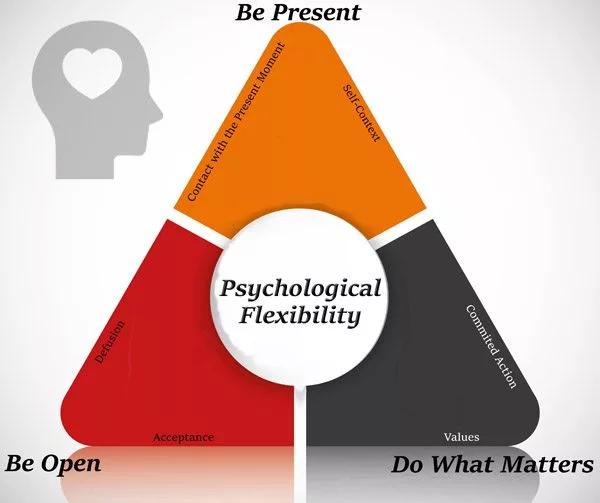
Beyond these immediate tactics, long-term flexibility is built through several core pillars:
- Mindfulness: Training the brain to stay in the present moment without judgment. This reduces the tendency to ruminate on the past or catastrophize the future.
- Cognitive Defusion: Learning to see thoughts as merely “words” or “images” rather than absolute truths. Instead of saying “I am a failure,” one learns to say “I am having the thought that I am a failure.”
- Values-Based Action: Identifying core values (e.g., health, family, integrity) and using them as a compass for behavior, regardless of the current emotional state.
- Acceptance: Allowing uncomfortable feelings to exist without trying to minimize, deny, or eliminate them.
Simon Rego, Chief Psychologist at Montefiore Medical Center and author of The CBT Workbook for Mental Health, notes that suffering often intensifies when we become rigid—specifically when we fight our emotions or insist that life must unfold in a certain way. By loosening this grip, we reduce the psychological friction that leads to burnout and chronic illness.
The Broader Impact: Why Flexibility is a Public Health Necessity
If psychological flexibility can be taught, as the Swiss research and clinical outcomes suggest, then it ceases to be a personal luxury and becomes a public health necessity. In a global economy characterized by “permacrisis,” the ability to adapt mentally is just as important as access to healthcare or nutrition.
When individuals are psychologically flexible, the ripple effects extend beyond their own health. In the workplace, it manifests as better collaboration, higher emotional intelligence, and a reduction in turnover. In families, it leads to more resilient parenting and healthier conflict resolution. By moving away from the “right way” to think or feel, we create space for diverse perspectives and more compassionate interactions.
We must stop viewing the struggle with stress as a failure of will. For too long, the narrative has been that we simply need to be “stronger.” But strength without flexibility is brittle; it breaks under enough pressure. True strength is the ability to bend without breaking, to acknowledge our blind spots and implicit biases, and to accept that we are all works in progress.
Navigating the modern world requires us to act as explorers rather than judges. An explorer is open to adventure, seeks various perspectives, and embraces a broad range of experiences—even the uncomfortable ones. By adopting this mindset, we stop fighting the current of our lives and start learning how to swim in it.
Key Takeaways for Improving Your Mental Agility
- Shift from Reaction to Response: Use a “pause” (like the stop sign technique) to choose your action based on values rather than immediate emotion.
- Embrace the “Third Wave”: Move from trying to “fix” or change negative thoughts to accepting them as temporary mental events.
- Ride the Wave: Practice “bodysurfing” your emotions—letting them exist without fighting them until they pass.
- Focus on Values: Define what truly matters to you and let those values guide your behavior, even when you feel anxious or stressed.
- Practice Mindfulness: Dedicate time to being present in the moment, which reduces the cognitive rigidity that fuels chronic stress.
As we look toward the future of global health, the integration of psychological flexibility into our daily routines—and perhaps our educational and corporate systems—will be essential. The goal is not a life without stress, but a life where stress no longer limits our capacity to thrive.
The next critical step in this evolution is the continued integration of mindfulness-based interventions into primary healthcare settings, moving mental agility from the therapist’s office into the general public’s toolkit. As more clinical data emerges on the link between psychological flexibility and physical longevity, we can expect a shift in how “wellness” is defined and prescribed.
Do you find yourself leaning into rigidity or flexibility when stress hits? Share your experiences in the comments below, and let us know which of these techniques you find most helpful in your professional and personal life.
- Cathay Pacific Outlook: Profit Surge Expected as Travel and Cargo Demand Rebound
- Bitcoin Analysis: ETF Inflows and MicroStrategy Impact
- The Relationship Between Vaping and Health: Separating Fact from Alarmist Headlines (world-today-news.com)
- Affordable Food That Significantly Boosts Your Health, According to Doctor (newsdirectory3.com)