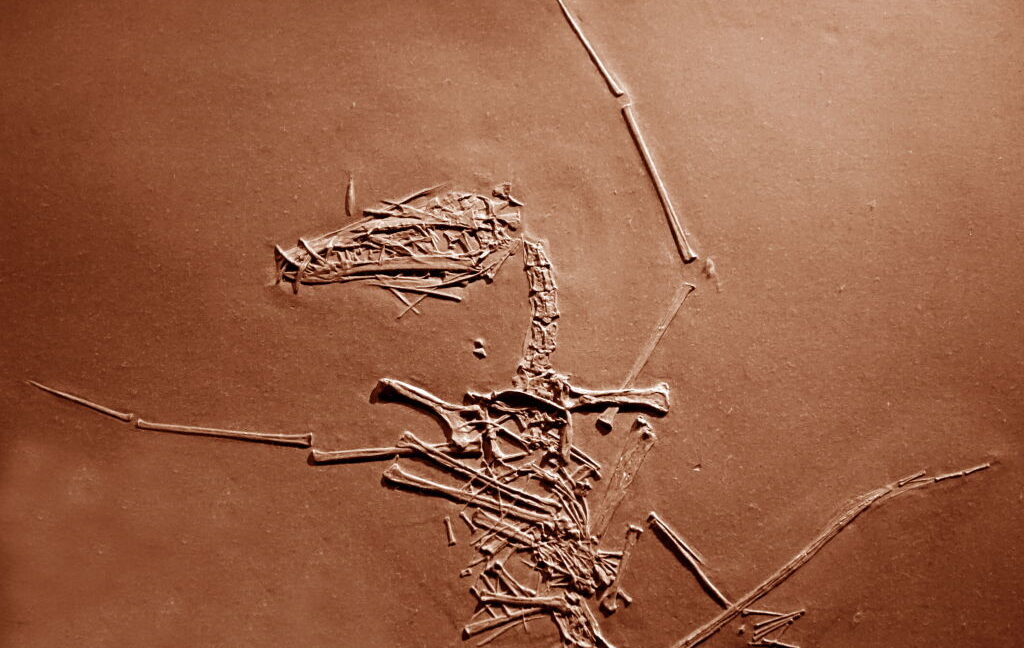
Unraveling the Mystery of Lucky: How Storms Claimed Juvenile Pterosaurs in Ancient Germany
For over a century, the remarkably preserved skeletons of two juvenile pterosaurs, nicknamed ”Lucky I” and “Lucky II,” have captivated paleontologists. discovered in the famed Solnhofen limestone deposits of Bavaria, Germany, these fossils presented a puzzling question: why were predominantly young pterosaurs found, and what caused their demise? Recent research, published in Current Biology (2025, DOI: 10.1016/j.cub.2025.08.006), finally offers compelling answers, pointing too the devastating impact of intense storms on these ancient flying reptiles.This article delves into the evidence, exploring the cause of death, the unique preservation conditions of Solnhofen, and what these discoveries reveal about the lives - and vulnerabilities - of pterosaurs.
The Solnhofen Puzzle: Where Are the Adults?
the Solnhofen region is world-renowned for its exceptional fossils, dating back to the Late Jurassic period (approximately 150 million years ago). The area was once a shallow, tropical lagoon system, ideal for preserving delicate organisms. Though,a striking pattern emerged when examining pterosaur fossils from this location: a disproportionate number were juveniles.
Dr. Jessica Smyth, the lead researcher on the recent study, proposes a two-fold explanation. Firstly, she suggests that young pterosaurs were simply more susceptible to the environmental hazards present. Their developing flight skills and smaller size likely made them less capable of navigating turbulent conditions. Secondly, and crucially, she posits that those pterosaurs that did survive were less likely to be rapidly buried and fossilized. Larger carcasses would have floated for days or even weeks, allowing decomposition and scavenging to occur before burial. In contrast, the smaller bodies of juveniles were more easily swept under the sediment layers, ensuring their preservation.
This insight addresses a long-standing question in paleontology,offering a plausible explanation for the skewed age distribution observed in the Solnhofen pterosaur fossil record.
Fractured Wings and Fatal Storms: Determining the cause of Death
The key to unlocking the mystery lay in the detailed examination of the skeletal remains of Lucky I and Lucky II. Both specimens exhibited fractures in their humeri – the bones connecting the wing to the body.These fractures weren’t the result of blunt force trauma,such as a collision with a tree or cliff face. Instead, thay displayed characteristics consistent with injuries sustained during flight.
The humerus is especially vulnerable to stress during flight, bearing the brunt of the forces generated by wing movement. Smyth’s team observed that the fractures were characterized by smooth edges, indicative of breaks occurring in living bone, as opposed to the jagged edges of postmortem damage. Importantly, there were no signs of healing, suggesting the injuries were directly related to the pterosaurs’ death.
Further evidence pointed towards a common culprit: severe storms. The researchers noted similarities between the observed bone displacement and injuries seen in modern birds and bats that have succumbed to storm-related fatalities. The intense winds prevalent in the Solnhofen region would have posed a significant threat to flying creatures, particularly those with limited flight experience.
A Perfect Storm for Preservation
The same storm events that likely caused the pterosaurs’ injuries also played a critical role in their exceptional preservation. These storms churned up the lagoon, bringing deep-water sediments to the surface. This sediment was rich in fine particles that quickly enveloped the sinking carcasses, shielding them from scavengers and slowing decomposition.
Furthermore, the deep-water conditions were characterized by high salinity and low oxygen levels, creating an surroundings inhospitable to most bacteria and other organisms that contribute to decay. This unique combination of factors resulted in the remarkable fossilization of not only pterosaurs but also other winged vertebrates like the iconic Archaeopteryx and a variety of flying invertebrates. Even marine life wasn’t immune, with storm-induced turbulence impacting the lagoon ecosystem as a whole.
In essence, the Solnhofen environment presented a tragic paradox: the very conditions that made life precarious also ensured its lasting legacy in the fossil record.
Lucky’s Legacy: A Window into the Past
The meticulous analysis of Lucky I and Lucky II has provided invaluable insights into the lives and deaths of these ancient creatures. Dr. Smyth concludes that the storm events were not only responsible for the burial of the pterosaurs but were also the primary cause of their injuries and ultimate demise.
While these young pterosaurs were undeniably unlucky,
Worth a look