In the world of paleontology, some of the most significant discoveries initiate not with a pristine specimen, but with something overlooked, dismissed, or even considered too damaged to study. Such was the case with a fragmented dinosaur skull that languished in obscurity for decades before a curious undergraduate student at Virginia Tech decided to take a closer look. What emerged from that painstaking reconstruction was not just another fossil, but a new species that challenges long-held assumptions about dinosaur evolution and survival during one of Earth’s most turbulent periods.
The fossil in question, later identified as belonging to a new genus and species named Ptychotherates bucculentus, was originally discovered in 1982 in the Coelophysis Quarry of northern New Mexico. For years, it remained largely unstudied due to its poor condition — crushed and fragmented to the point where early examiners described it as “uniquely sucky.” It was Simba Srivastava, then a first-year geosciences student, who took on the task of reconstructing the skull under the mentorship of paleontologists Sterling Nesbitt and Michelle Stocker. Over two years, Srivastava meticulously pieced together the fragments, revealing anatomical features never before seen in early carnivorous dinosaurs.
The reconstructed skull, measuring approximately 22 centimeters in length, displays a unique combination of traits: massive cheekbones, a wide braincase, and a short, deep snout. These characteristics distinguish Ptychotherates bucculentus from its contemporaries and suggest a specialized adaptation that may have played a role in its survival. According to the research published in Papers in Palaeontology, the dinosaur lived around 201 million years ago during the Rhaetian stage of the Late Triassic, making it one of the last known members of the Herrerasauria — an early branch of carnivorous dinosaurs that predates more familiar theropods like Tyrannosaurus rex by tens of millions of years.
This placement is significant since the end-Triassic extinction event, which occurred roughly 201.3 million years ago, wiped out many reptilian lineages and reshaped terrestrial ecosystems. While it was long believed that early dinosaur groups like the Herrerasauria disappeared well before this boundary, the discovery of Ptychotherates bucculentus suggests that at least some lineages persisted much later than previously thought. As Sterling Nesbitt noted in the Virginia Tech announcement, the fossil implies that certain dinosaur groups were not merely outcompeted by rivals but were actively affected by the same extinction pressures that eliminated other reptilian groups.
Michelle Stocker emphasized the broader implications of the find, stating that it offers rare insight into a poorly understood phase of dinosaur history. “Dinosaurs originated in the Carnian stage,” she explained, “and diverged into three major lineages: Ornithischia, Theropoda, and Sauropodomorpha. Yet, the fossil record from low-latitude regions like the American Southwest has been sparse, making it tricky to trace how these groups evolved in those areas.” The discovery of Ptychotherates bucculentus in New Mexico helps fill that gap, providing evidence that early dinosaur diversity was more widespread and ecologically complex than the fossil record had previously indicated.
What makes this discovery particularly remarkable is the role of undergraduate research in driving it forward. Srivastava’s involvement began as part of an initiative by Nesbitt and Stocker to immerse students in the full paleontological process — from fieldwork to publication. “We want undergraduate researchers to experience the whole paleontological research process at Virginia Tech,” Nesbitt said. “Simba grabbed the project by the reins.” Her dedication transformed a neglected specimen into a cornerstone of new scientific understanding, demonstrating how persistence and careful methodology can yield breakthroughs even from the most unpromising materials.
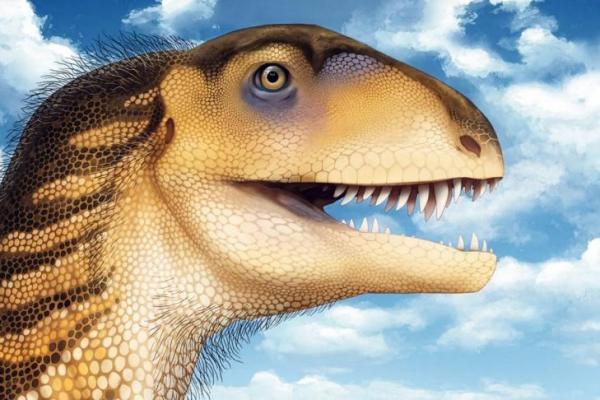
The artistic reconstruction of Ptychotherates bucculentus, created by Megan Sodano of Virginia Tech, depicts a agile, bipedal predator with a robust skull adapted for powerful bites. While much about its behavior remains inferential, the anatomical details suggest it was an active hunter, possibly preying on smaller reptiles and early mammal relatives in the arid environments of Late Triassic New Mexico. Its survival into the Rhaetian hints at ecological resilience, though it ultimately did not persist into the Jurassic, unlike the three major dinosaur lineages that would go on to dominate the next geological period.
This discovery also raises crucial questions about sampling bias in the fossil record. The fact that such a significant specimen was overlooked for so long underscores how preservation conditions, preparation challenges, and initial perceptions of quality can delay or prevent scientific recognition. It serves as a reminder that museum drawers and fossil collections may still hold undiscovered truths, waiting for the right researcher to question the right questions.
As of now, Ptychotherates bucculentus is known from a single skull, limiting what can be said about its full anatomy, growth, or variation across populations. However, the uniqueness of its features — particularly the combination of a wide braincase and pronounced cheek musculature — provides a clear diagnostic marker for future identifications. Should additional specimens be found, they could shed light on whether this species represents a localized adaptation or part of a broader, previously unrecognized radiation of early carnivorous dinosaurs.
The study’s authors continue to emphasize the importance of re-examining overlooked fossils, especially those from underrepresented geographic and temporal windows. With advances in imaging technology and computational reconstruction, even highly fragmented specimens can now yield valuable data. For institutions and researchers, this reinforces the value of maintaining accessible fossil collections and encouraging interdisciplinary, student-involved projects that prioritize thoroughness over speed.
In the broader narrative of life’s recovery after mass extinction, Ptychotherates bucculentus stands as a testament to evolutionary experimentation and resilience. Though its lineage did not survive into the Jurassic, its existence just before the boundary offers a snapshot of dinosaur diversity at a critical juncture — one where experimentation in form and function was still underway, and the future rulers of the Mesozoic had not yet secured their dominance.
For readers interested in following developments in this area, the Virginia Tech Department of Geosciences regularly publishes updates on ongoing paleontological research, including fieldwork in the American Southwest and analyses of Triassic-Jurassic transition fossils. The Papers in Palaeontology journal, where the original study was published, remains a key source for peer-reviewed advancements in vertebrate paleontology.
What began as a forgotten fragment in a drawer has, through careful study and scientific curiosity, become a pivotal piece in understanding how dinosaurs rose to prominence. It is a powerful reminder that in science, as in discovery, sometimes the most important truths are found not in the pristine and obvious, but in the broken, the overlooked, and the seemingly insignificant — waiting only for someone to look closely enough to observe them.
If you found this story informative, consider sharing it with others who appreciate science and discovery. We welcome your thoughts and reflections in the comments below.
Related reading