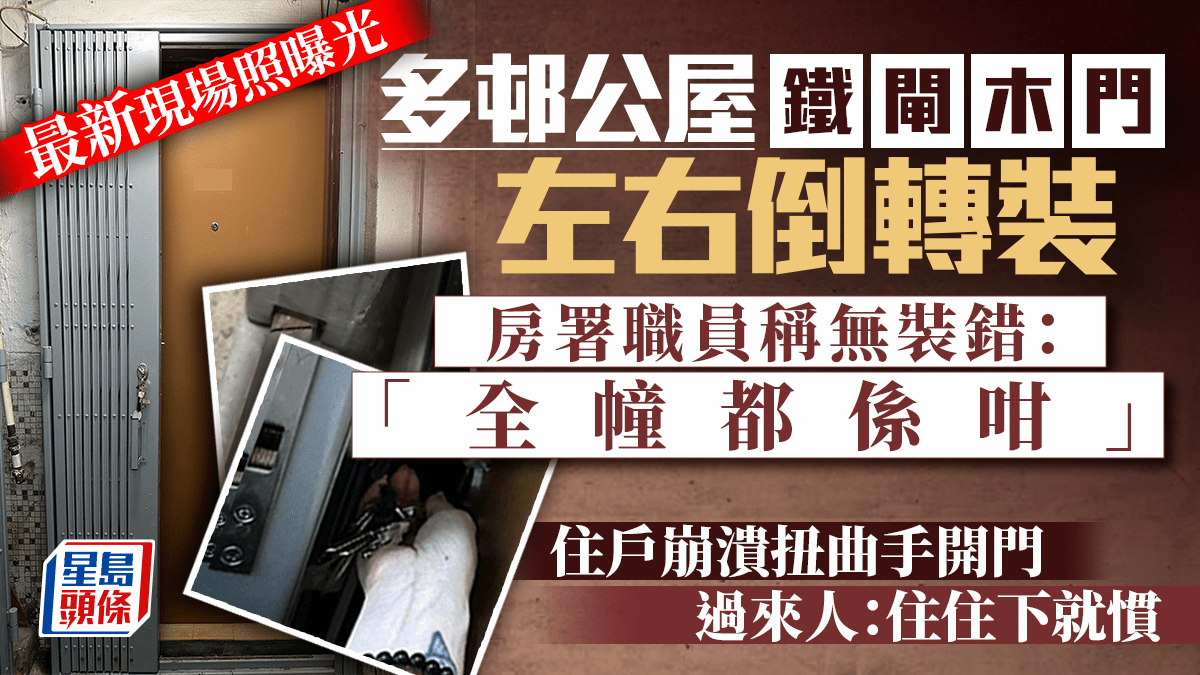
Residents in newly completed public housing estates have reported significant difficulties accessing their homes due to the installation of metal security gates and wooden doors in a configuration that forces users to reach across their bodies to operate the locks. The issue, which has surfaced in social media discussions and local reports, stems from the doors and gates being hinged on opposite sides, creating a layout that residents describe as physically awkward and counter-intuitive.
According to the Hong Kong Housing Authority’s standardized design guidelines, public housing units are equipped with a fire-rated timber entrance door and a metal security gate. While the Housing Department maintains that these installations comply with safety and operational standards, numerous tenants have voiced frustration, noting that the opposing lock positions require them to contort their hands or reach across the door frame to insert keys and operate deadbolts. This design choice, often referred to by residents as “left-right inversion,” has prompted concerns regarding accessibility and daily convenience for elderly residents and those with limited mobility.
Understanding the Housing Authority’s Installation Standards
The Housing Department has responded to resident complaints by clarifying that the orientation of doors and gates is determined by the internal layout of each apartment and the proximity to adjacent units or fire escape routes. In many cases, the configuration is dictated by the need to ensure that when both the timber door and the metal gate are opened, they do not obstruct common corridors or violate fire safety regulations set out by the Buildings Department under the Buildings Ordinance (Cap. 123). By offsetting the hinges and lock mechanisms, the design aims to prevent the “collision” of door leaves in narrow lift lobbies.
While the department asserts that the installations are not “wrong” but rather site-specific, the practical impact for residents remains a point of contention. Architectural experts consulted in similar housing design disputes have noted that while safety compliance is the primary driver for such layouts, the human-factors engineering—how a person interacts with the hardware—is often secondary to regulatory requirements. For residents, this means that while the building meets the letter of the law, the daily experience of entering one’s home is significantly hampered.
Daily Challenges and User Frustration
For many tenants, the immediate reality is a repetitive, physically taxing struggle to unlock their doors. Social media forums have been flooded with images of these “mirrored” doors, with users sharing tips on how to maneuver around the awkward lock positioning. Some residents have described the process as requiring a “twist of the wrist” that becomes painful over time, particularly when carrying groceries or heavy items.

The sentiment among affected tenants is largely one of helplessness. When residents have approached housing office staff, they have frequently been told that the configuration is standard for that specific building block. This “take it or leave it” response has led to widespread criticism online, with many questioning whether the design was reviewed by accessibility consultants prior to installation. While some long-term public housing tenants have remarked that one eventually becomes accustomed to the hardware, others argue that modern housing developments should prioritize user ergonomics alongside fire safety.
Fire Safety vs. Usability
The core of the issue lies in the strict enforcement of fire safety codes in high-density residential buildings. As outlined in the Code of Practice for Fire Safety in Buildings, entrance doors must be designed to facilitate rapid egress during an emergency. The Housing Authority is bound by these regulations to ensure that no part of the door assembly creates a hazard in the building’s means of escape.
When comparing these modern installations to older public housing estates, a shift in priority is evident. Older blocks often featured simpler, more uniform door configurations; however, newer, high-density blocks often have tighter corridor spaces, forcing architects to use “handed” doors (left-hand or right-hand opening) to manage space. The resulting “left-right” conflict occurs when the security gate and the main door are forced to swing in ways that accommodate the narrowest points of the corridor. For the Housing Authority, the priority remains the integrity of the fire escape path, even at the cost of resident convenience.
What Residents Can Do
Tenants who find that their door configuration poses a genuine safety or accessibility risk—such as those with physical disabilities who cannot operate the locks—are encouraged to submit a formal request for an assessment through their local Estate Management Office. While the Housing Department has stated the current installations are not “incorrect,” they do have a mechanism for reviewing accessibility requirements under the Disability Discrimination Ordinance (Cap. 487) when specific needs are identified.
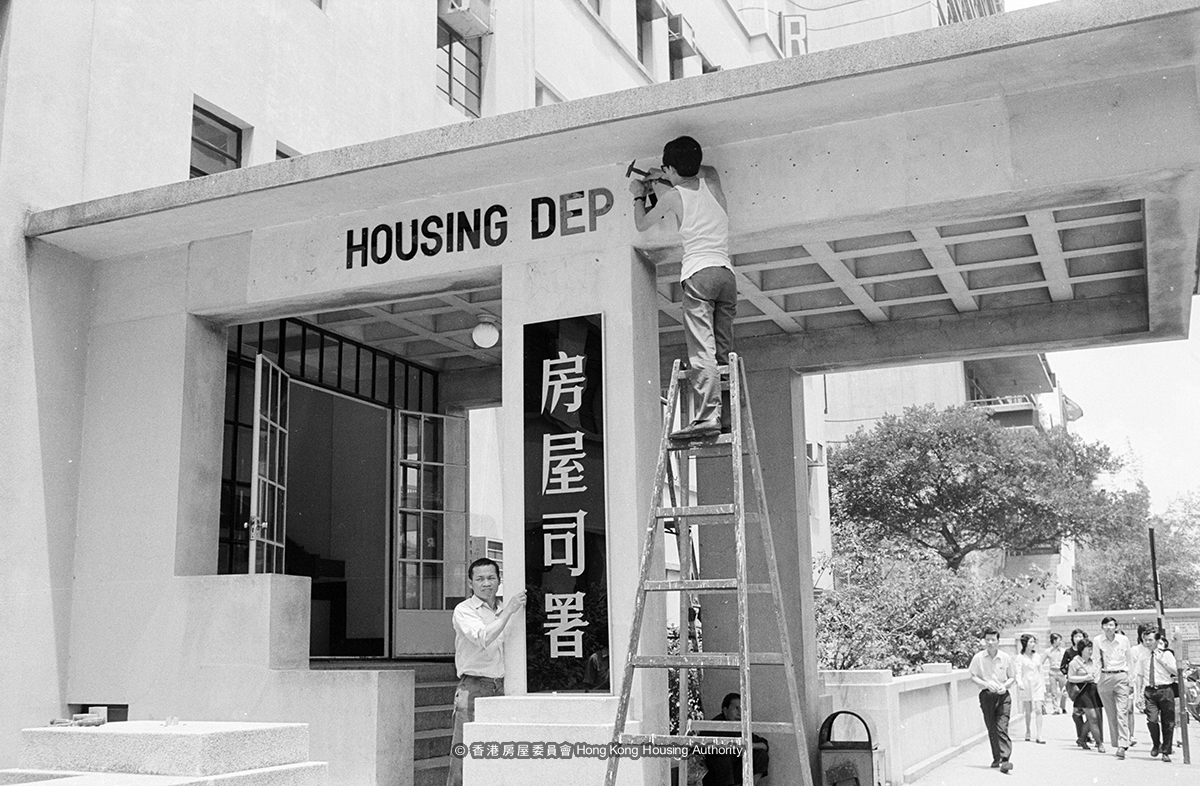
Updates regarding building maintenance and policy revisions are typically posted on the official Hong Kong Housing Authority website. Residents are advised to document any specific difficulties they encounter and provide feedback through the official channels to ensure their concerns are formally registered with the estate management teams. We will continue to monitor the situation as more residents move into these new developments and share their experiences.
Have you experienced similar issues with your home security gate? Share your thoughts or reach out to our editorial team to provide further details on your housing experience.
Related reading