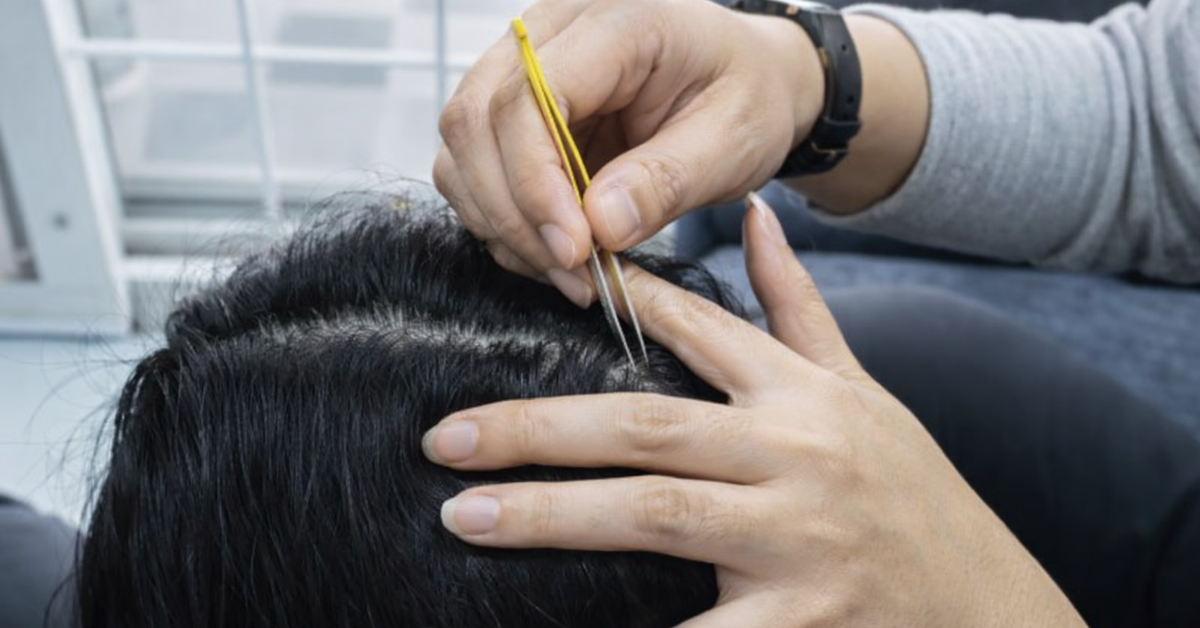
The seemingly harmless habit of plucking gray hairs, often done to alleviate a cosmetic annoyance, can have lasting consequences for hair growth. Dermatologists are increasingly warning that repeatedly removing hairs – whether from the scalp, eyebrows, or elsewhere – can damage the hair follicles, potentially preventing future hair growth in those areas. This isn’t a new phenomenon. the long-term effects of over-plucking were evident in trends like the ultra-thin eyebrows popular in the 1990s and early 2000s.
The concern stems from the fundamental biology of hair growth. Each hair follicle, a tiny structure embedded in the skin, is responsible for producing a single hair shaft. Unlike some cells in the body that regenerate, these follicles have a limited capacity for repair. Repeated trauma from plucking can inflict damage that exceeds the follicle’s ability to recover, ultimately leading to its cessation of hair production. This isn’t simply a matter of temporarily halting growth; the damage can be permanent. Understanding the structure of the hair follicle is key to understanding why this happens. The follicles reside 2-4mm beneath the skin, and the hair fiber is formed long before it becomes visible.
How Hair Follicles are Damaged by Plucking
According to Professor Desmond Tobin, a leading dermatologist at University College Dublin, the human scalp contains millions of hair follicles, which he describes as “tiny hair factories.” As reported by Tempo on March 10, 2026, Tobin explained that each follicle produces only one hair. Plucking doesn’t stimulate multiple hairs to grow from the same follicle, a common misconception. Instead, it weakens and potentially destroys the follicle itself. The act of pulling a hair out by the root can create a small wound on the scalp, and if the damage is severe enough, the entire follicle can be removed, preventing any future hair from growing in that spot.
This damage isn’t limited to the scalp. The same principle applies to other areas of the body where hair is frequently plucked, such as the eyebrows. The trend of over-plucking eyebrows in the past serves as a cautionary tale. Many individuals who aggressively shaped their eyebrows during the 1990s and 2000s found that hair stopped growing back in certain areas, leaving them with permanently sparse brows. This highlights the vulnerability of hair follicles to repeated trauma.
The Role of Genetics and Aging in Hair Growth
Whereas plucking can cause permanent hair loss, it’s important to distinguish this from the natural process of hair graying. Professor Tobin notes that gray hair growth is largely determined by genetics. He stated in the Tempo article that gray hair often grows as well as, or even better than, pigmented hair, and in some cases, may even appear to grow faster. This is because the cells responsible for pigment production slow down with age, but the hair follicle itself remains active.
However, Tobin likewise emphasizes that lifestyle factors can influence hair health and the aging process. Chronic stress, poor sleep, and nutritional deficiencies can accelerate biological aging, including changes in hair growth and quality. Maintaining a healthy lifestyle, including a balanced diet and adequate rest, can help support optimal hair health. Addressing these factors can contribute to overall well-being and potentially mitigate some of the effects of aging on hair.
Distinguishing Between Plucking and Other Forms of Hair Loss
It’s crucial to differentiate between hair loss caused by plucking and other common forms of hair loss, such as androgenetic alopecia (male or female pattern baldness). Androgenetic alopecia is a genetically predisposed condition that causes gradual hair thinning, typically following a predictable pattern. Unlike hair loss from plucking, androgenetic alopecia affects multiple follicles simultaneously and is not directly caused by physical trauma.
Other causes of hair loss include autoimmune conditions, hormonal imbalances, and certain medical treatments. If you are experiencing significant hair loss, it’s essential to consult a dermatologist to determine the underlying cause and receive appropriate treatment. A proper diagnosis is crucial for effective management of hair loss conditions.
What the Research Says About Hair Follicle Damage
Research into hair follicle damage and regeneration is ongoing. While the hair follicle’s capacity for self-repair is limited, scientists are exploring potential therapies to stimulate follicle regeneration and promote hair growth. These therapies include stem cell research, growth factor treatments, and low-level laser therapy. Professor Tobin, as Director of the UCD Charles Institute of Dermatology, is actively involved in this research, seeking to better understand the complex mechanisms that govern hair growth and loss.
The findings from these studies could lead to new treatments for individuals who have experienced hair loss due to plucking or other forms of follicle damage. However, it’s important to note that these therapies are still under development and are not yet widely available.
Preventing Hair Loss from Plucking: Practical Advice
The most effective way to prevent hair loss from plucking is to avoid the practice altogether. If you are tempted to pluck gray hairs or stray hairs, consider alternative methods for managing their appearance. For example, you can use hair dye to cover gray hairs or trim stray hairs with scissors instead of plucking them out.
If you are struggling with compulsive hair-pulling (trichotillomania), it’s important to seek professional help. Trichotillomania is a mental health disorder characterized by a recurrent urge to pull out hair from the scalp, eyebrows, or other areas of the body. Treatment options include cognitive-behavioral therapy and medication. Early intervention can help manage the condition and prevent further hair loss.
Experts warn that repeated hair plucking can prevent regrowth – Photo: AI
Key Takeaways
- Repeatedly plucking hairs can damage hair follicles and prevent future hair growth.
- Each hair follicle produces only one hair shaft, so plucking doesn’t stimulate regrowth.
- Gray hair growth is primarily determined by genetics, but lifestyle factors can influence hair health.
- Avoid plucking hairs and seek professional help if you struggle with compulsive hair-pulling.
As research continues to unravel the complexities of hair follicle biology, we can expect to see further advancements in the prevention and treatment of hair loss. For now, the most prudent approach is to avoid damaging the follicles in the first place. The long-term health of your hair depends on it. The UCD Charles Institute of Dermatology continues to publish research findings; their website is a valuable resource for staying informed about the latest developments in hair and skin health.
What are your experiences with hair loss? Share your thoughts and questions in the comments below. And if you found this article helpful, please share it with your friends and family.
Worth a look