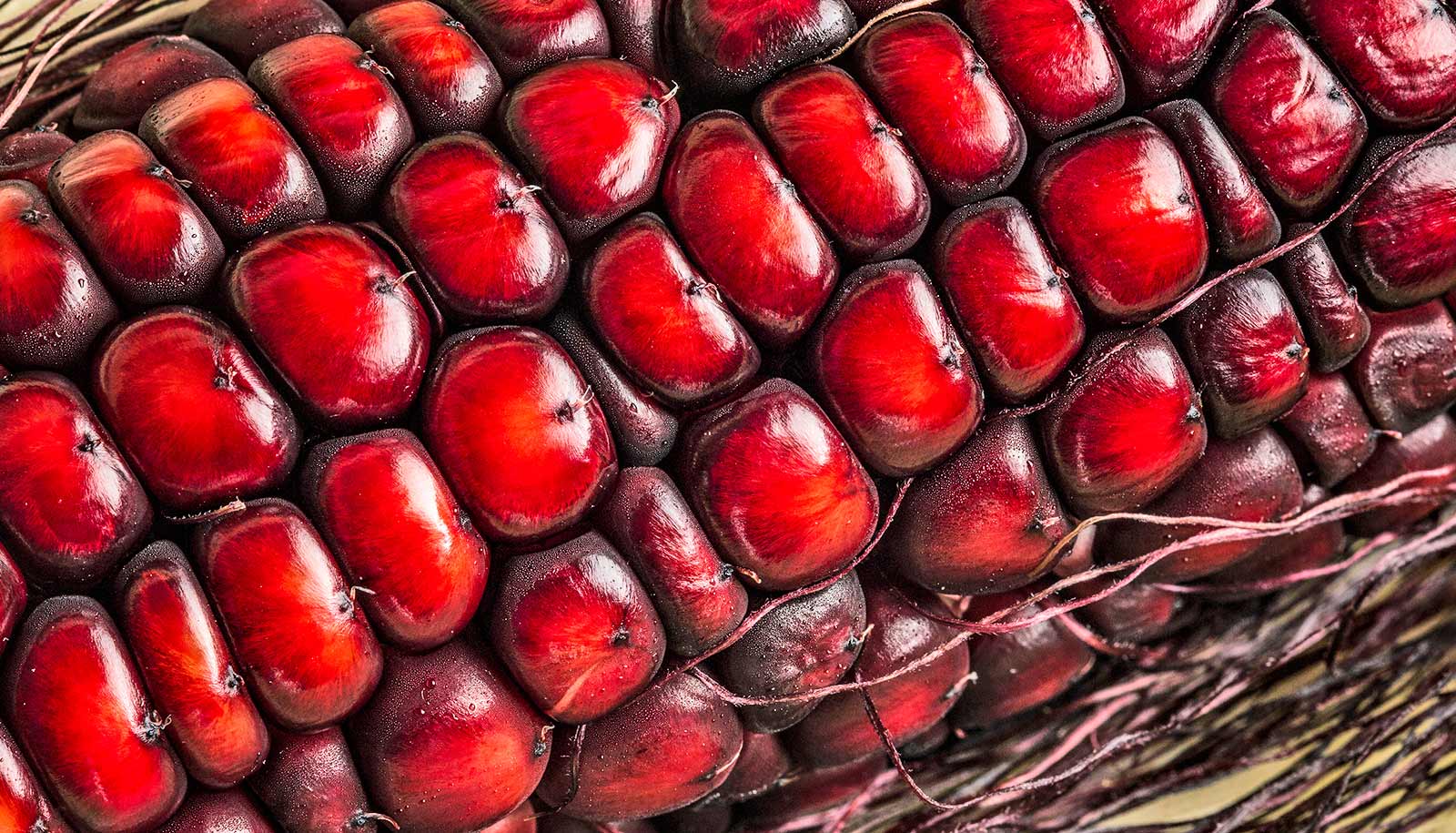
Researchers at the University of Missouri are turning a unique variety of purple corn traditionally grown in South America into a stable, natural alternative to artificial food dyes, offering food manufacturers a viable path toward cleaner product labels. Led by a team across the institution’s College of Agriculture, Food, and Natural Resources and the College of Engineering, scientists have tackled the primary hurdle that has long plagued natural colorants: their fragility when exposed to heat, light, and oxygen.
The food industry has relied on synthetic, petroleum-based dyes such as Red No. 40 and Red No. 3 to achieve vibrant product appearances. While these artificial options remain chemically stable during industrial processing, consumer demand for cleaner ingredients has pushed manufacturers to seek plant-based replacements. Natural pigments, however, frequently break down under standard manufacturing conditions, losing their color intensity long before reaching store shelves.
The secret behind the University of Missouri team’s approach lies in anthocyanins, the same natural antioxidant pigments that give blueberries, red cabbage, and grapes their deep colors. In corn, these valuable compounds are concentrated specifically in the pericarp, which is the thin outer layer of the kernel. “It’s the layer that often gets stuck in your teeth,” says Pavel Somavat, who holds joint appointments in Mizzou’s College of Agriculture, Food, and Natural Resources and the College of Engineering. “In purple corn, that’s where our most valuable components are.”
Overcoming Heat and Processing Challenges
Replacing synthetic dyes with plant extracts has historically been difficult because most natural colors break down when exposed to elevated temperatures, light, or oxygen. This instability poses a major barrier in commercial food production, where ingredients must regularly withstand processing temperatures reaching up to 250 degrees Fahrenheit and remain visually stable on shelves for extended periods.
To test the resilience of their purple corn extracts, Mizzou researchers exposed the colorants to elevated temperatures typically used in commercial food manufacturing. After one hour of direct exposure, approximately 75% of the key color compounds remained intact. “If the color looks good after heating, that’s what matters to manufacturers,” Somavat notes.
To improve durability further, the research team coated the extracted pigments in protective, food-grade materials. This coating process increased color retention to nearly 97% for specific compounds. Additionally, the technique allows scientists to produce shelf-stable powders, making the purple corn-based colorants significantly easier for commercial facilities to store and transport.
Performance in Beverage Systems and Acidic Environments
Beyond high-temperature processing, the team evaluated the colorants in beverage systems, which represent some of the most demanding environments for natural ingredients. Commercial drinks are frequently acidic, exposed to store lighting, and stored for weeks or months—conditions that typically degrade plant-based dyes rapidly.
“Purple corn-based colorants held up well in acidic and basic environments,” Somavat explains. That chemical stability positions the extract as a strong candidate for commercial fruit juices, flavored waters, and sports drinks. Laboratory evaluations showed that even after seven weeks of refrigerated storage, color loss in the tested systems remained minimal.
Besides providing visual appeal, anthocyanins offer potential health benefits that petroleum-based dyes lack. Anthocyanins are rich in antioxidants known to help reduce inflammation and support overall heart health.
Adapting South American Crops to the U.S. Corn Belt
While South American varieties provide the necessary pigmentation, many of those traditional strains do not adapt well to North American growing conditions. Because Missouri ranks as one of the nation’s leading producers of standard yellow corn, researchers have spent the past five years working to adapt purple corn to the climate of the American Corn Belt.
To achieve this, the Mizzou team partnered with Sherry Flint-Garcia, a research geneticist with the U.S. Department of Agriculture’s Agricultural Research Service. Together, they are developing hybrid varieties designed to balance intense color production with strong agricultural performance.
“Some of the most colorful types don’t grow well here, so we’re crossbreeding them with types of corn that already do well in places like Missouri,” Flint-Garcia states. “That way, farmers can grow purple corn, and we can benefit from its healthy properties.” The ongoing breeding initiative aims to expand domestic crop production while diversifying revenue streams for regional farmers.
The detailed findings from this research project were published in the scientific journal NPJ Science of Food.
Keep reading