
Xi Jinping and Vladimir Putin Warn of Global Descent into ‘Law of the Jungle’
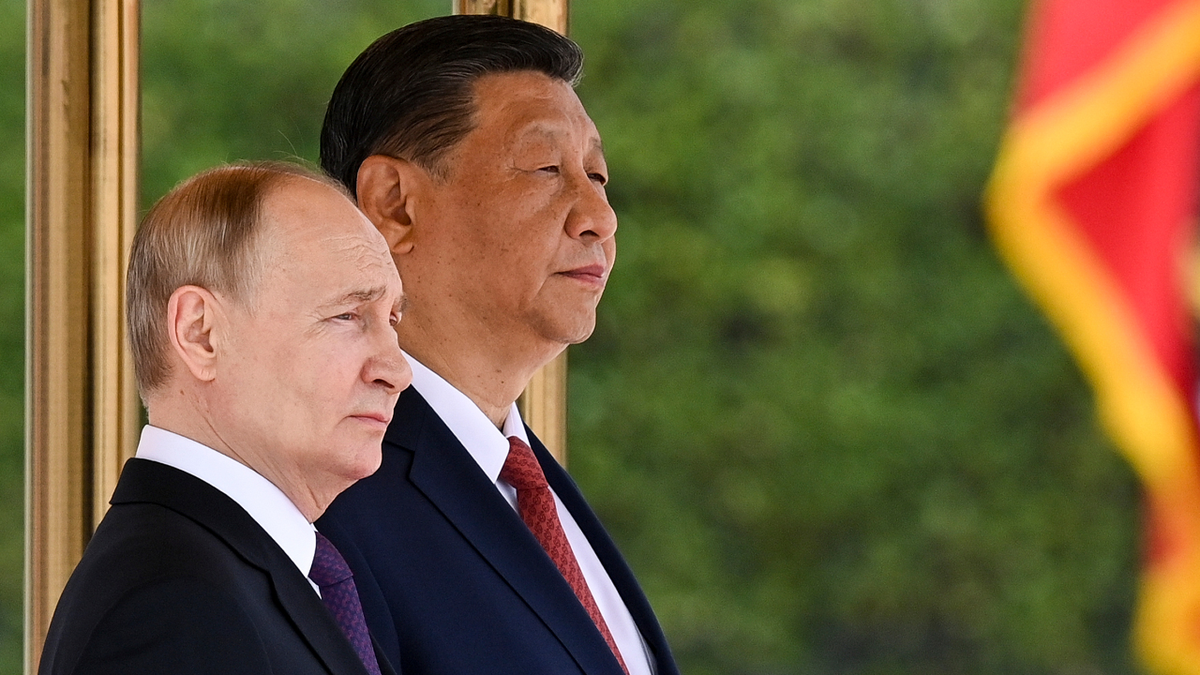
In a stark warning to the international community, Chinese President Xi Jinping and Russian President Vladimir Putin have signaled a deepening ideological and strategic alignment, cautioning that the world is at risk of regressing into a “law of the jungle” if the current global order is not fundamentally restructured. The warning, delivered through a joint statement on strategic coordination, underscores a coordinated effort by Moscow and Beijing to challenge the prevailing Western-led international system in favor of what they describe as a multipolar reality.
The rhetoric marks a significant escalation in the diplomatic posturing of the two powers. By invoking the metaphor of the “law of the jungle,” the leaders are suggesting that the erosion of multilateralism and the rise of unilateralism by Western powers are creating a vacuum where might makes right, potentially destabilizing global security and economic cooperation. This alignment comes at a time of intense geopolitical friction, as both nations seek to consolidate influence and present themselves as the architects of a new, alternative global governance model.
For the international community, the implications of this “strategic coordination” are profound. It suggests that the Russia-China partnership is moving beyond mere transactional cooperation into a more systemic effort to reshape the rules of global engagement. As the two nations synchronize their diplomatic and economic strategies, the divide between the Western-led “rules-based order” and the emerging China-Russia axis appears to be widening, creating a more fragmented and unpredictable global landscape.
A Warning Against Unilateralism and Hegemony
The core of the recent warning centers on the perceived failure of existing international institutions to provide equitable representation for non-Western powers. President Xi Jinping’s warning regarding a return to the “law of the jungle” serves as a critique of what Beijing and Moscow characterize as the “hegemonic” tendencies of the United States and its allies. From the perspective of the two leaders, the current international framework is being used as a tool for unilateralism, where a compact group of nations dictates global norms and imposes sanctions to achieve political ends.

This “law of the jungle” metaphor is particularly potent in the context of modern geopolitics. It implies a world where international law is bypassed in favor of raw power, and where smaller or less influential nations are left vulnerable to the whims of dominant states. By framing the issue this way, Xi and Putin are positioning themselves as defenders of a more balanced, multipolar world order—one that they argue would prioritize sovereignty and non-interference over the ideological preferences of the West.
This strategic messaging is designed to resonate with the “Global South,” a group of nations that often feels marginalized by the current global financial and security architectures. By championing a multipolar vision, China and Russia are attempting to build a coalition of states that seek greater autonomy from Western influence, further complicating the ability of the United States to maintain its traditional leadership roles in global affairs.
Strategic Coordination: Beyond a Tactical Alliance
The joint statement on strategic coordination signals that the relationship between Moscow and Beijing has entered a new phase. While the two nations have long maintained a “no limits” partnership, the current emphasis on “strategic coordination” suggests a more deliberate and synchronized approach to global challenges. This includes not only political and security alignment but also heightened cooperation in economic, technological, and energy sectors.
This coordination is visible in several key areas:
- Economic Resilience: The development of alternative payment systems and trade routes to mitigate the impact of Western-led sanctions.
- Security Architecture: Shared interests in reforming the UN Security Council and creating new regional security frameworks that do not rely on NATO or other Western-aligned structures.
- Technological Sovereignty: Collaborative efforts to develop independent supply chains for critical technologies, including semiconductors and artificial intelligence, to reduce reliance on Western intellectual property.
This level of coordination represents a systemic challenge to the existing global order. If China and Russia can successfully synchronize their efforts, they may be able to create a parallel system of governance and commerce that operates largely outside the reach of Western regulatory and punitive mechanisms. This would not only weaken the effectiveness of traditional tools of diplomacy, such as economic sanctions, but also fundamentally alter the dynamics of global power competition.
The Ukraine Conflict and the Diplomatic Stagnation
The intensifying Russia-China alignment cannot be viewed in isolation from the ongoing conflict in Ukraine. The war, which has entered its fifth year, remains a central pillar of the geopolitical tension between the East and the West. Recent developments suggest a complex and stalled diplomatic landscape, with both sides facing significant internal and external pressures.
In a recent address following Victory Day events in Moscow, President Vladimir Putin indicated that he believes the conflict in Ukraine may be “coming to an end.” However, his remarks were tempered by a insistence that any dialogue must occur on terms that respect Russian interests. Putin expressed a willingness to hold direct talks with Ukrainian President Volodymyr Zelenskyy in Moscow or a neutral location, but only after the fundamental terms of a peace agreement have been established.
While these comments suggest a potential opening for negotiations, the reality on the ground remains volatile. Despite a recent three-day, United States-backed ceasefire, reports continue to emerge of combat engagements and attacks along the front lines. The broader peace process remains largely stalled, as the core issues of territorial sovereignty and security guarantees remain unresolved. For China, the conflict serves as a catalyst for its broader strategic goals, as Beijing uses the situation to highlight the perceived instability caused by Western interventionism while simultaneously positioning itself as a mediator that offers an alternative to the Western approach.
Toward a Multipolar World: The Changing Global Landscape
The convergence of Xi and Putin’s rhetoric points toward a fundamental shift in how global power is being contested. The transition from a unipolar world, dominated by the United States, to a multipolar one is no longer a theoretical discussion; This proves an active geopolitical process driven by the strategic decisions of major powers.
This shift brings several critical questions to the forefront of international relations:
- Will the current international institutions survive? The ability of the UN, the WTO, and the IMF to maintain relevance will depend on their capacity to integrate the interests of rising powers like China and a resurgent Russia.
- How will the West respond to the “parallel system”? The creation of alternative economic and security structures by Moscow and Beijing may force Western nations to rethink their approaches to globalization and collective security.
- What is the impact on middle powers? Nations in Southeast Asia, Africa, and Latin America will increasingly find themselves caught in the middle, forced to navigate the competing visions of the Western-led order and the China-Russia-led multipolar alternative.
As the “law of the jungle” warning suggests, the path toward a multipolar world is fraught with risk. The struggle to define the rules of this new era will likely be characterized by intense competition, diplomatic maneuvering, and the potential for localized conflicts. For global stability, the challenge will be to find a way to accommodate a more diverse array of power centers without descending into the exceptionally chaos that Xi and Putin have warned against.
Key Takeaways
- Strategic Warning: Xi Jinping and Vladimir Putin warned that without a multipolar reform, the world risks a “law of the jungle” scenario driven by unilateralism.
- Deepening Alliance: The “strategic coordination” between China and Russia is moving toward a more systemic and synchronized challenge to Western hegemony.
- Ukraine Context: Putin has signaled that the Ukraine war may be ending but remains adamant that peace terms must be settled beforehand.
- Global Shift: The move toward multipolarity is creating parallel economic and security structures, challenging the effectiveness of the traditional Western-led order.
The next major checkpoint in this evolving dynamic will be the upcoming high-level diplomatic summits scheduled for the second half of 2026, where the specific implementation of “strategic coordination” is expected to be discussed in greater detail. Observers will be watching closely to see if these discussions translate into concrete shifts in global trade and security policy.
What do you think about the shift toward a multipolar world? Is the “law of the jungle” a realistic threat, or is it political rhetoric? Share your thoughts in the comments below and share this article with your network.
Keep reading